
Antique Cylinder Roll Bureau
An antique cylinder roll bureau offers a clever curved shutter to hide your papers, combining concealed workspace with handsome cabinet work.
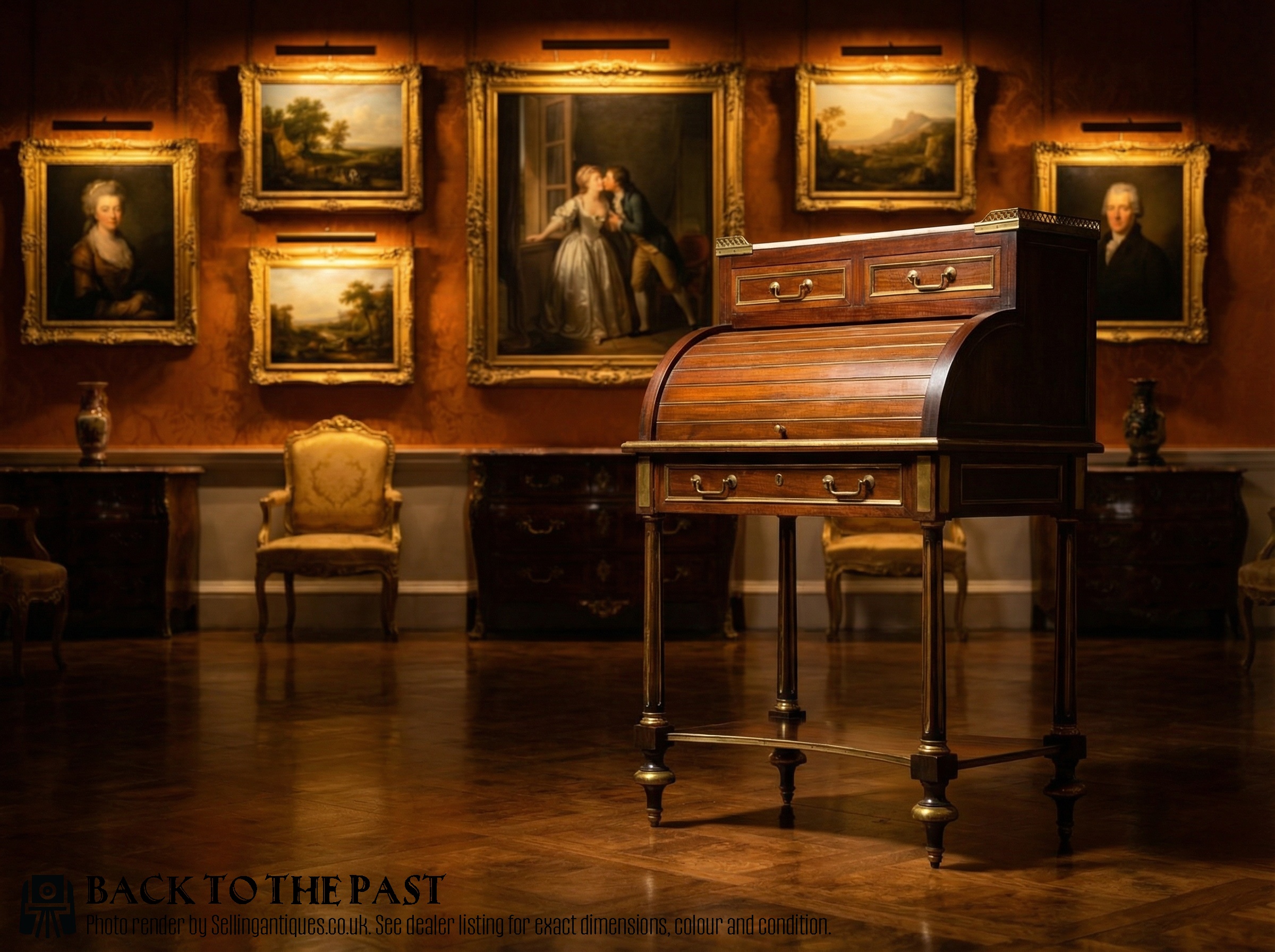
Antique Cylinder Roll Bureau
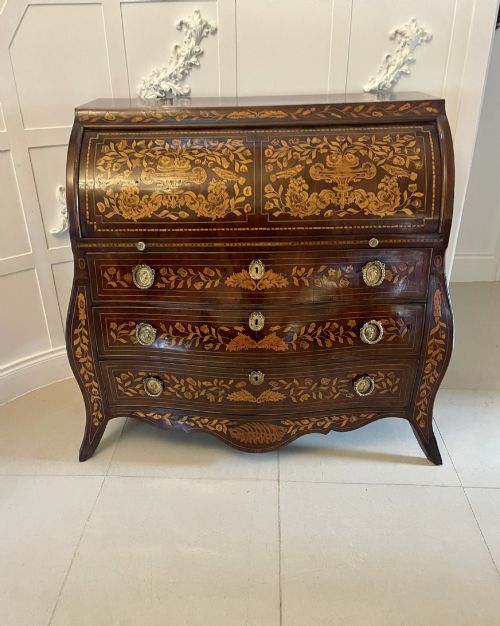
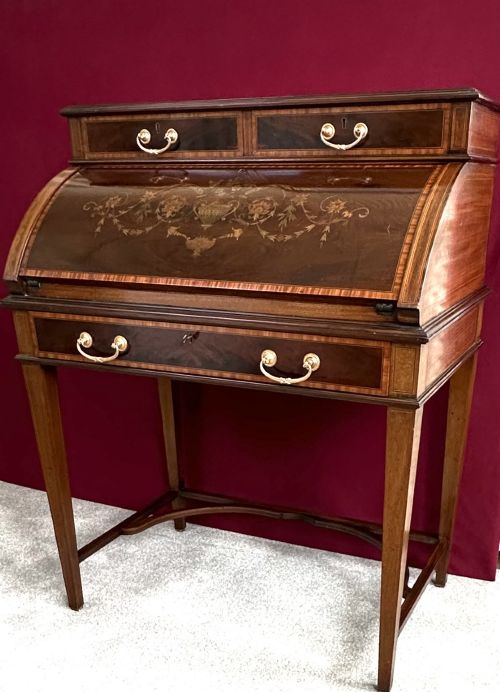
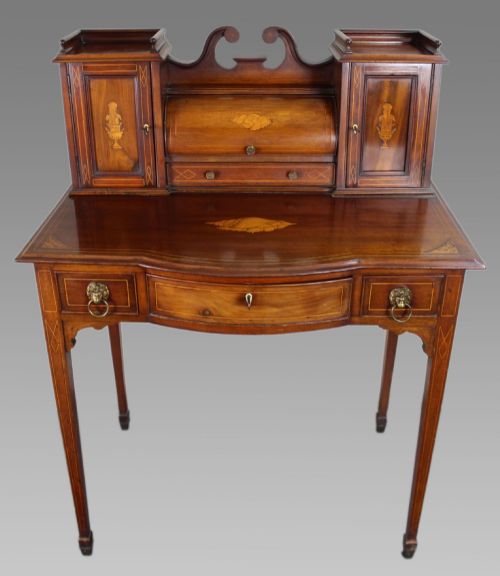
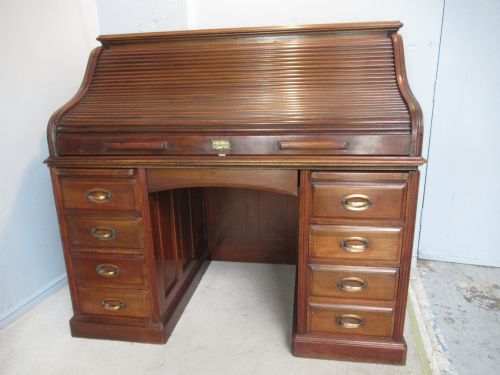
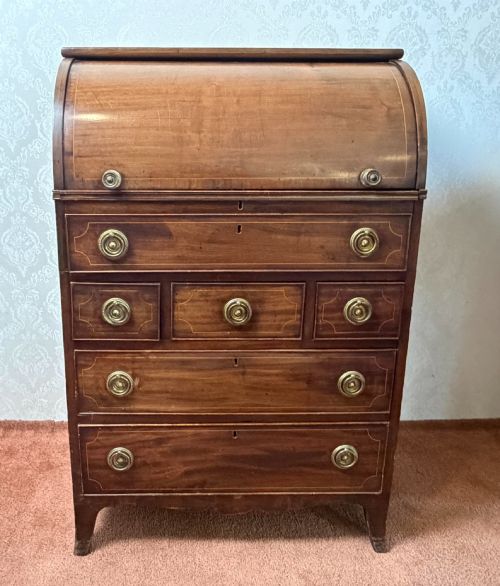
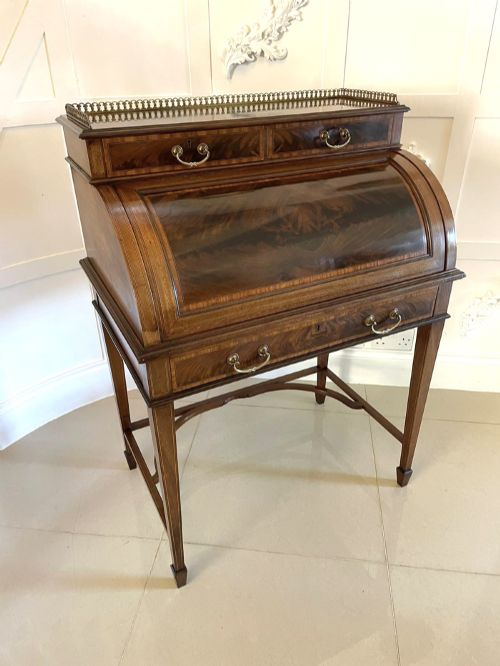
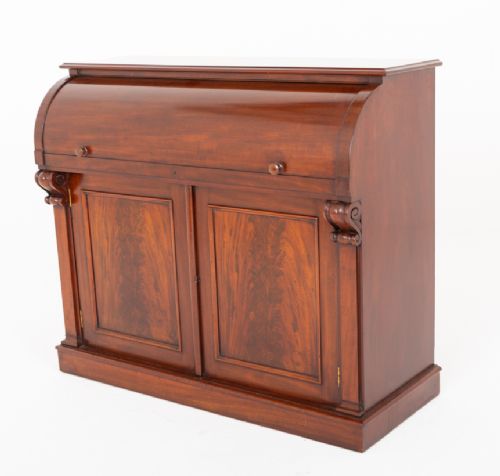
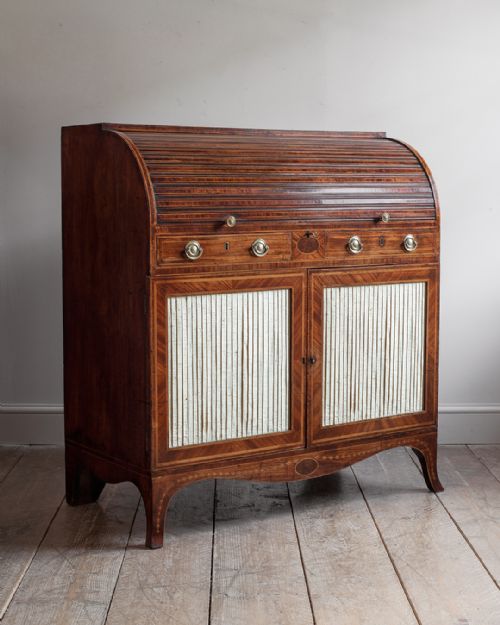
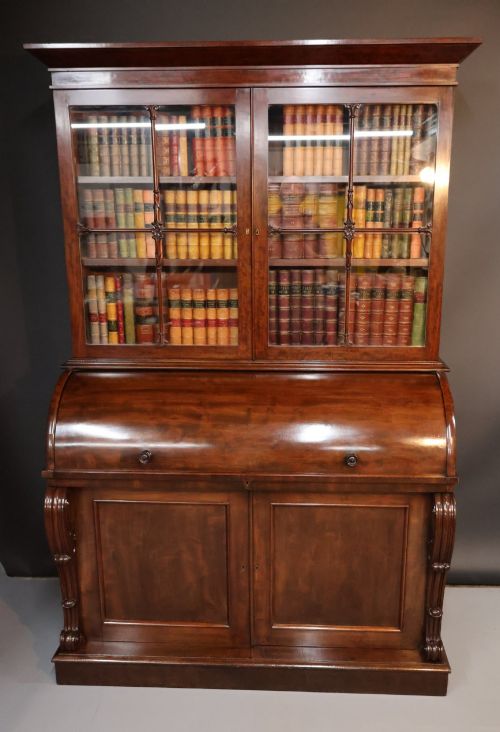
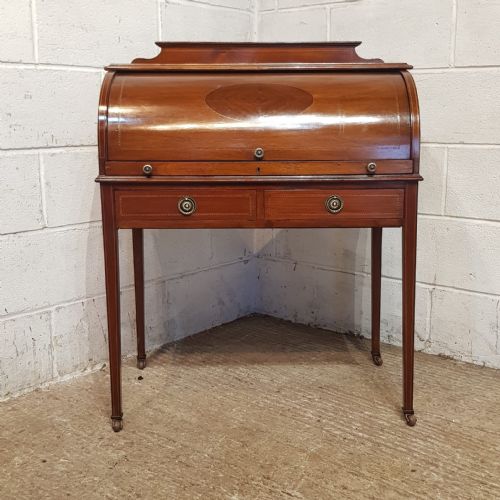
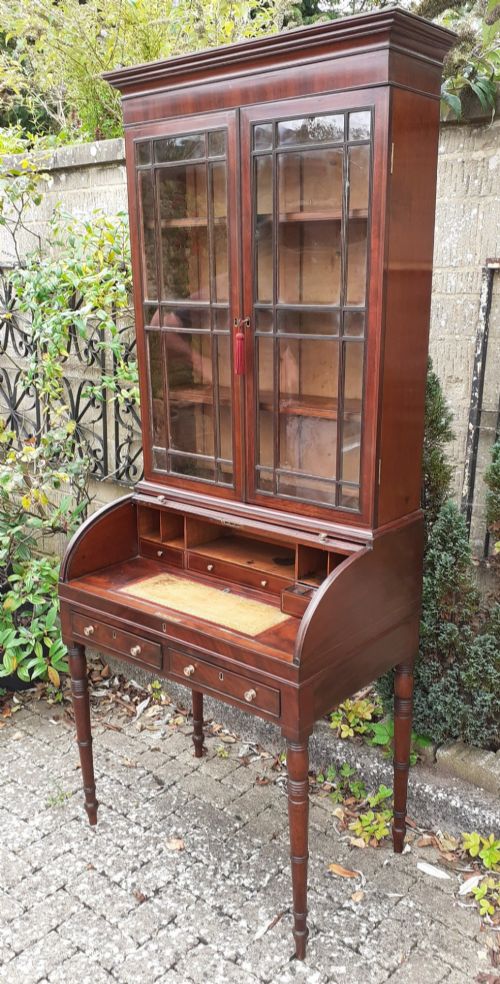
When searching for an antique cylinder roll bureau, you meet pieces designed to conceal a working surface beneath a curving wooden shutter. These desks range from compact Edwardian ladies writing tables to grand Georgian and Victorian bureau bookcases fitted with shelves above.
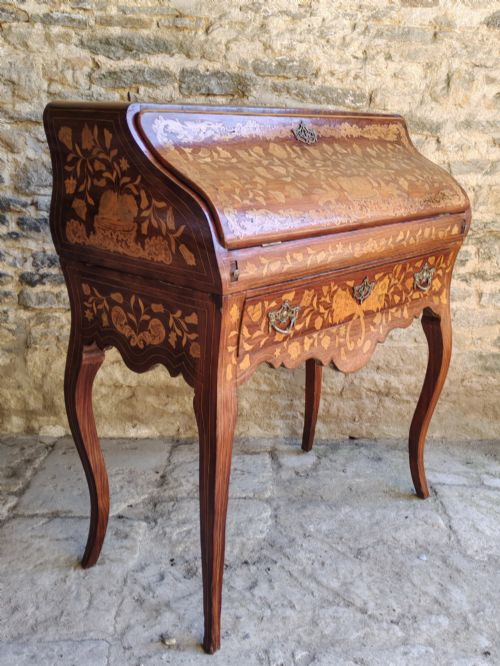
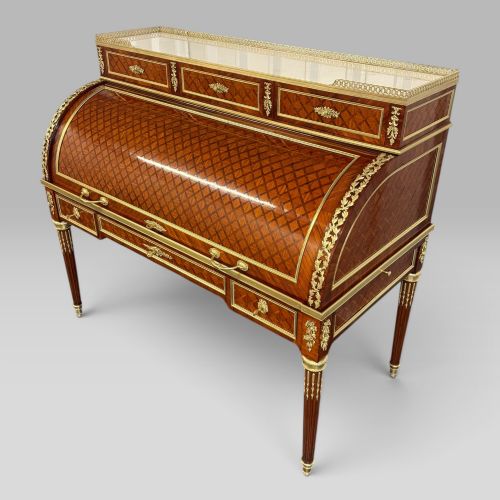
Mahogany forms the mainstay of these desks, frequently enriched by satinwood, walnut, and partridgewood veneers. You encounter styles spanning George III, Regency, William IV, and Edwardian periods, alongside Dutch marquetry and French Louis XVI revival pieces.
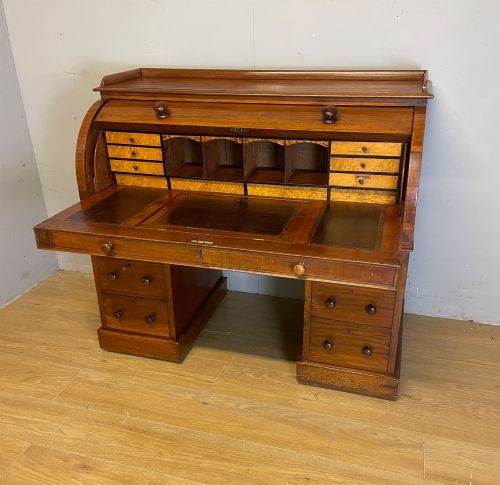
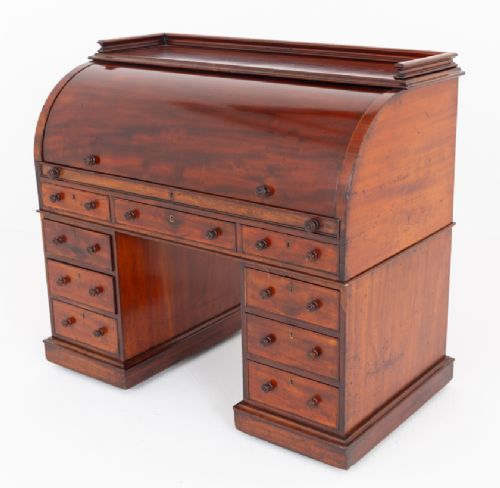
The primary function remains writing and storage, often incorporating pull-out slides, internal pigeonholes, and small drawers behind the main cylinder roll. Freestanding variations allow placement in the centre of a room rather than strictly against a wall.
Materials and Construction Methods
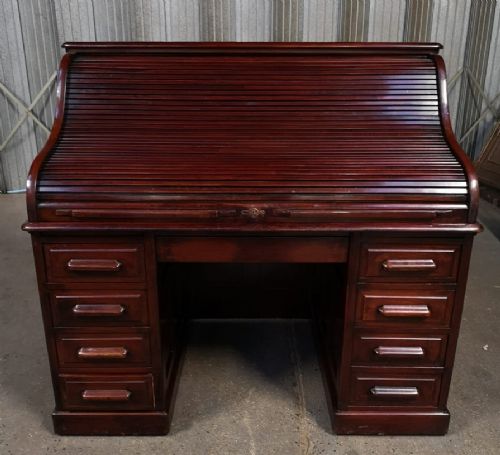
Cabinetmakers built the curving cylinder shutter from narrow strips of wood glued to a flexible canvas backing, allowing the curved top to slide smoothly within concealed tracks. This technique required precise carpentry to ensure the rolling mechanism operated without binding.
Solid timbers and fine veneers of mahogany, satinwood, and walnut provided the structural foundation and decorative surface. Brass handles, glass doors, and leather writing inserts completed the fittings on higher grade examples.
Listings feature mahogany, satinwood, walnut, and fruitwood alongside brass and leather fittings.
Distinctions in Quality and Make
The sophistication of the internal stationery fittings and the precision of the sliding cylinder mechanism distinguish finer pieces from standard production. Smooth movement of the roll top indicates careful initial joinery and minimal warping over time.
Elaborate floral marquetry, parquetry, and contrasting string inlay in satinwood or ebony elevate the decorative ambition of the cabinet work. Recognised makers and documented regional workshops also mark out superior examples.
Maple & Co. London·Edwards & Roberts·Tudor & Burrey
The Antique Cylinder Roll Bureau Glossary
- Cylinder roll
- A curved wooden shutter that slides back into the body of the desk to reveal the writing surface and interior drawers. It provides a secure way to conceal paperwork without folding down a flat flap.
- Tambour
- A flexible shutter constructed from narrow vertical strips of wood glued to fabric backing. This allows the writing surface to be covered by sliding the slats around a curved track.
- Marquetry
- Decorative inlay work using various coloured woods to create pictorial floral or geometric patterns. It appears across Dutch and English cabinet work.
- Secretaire
- A desk or cabinet featuring a pull-out or drop-down writing drawer combined with pigeonholes and small compartments. It often forms the upper section of a bureau bookcase.
- Pedestal
- A structural support placed beneath the writing surface, frequently fitted with banks of small drawers. Twin pedestal desks divide the under-space into two distinct columnar stacks.
Antique Cylinder Roll Bureau: Frequently Asked Questions
How do cylinder desks work?
The curved wooden cylinder slides along recessed tracks into the body of the piece. Pulling the writing slide forward often automatically retracts the cylinder to open the desk.
Internal linkages and balanced weights assist the smooth travel of the wooden shutter during daily use.
Are tambour and cylinder desks different?
A cylinder desk uses a solid curved wooden shell formed in one piece or joined tightly. A tambour desk uses many small vertical slats glued to canvas for flexibility.
Both serve the same purpose of rolling back to hide the desk interior.
Where were these desks placed?
Many examples stood against walls within studies, libraries, and drawing rooms. Freestanding models allowed placement in the middle of a room.
Smaller Edwardian ladies versions suited lighter private sitting spaces.
How do I date an antique bureau?
Construction details, timber choices, and decorative styles provide clear clues to the period. Georgian and Regency pieces show heavier proportions and fine mahogany, while Edwardian versions often employ lighter satinwood inlay.
Secondary woods inside drawers also help determine the age and origin.