


French Neoclassical Writing Table
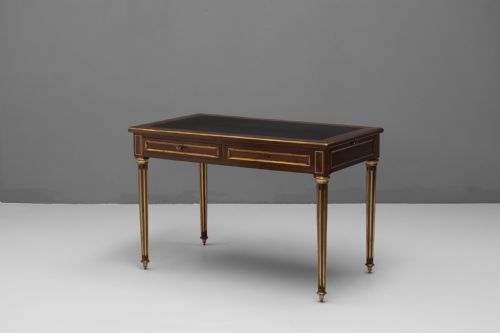
A french neoclassical writing table brings architectural restraint and gilt-bronze detail to a room, offering a disciplined surface for correspondence.
French Neoclassical Writing Table
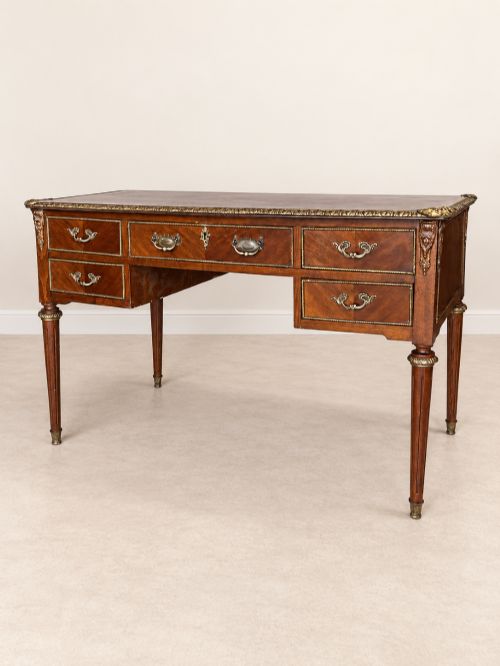
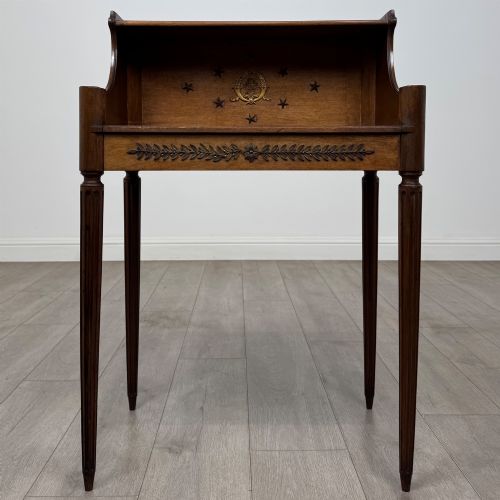
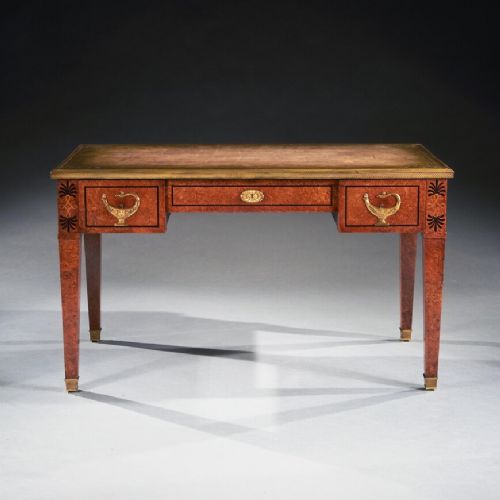
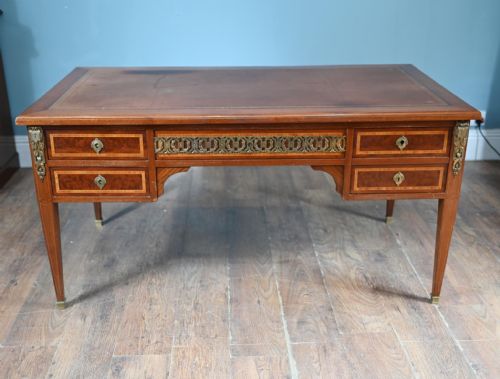
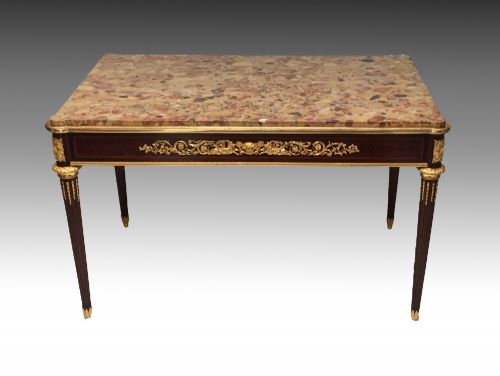
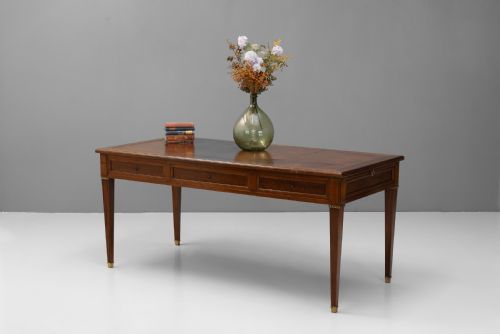
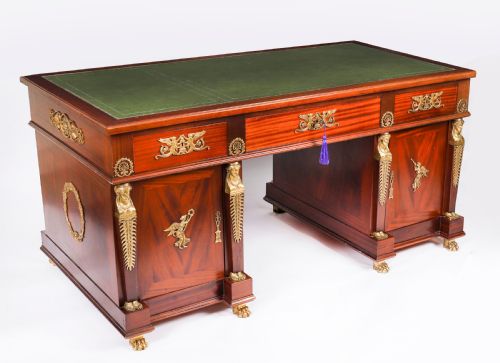
A french neoclassical writing table encompasses forms such as the bureau plat, side tables, and freestanding centre tables originating from the eighteenth, nineteenth, and early twentieth centuries. These pieces reflect stylistic revivals including Louis XVI, Empire, and Directoire designs.
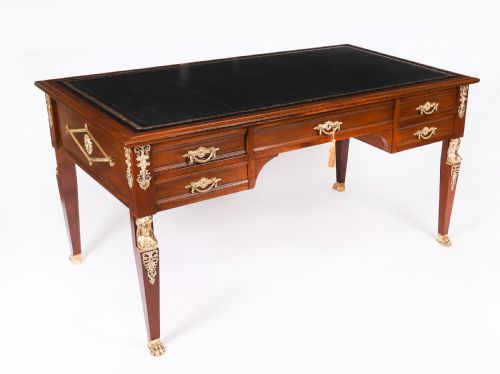
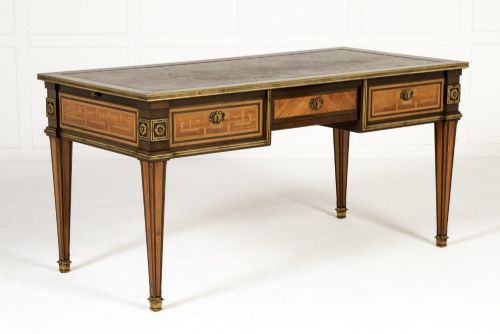
The version most commonly encountered on this page dates from the nineteenth century, finished in mahogany, kingwood, or walnut with characteristic restrained lines. Desks of this form often feature inset leather writing surfaces and bronze mounts rather than heavy carving.
Quality and craftsmanship
Quality rests in the crispness of the ormolu casting and the precision with which the bronze mounts fit the timber contours. Heavier, more deeply chased mounts distinguish finer examples from standard production pieces.
Timber selection and veneer matching dictate the visual depth of the writing surface and drawers. Finer execution shows in the seamless integration of leather inserts and the stability of the freestanding frame.
Listings feature pieces spanning from the eighteenth century through to the Edwardian era and 1920s, constructed in mahogany, walnut, kingwood, and ebonised timber.
Henry Dasson·Jean Werner·Diehl Paris·Paul Sormani·Ince & Mayhew
The French Neoclassical Writing Table Glossary
- Bureau plat
- A freestanding writing table fitted with one or more rows of drawers beneath the top. This form typically stands away from the wall.
- Ormolu
- Gilded bronze used for decorative mounts and accents on furniture. The technique involves applying a gold amalgam to bronze.
- Directoire
- A transitional style bridging Louis XVI and Empire periods, known for pared-down classical geometry. Ornamentation becomes more archaeological and restrained.
- Kingwood
- A dense, richly figured exotic timber utilised for fine cabinet veneers. Its distinctive dark grain patterns enhance the visual weight of nineteenth-century pieces.
French Neoclassical Writing Table: Frequently Asked Questions
How do I use a bureau plat today?
A bureau plat functions effectively as a freestanding desk in the centre of a study or living space, providing a finished look from all angles.
The generous writing surface accommodates modern laptops and correspondence alike while maintaining classical proportions.
How do I care for the leather top?
Leather writing inserts require gentle cleaning with a slightly damp cloth and occasional treatment with appropriate leather dressings to prevent cracking.
Avoid placing damp glasses or unsealed ink sources directly onto the hide to preserve the gold tooling.
What defines Louis XVI style furniture?
Louis XVI style draws upon classical antiquity, favouring straight tapered legs, geometric symmetry, and restrained ormolu mounts over curved rococo excess.
This aesthetic prioritises architectural balance and clear structural lines.
Are these tables suitable for small rooms?
Smaller side tables and Directoire writing desks offer compact footprints that fit neatly into residential interiors without dominating the floor plan.
Their slender legs and open underframes maintain a sense of light and space.