



Antique Curved Side Cabinet
An antique curved side cabinet brings elegance to a room, offering refined storage through bowed fronts, glass doors, and rich timber grains.
Antique Curved Side Cabinet
When searching for an antique curved side cabinet, buyers encounter sophisticated low storage furniture designed to follow a graceful rounded, bowed, or serpentine contour. These pieces encompass credenzas, display cabinets, and smaller bedside or music tables shaped to soften room corners and add architectural interest.
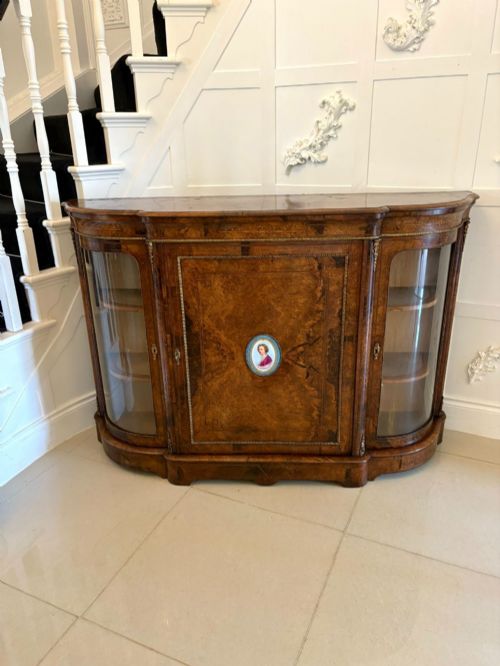
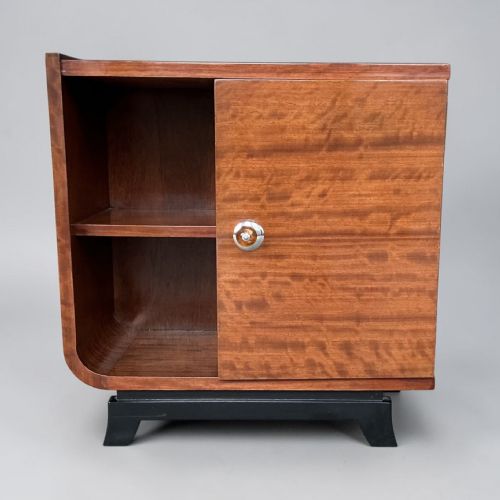
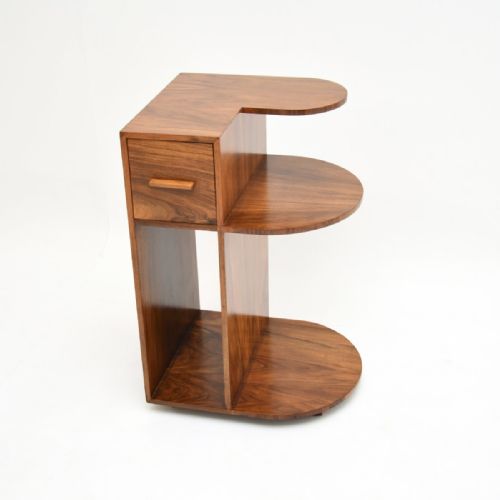
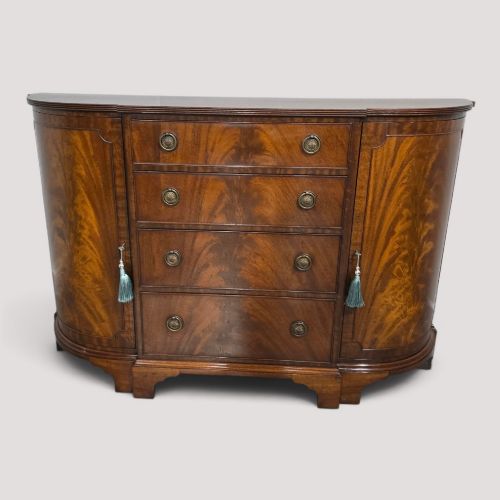
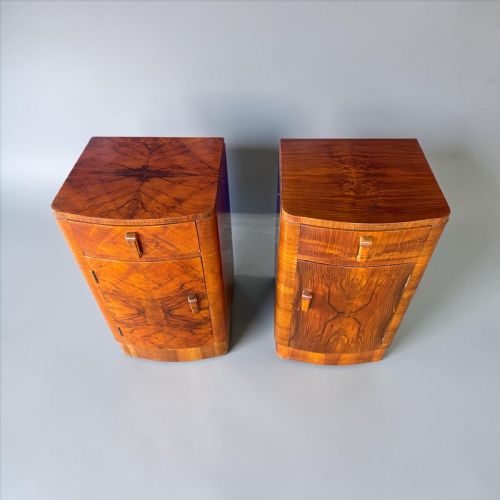
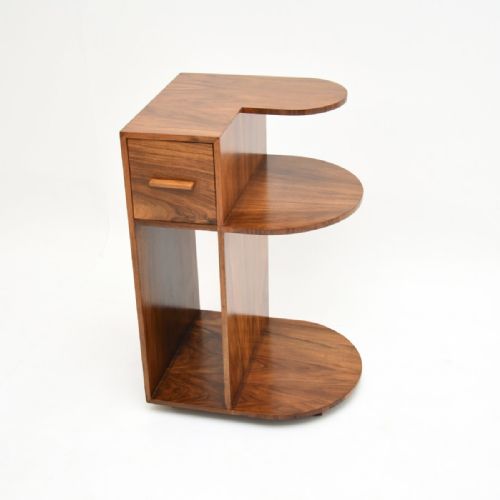
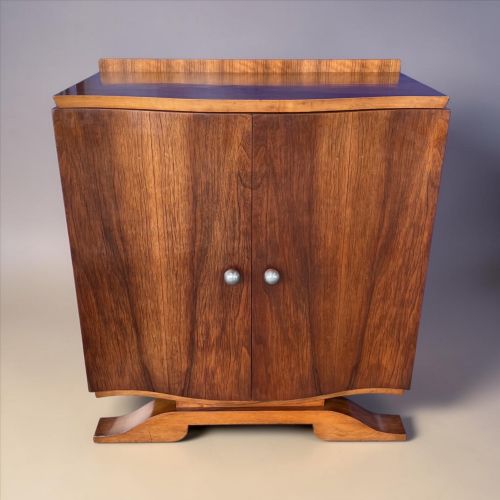
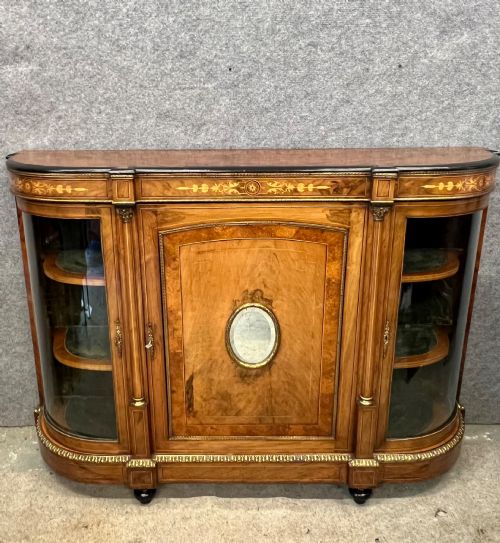
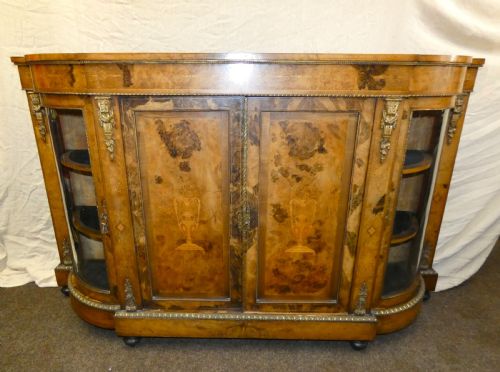
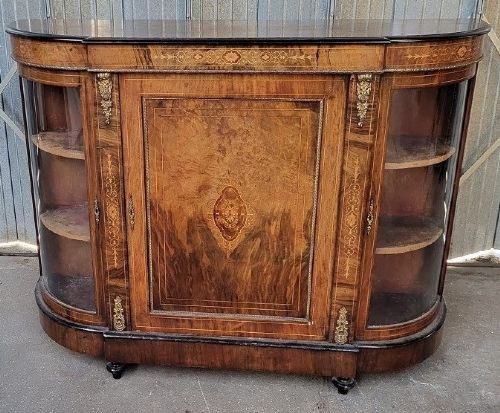
The version most frequently met on this page is the Victorian walnut credenza or side cabinet, often richly inlaid and detailed with glazed doors. Alongside these, buyers find Edwardian satinwood marquetry pieces and later twentieth-century Art Deco interpretations in figured walnut.
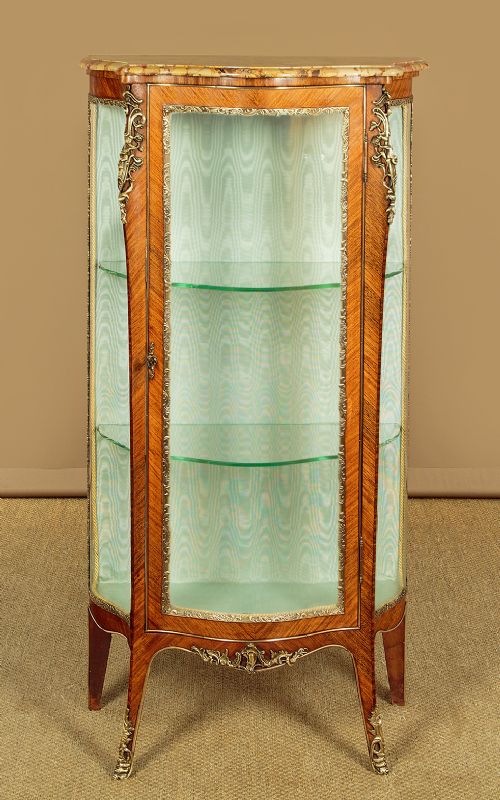
Origins span English cabinet makers of the nineteenth century and French workshops producing marble-topped commodes and vitrines. Each form utilises its curved footprint to balance practical surface space with a compact profile.
Assessing craftsmanship and finish
Quality separates in the crispness of the marquetry inlay and the selection of figured veneer, where superior examples display symmetrical grain patterns across challenging curved doors. The integration of bronze or ormolu mounts reveals the maker's hand, with finer pieces featuring chased details rather than plain cast metal.
Internal joinery and the true alignment of bowed doors distinguish finer cabinet work from standard production. A well-constructed carcase maintains its structural integrity over time, ensuring doors close flush against curved rebates without sagging.
Listings feature burr walnut, mahogany, satinwood, and marble across nineteenth-century Victorian and twentieth-century Art Deco periods.
The Antique Curved Side Cabinet Glossary
- Credenza
- A low cabinet or sideboard, frequently featuring glazed central doors flanked by curved side compartments. This form became popular in Victorian drawing rooms for displaying porcelain and silver.
- Marquetry
- Decorative patterns formed by fitting together thin veneers of contrasting wood, ivory, or shell. Craftsmen applied these intricate designs across flat and curved cabinet panels.
- Ormolu
- Gilded bronze ornamentation mounted onto furniture surfaces. This decorative technique highlights corners, friezes, and borders on nineteenth-century pieces.
- Demi-lune
- Having the shape of a half-moon or semicircle. Cabinets with this profile sit flat against a wall while projecting a curved front into the room.
- Burr walnut
- Timber taken from the abnormal growth of a walnut tree, yielding swirling, highly figured grain patterns. Cabinet makers prized this wood for veneering prominent door and top surfaces.
Antique Curved Side Cabinet: Frequently Asked Questions
Where did people use these cabinets historically?
These cabinets served primarily in formal dining rooms and drawing rooms to store silver, linen, and glassware. Their decorative surfaces also provided space to display ornaments and lamps.
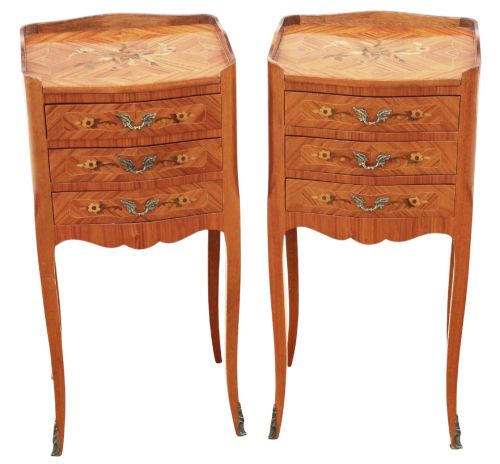
In domestic settings, smaller versions functioned as bedside tables or music cabinets, keeping personal items neatly enclosed within curved wooden doors.
How do I identify a Victorian credenza?
Victorian credenzas typically feature a low profile with a combination of solid walnut, burr walnut veneers, and elaborate marquetry inlay. Many incorporate glazed side compartments and gilt bronze mounts.
Looking closer at the interior reveals mahogany or oak secondary timbers, characteristic of mid-nineteenth-century British cabinet making standards.
Are marble tops original to these cabinets?
Marble tops appear frequently on French commodes and specific English side cabinets from the nineteenth century. These slabs were selected to provide a durable, decorative surface resistant to spills.
Examining the underside and the seating of the stone helps confirm its period integration with the wooden carcase below.
How do I care for burr walnut veneer?
Burr walnut requires stable indoor humidity away from direct sunlight to prevent the delicate veneer from drying and lifting. Regular dusting with a soft, dry cloth preserves the polished finish.
Occasional application of appropriate wax feeding helps nourish the timber grain without building up excessive residue on the antique surface.