






Antique Crystal Inkstand
An antique crystal inkstand sits ready on the desk, offering heavy cut glass and precious mounts that turn everyday writing into a deliberate ritual.
Antique Crystal Inkstand
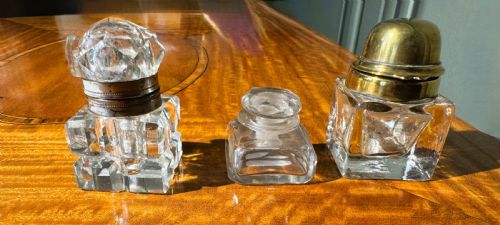
An antique crystal inkstand brings together heavy glass reservoirs and fitted bases made from sterling silver, brass, or solid timbers like oak and walnut. When you search for an antique crystal inkstand, you are looking at desktop accessories designed to hold liquid ink securely alongside spaces for dip pens.
The pieces listed here span the nineteenth and twentieth centuries, taking in Victorian, Edwardian, and Art Deco designs. You will encounter single cut glass ink pots with hinged lids as well as elaborate stands holding multiple wells.
Victorian examples often feature thick sterling silver mounts and deep facet cutting, whilst later Art Deco pieces introduce figural bronze elements and geometric trays. Oak and walnut stands from the late nineteenth century frequently pair with square or octagonal cut crystal vessels.
Materials and construction
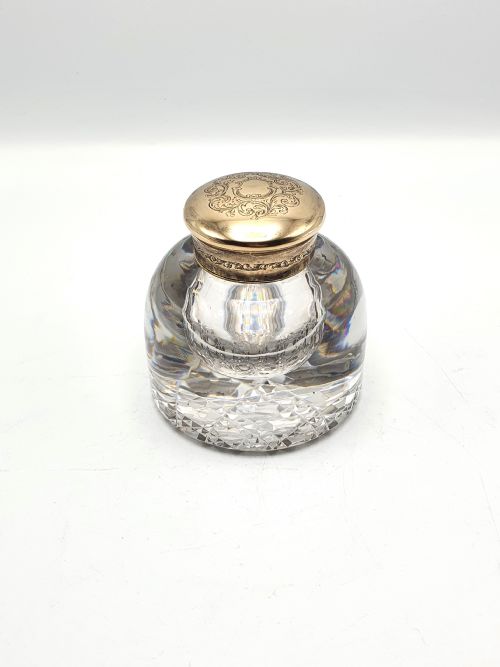
The glass elements rely on heavy lead crystal or cut glass, shaped by hand and polished to create sharp geometric facets that catch the light. This dense material provides the necessary weight to prevent the ink pot from tipping during use.
Metal mounts in sterling silver, silverplate, ormolu, and brass are secured to the glass or fitted into wooden trays. Silver lids often carry hallmarks indicating the year of assay and the silversmith's mark.
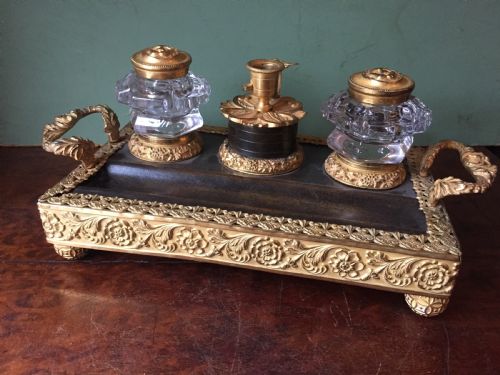
Wooden bases utilise solid oak or walnut, carved or turned to receive the ink pots and pen rests securely. Ormolu and cast bronze mounts provide decorative frames, occasionally featuring figural subjects like the gilded bronze chick.
The listings span the nineteenth and twentieth centuries, featuring Victorian, Edwardian, Art Deco, and French Empire styles.
Judging quality
Quality rests in the crispness of the glass cutting and the weight of the metal mounts. Superior pieces display deep, sharp facets on the crystal and heavy gauge sterling silver or solid bronze rather than thin plated alternatives.
The integration between the glass vessel and its mount dictates the overall standard. Finer examples show precise engineering where hinged lids close flush and collars fit the glass neck without excess movement.
Design ambition separates standard desk furniture from exceptional works. Pieces incorporating figural cast elements, French Empire ormolu mounts, or substantial multi-inkstand configurations represent the upper end of the craft.
Tiffany & Co
The Antique Crystal Inkstand Glossary
- Cut crystal
- High-clarity glass containing lead oxide, shaped by cutting wheels to form decorative facets. It gives the inkwell substantial weight and a bright refractive sparkle.
- Inkstand
- A desktop tray or stand designed to hold one or more inkwells and often incorporating a pen rest. They range from simple wooden boards to elaborate metal and glass assemblies.
- Ormolu
- Gilded brass or bronze used for decorative mounts and decorative trim. The technique involves applying a gold amalgam to the metal base.
- Sterling silver
- An alloy containing ninety-two point five percent silver by mass. It appears frequently as lids, collars, and entire desk trays on better-quality inkwells.
- Hallmark
- A series of official marks stamped onto precious metal items. These marks indicate the maker, the assay office, and the year of testing.
Antique Crystal Inkstand: Frequently Asked Questions
How do I clean an antique inkwell?
Dried ink residue inside glass wells responds best to warm water and a soft bottle brush, avoiding harsh abrasives that scratch the crystal.
Silver collars and mounts require gentle polishing with a dedicated cloth to preserve hallmarks and prevent the cleaner from entering the glass interior.
Are these inkstands still usable?
Most antique inkwells function perfectly well for modern fountain pen users or dip pen enthusiasts, provided the glass is sound and the lid closes tightly.
Checking the interior for chips around the neck ensures a proper seal if you intend to fill the well with ink for regular writing.
How do I date an inkstand?
Hallmarks on silver mounts provide the most precise date, giving the exact year of assay and often the maker's registered mark.
Stylistic cues such as heavy Victorian silver engraving, Edwardian simplicity, or Art Deco figural bronze elements help narrow down pieces lacking metal stamps.
What is the difference between an inkwell and an inkstand?
An inkwell is the individual pot that holds the ink, usually fitted with a hinged lid to prevent the liquid from evaporating too quickly.
An inkstand is the larger tray or chassis that accommodates one or more inkwells alongside dedicated troughs or rests for dip pens.