



Antique Crystal Girandole
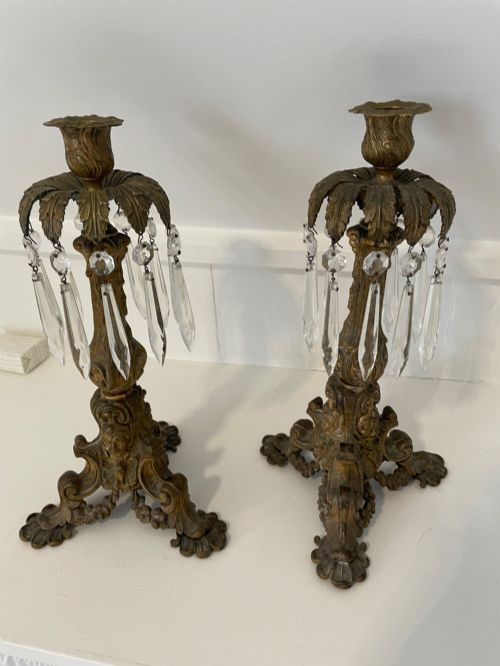
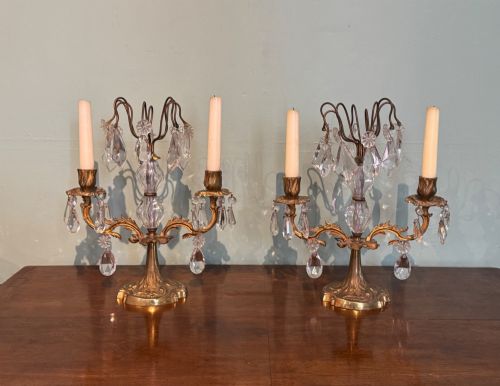
These antique crystal girandole pieces bring a brilliant sparkle to a room through cut glass drops and mirrored brass or ormolu backs.
Antique Crystal Girandole
An antique crystal girandole is a decorative lighting form that combines candle branches or electrical fittings with reflective mirrored surfaces and cut glass drops. When people search for this phrase, they find ornate candelabras, wall sconces, and table lamps designed to multiply the flicker of candlelight.
The versions most commonly met on this page originate from French workshops across the nineteenth and early twentieth centuries. These pieces typically manifest as pairs of gilded twin or triple arm candelabras, often featuring elaborate Rococo Revival or Neoclassical styling.
Beyond standard table candelabras, the category encompasses mirrored wall sconces and occasional chandelier conversions. Each type utilises glass or crystal pendants suspended from metal arms to catch and refract ambient light.
Materials and construction
Gilded brass, bronze, and gilt metal form the structural framework for these lighting pieces, frequently shaped into organic scrolls and foliate motifs. Craftsmen combined these metal mounts with cast brass and toleware to support the weight of the branches.
Cut crystal and paste glass drops hang from the arms and drip pans, secured by small wire loops. The inclusion of mirrored glass backplates on sconces and specific girandole forms serves to project additional illumination into the interior.
Antique Crystal Girandole Retail Price Guide 2026
Typical asking prices for crystal girandole among the pieces listed under this phrase on Sellingantiques today, from the lower quarter to the upper quarter. They describe what is for sale here now, not the wider market.
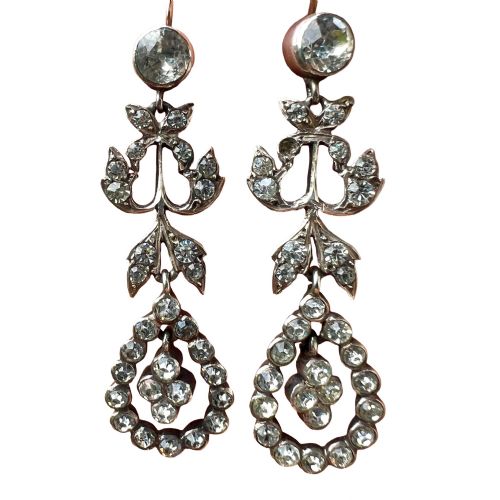
Several girandoles double as earrings in the archive, proving that nineteenth-century artisans believed everything deserved a crystal drop.
Distinctions in quality
The refinement of the cast metal mounts distinguishes finer examples from simpler production. Crisp chiselling on ormolu and well-defined floral casting in the French Rococo manner indicate superior workshop standards.
The cut and clarity of the crystal drops also determine the grade of a piece. Hand-cut facets that catch the light sharply demonstrate greater craftsmanship than pressed glass alternatives.
The Antique Crystal Girandole Glossary
- Girandole
- A branched wall sconce or candelabrum featuring a mirrored backplate to reflect light. The term covers both wall-mounted and table-standing variants.
- Ormolu
- Gilded bronze used for decorative mounts on furniture and lighting. It provides a rich golden surface finish that resists tarnish.
- Paste glass
- High-refractive flint glass cut and polished to imitate gemstones. It appears frequently in vintage chandelier drops and jewellery.
- Toleware
- Painted or lacquered sheet metal items. This material appears on specific regional candelabras and girandoles.
- Drop
- A pendant piece of cut glass or crystal hung from a lighting fixture. These elements disperse light across the surrounding space.
Antique Crystal Girandole: Frequently Asked Questions
What is a girandole?
A girandole is a branched lighting fixture that incorporates a mirror to multiply the effect of candles or lamps. They are designed to hang on walls or stand on tables.
These pieces use glass drops and polished metal frames to brighten dark corners of a room. The reflective backplate is the defining feature that separates them from standard candelabras.
How do I clean antique crystal?
Cleaning requires warm water and mild soap applied carefully with a soft cloth to avoid disturbing the fragile hanging wires. Each drop should be washed and dried individually.
Harsh chemical cleaners must be avoided as they can damage the gilt finish on the brass or bronze frames. Professional care is recommended for delicate antique mountings.
Where should I place wall sconces?
Mirrored wall sconces suit hallways, living rooms, and dining areas where they can catch natural daylight or evening illumination. Positioning them opposite windows maximises their reflective quality.
Secure installation is essential due to the combined weight of the metal frame and glass drops. Wall fixings must support the full load safely.
How old are these pieces?
The pieces available here date primarily from the nineteenth and early twentieth centuries. French workshops produced many of the surviving examples during the Victorian and Edwardian eras.
Stylistic cues such as cast ormolu mounts and hand-cut crystal drops help indicate the manufacturing period. The construction methods reflect the transition from handmade to industrial techniques.