
Antique Crystal Drops
Antique crystal drops catch the daylight and throw it across a room, bringing life to chandeliers, wall lights, and mantel lustres.
Antique Crystal Drops
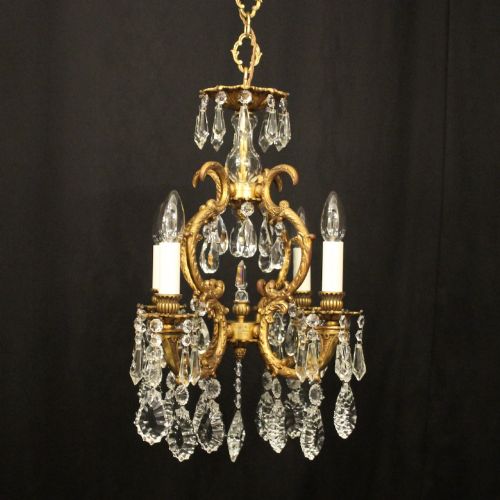
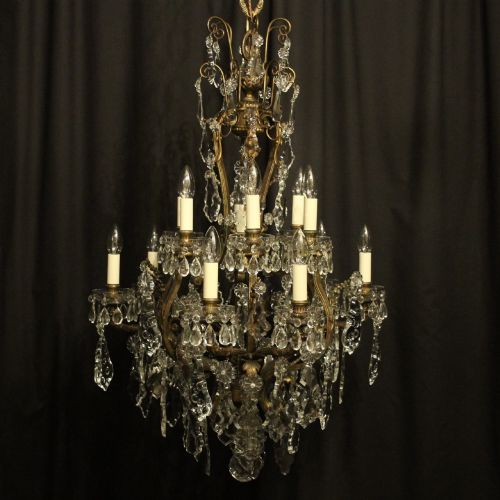
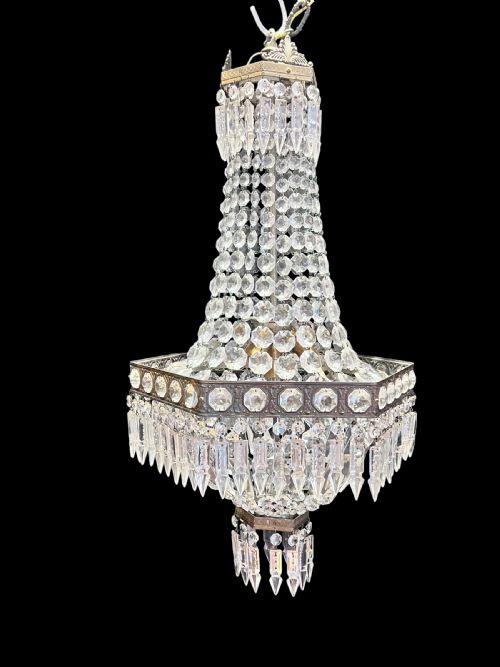
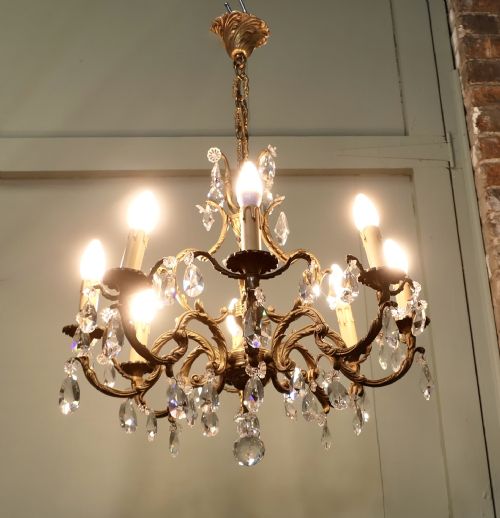
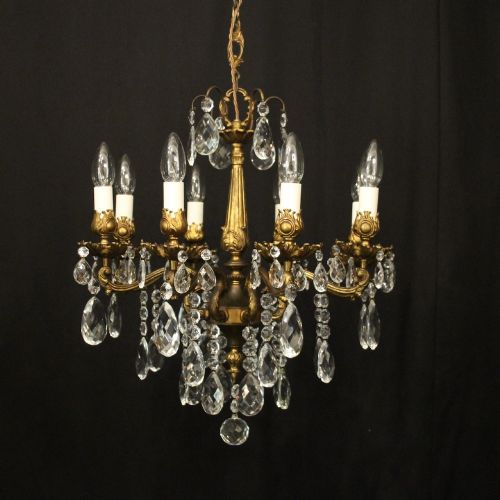
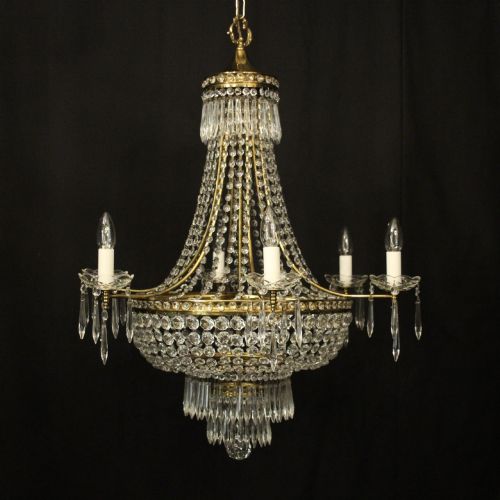
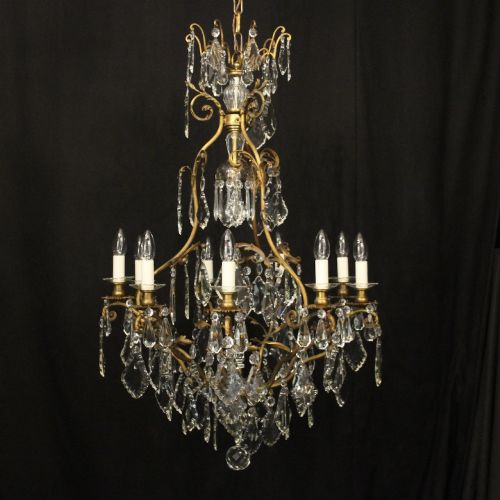
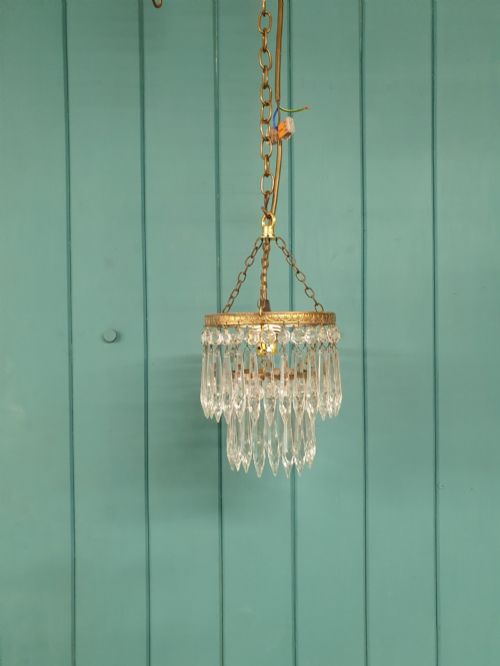
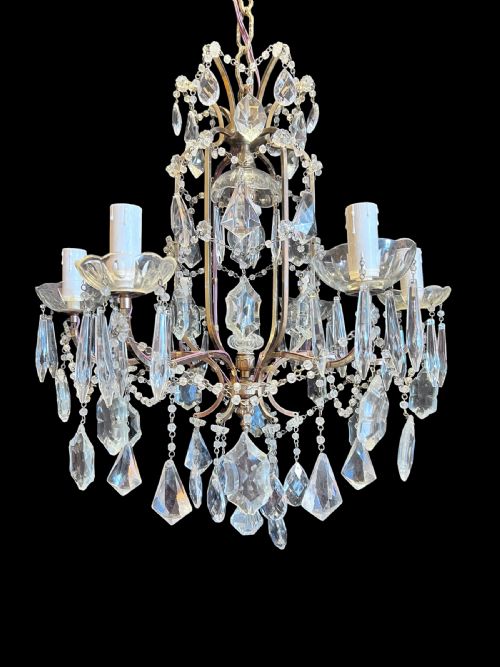
Antique crystal drops appear on a wide range of hanging and tabletop light fittings, from large multi-armed chandeliers to modest ceiling lights and wall sconces. Buyers seeking these items will find them integrated into grand French Empire and tent and waterfall designs, alongside simpler Edwardian and Victorian forms.
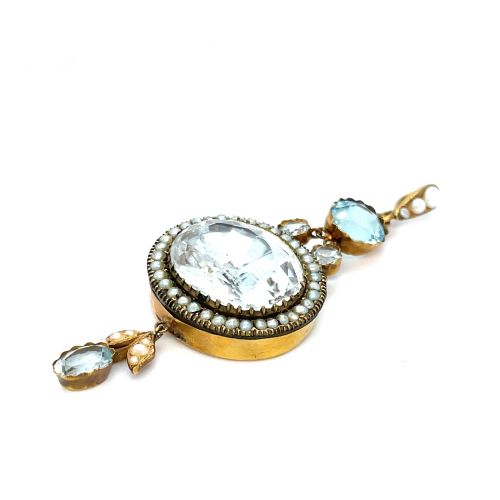
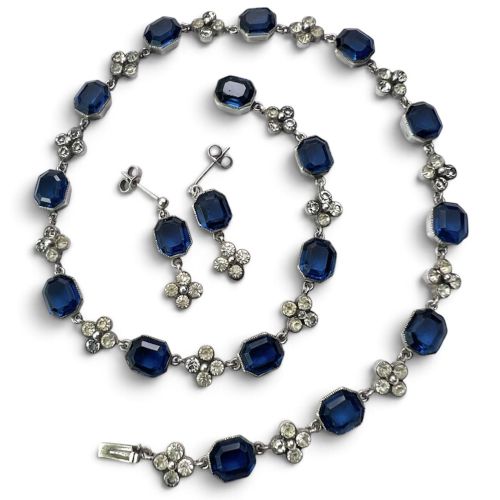
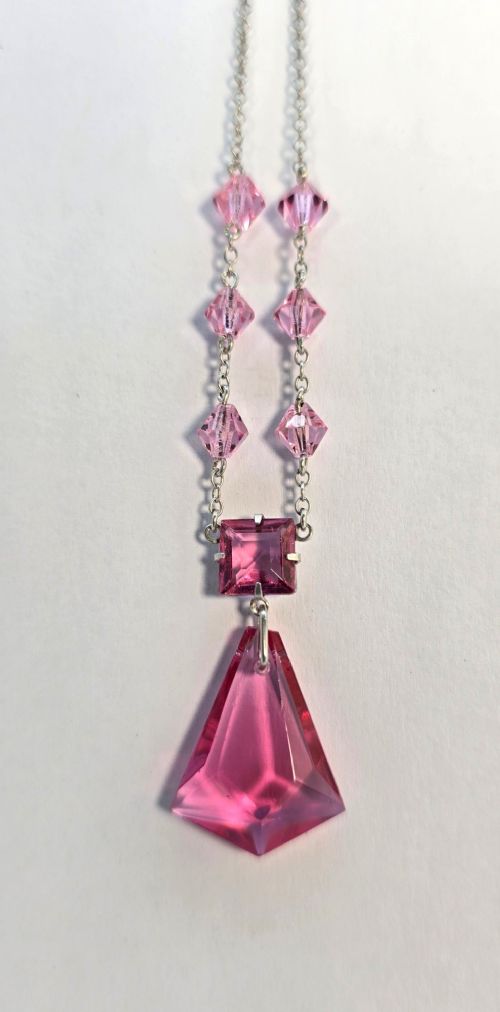
The selection encompasses both large-scale architectural lighting and smaller decorative accessories like mantel lustres, earrings, and necklaces. These pieces span from the nineteenth century through the Edwardian era and into the 1930s, reflecting diverse international origins including French, Italian, and Swedish workshops.
How they were made
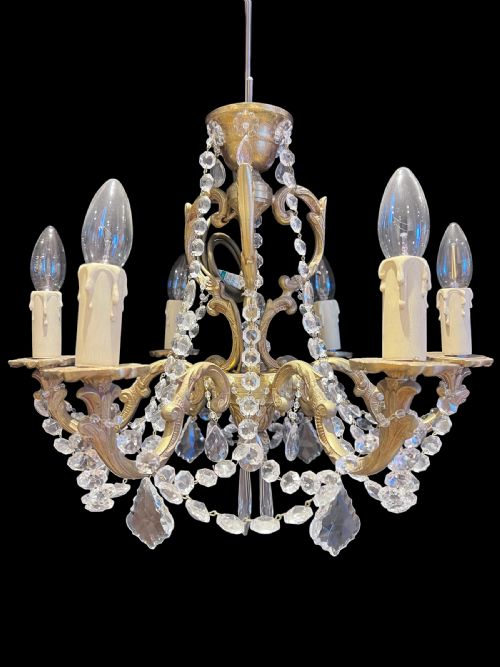
Metalwork frames form the structural backbone of these pieces, utilising brass, gilt metal, gilt bronze, and silver to support the hanging elements. These metal components are often cast or gilded, providing a stable armature for the numerous glass and crystal facets.
Cut glass and crystal drops are suspended from these frames using wire or pins, catching and refracting light through precise facets. Additional materials like uranium glass, milk glass, and paste stones appear in specific items, contributing distinct colour and opacity to the overall construction.
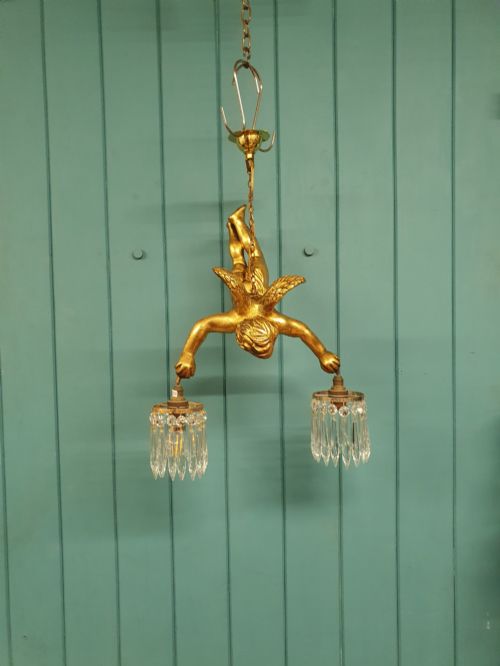
Some chandeliers come supervised by gilded flying cherubs and winged cupids holding the crystal spikes aloft.
What varies in quality
The sophistication of the metal casting and the clarity of the glass separate finer examples from standard production. Heavier cast frames with intricate gilt work and hand-cut crystal drops indicate a higher level of craftsmanship than pressed glass on simpler brass skeletons.
Design complexity also defines the tier of a piece, with multi-tiered tent and waterfall configurations or figural brass mounts requiring greater skill to assemble than basic single-tier ceiling lights.
The Antique Crystal Drops Glossary
- Mantel lustre
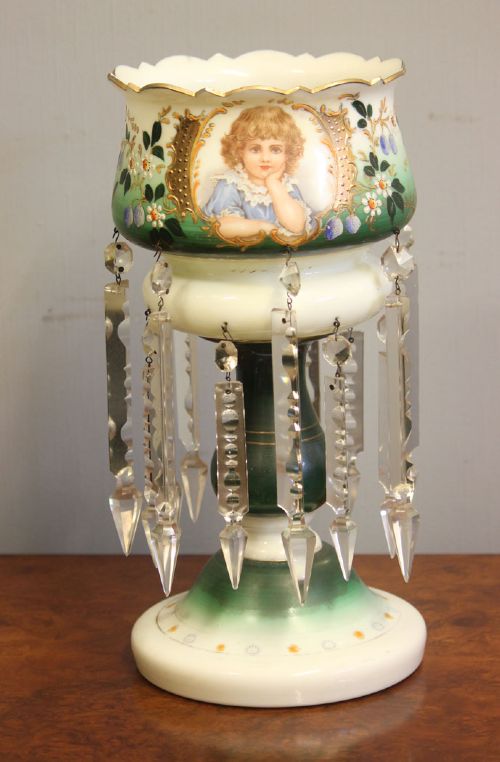
- A decorative tabletop ornament featuring a central vase or candle holder hung with cut crystal drops. These items sit upon mantelpieces and reflect ambient light.
- Tent and waterfall
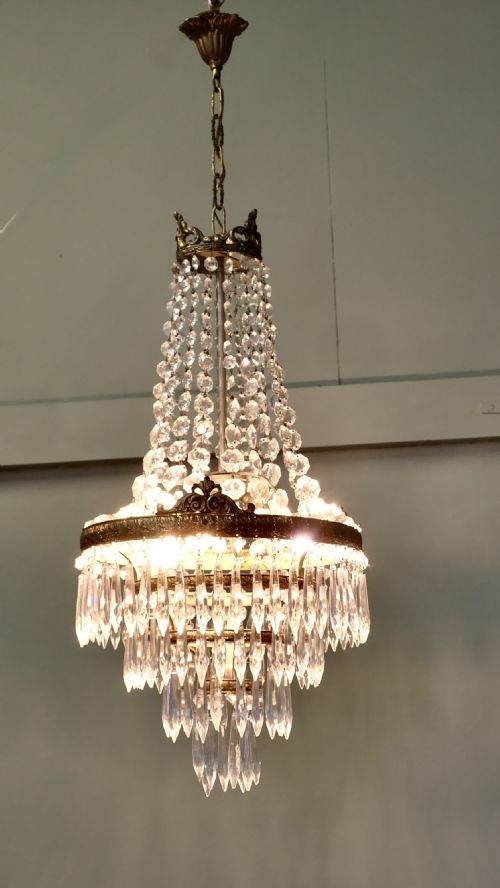
- A chandelier style characterised by an upper canopy of strings forming a tent shape, combined with a lower cascading arrangement of crystal drops. This layout maximises the prismatic effect of the glass.
- Paste
- Hand-cut lead glass used to imitate gemstones in jewellery and decorative settings. It provides high brilliance and clarity within period pieces.
- Spike
- A long, pointed form of crystal drop used in traditional chandelier construction. These drops hang vertically to add linear texture to the lighting fixture.
Antique Crystal Drops: Frequently Asked Questions
How do I hang a crystal chandelier?
Hanging these fixtures requires securing them directly to a ceiling joist using a rated hook and appropriate fixings. The weight of the metal frame and numerous crystal components demands substantial structural support.
Electrical wiring must be routed through the central stem, and suspended elements like drops should be attached after the main frame is firmly in place to prevent damage during installation.
What periods do these chandeliers come from?
The available lighting spans the nineteenth century, the Victorian period, the Edwardian era, and extends into the 1930s. Styles range from ornate French Empire and Rococo revivals to cleaner early twentieth-century designs.
Identifying the period relies on examining the metal alloys, casting techniques, and the specific cut of the glass drops used in the construction.
How should I clean crystal drops?
Cleaning requires a mild solution of warm water and professional glass cleaner applied with a soft cloth. Individual drops can be wiped gently while attached, or removed if the hanging wire permits safe handling.
Harsh abrasives and soaking metal components should be avoided to protect the underlying gilt work and prevent corrosion of the pins holding the glass.
Where were mantel lustres placed?
Mantel lustres traditionally sat upon the mantelpiece above a fireplace, often flanked by matching candlesticks or decorative objects. Their reflective surfaces helped brighten dim rooms by catching light from fires and windows.
They also appeared on sideboards and console tables in principal reception rooms during the Victorian and Edwardian periods.