





Gilt Bronze Lustres
These gilt bronze lustres combine cast metalwork with sparkling pendants, bringing Regency and nineteenth-century illumination directly into your interior.
Gilt Bronze Lustres
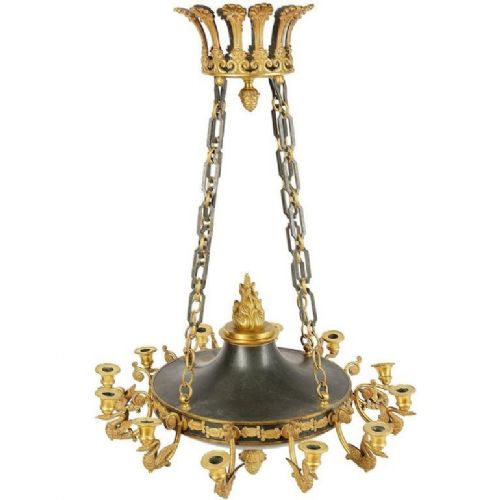
When you search for gilt bronze lustres, you find decorative light fittings and candle stands designed to catch and multiply the flicker of a flame. These objects range from single pairs of table candlesticks to large multi-branch candelabras and chandeliers.
The versions you are most likely to meet on this page date from the nineteenth century, including the Regency and William IV periods, alongside French Empire and Rococo revival styles. They combine metal bases with hanging glass crystals to create a striking visual display.
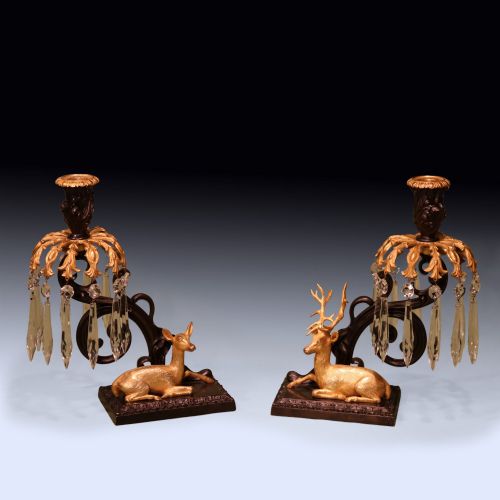
Many examples pair gilt bronze or ormolu with patinated bronze figures, such as stags, does, or griffins, while others rely entirely on cut glass and crystal components. These diverse forms reflect the rich decorative tastes of the eighteenth and nineteenth centuries.
How they were made
The construction of these pieces relies on the combination of cast metal and worked glass. Craftsmen shaped bronze into detailed figures and mounts, often finishing portions with ormolu gilding to provide a bright contrast against patinated surfaces.
Hanging pendants and drops were fashioned from cut glass or crystal, then suspended from the metal arms using wire or pins. This method allowed the glass elements to move slightly and refract light across the room whenever candles were lit.
Gilt Bronze Lustres Retail Price Guide 2026
Typical asking prices for gilt bronze lustres among the pieces listed under this phrase on Sellingantiques today, from the lower quarter to the upper quarter. They describe what is for sale here now, not the wider market.
Listings feature items from the eighteenth and nineteenth centuries, spanning Regency, William IV, French Empire, and Rococo styles.
What varies in quality
Quality in these items is defined by the crispness of the bronze casting and the depth of the gilding. Finer pieces display sharply rendered details in the figures and foliage, whereas simpler examples show softer edges from worn moulds.
The integration of the glass components also marks the difference between standard production and higher tiers. Uniform cutting on the crystal drops and secure, well-balanced arm assemblies indicate skilled workshop execution.
The Gilt Bronze Lustres Glossary
- Gilt Bronze
- Metal alloy coated with a layer of gold. It provides a bright, durable surface finish that resists tarnish.
- Ormolu
- A historically popular term for mercurial gilding on bronze. This technique creates a distinctive warm yellow metallic lustre.
- Patinated Bronze
- Metal treated with chemicals to darken the surface. This dark tone provides contrast against gilt highlights.
- Lustre
- A candlestick or candelabrum hung with cut glass pendants. These drops enhance the visual impact of the candle flame.
- Regency
- A British design period spanning the early nineteenth century. It draws heavily on classical Greco-Roman motifs.
Gilt Bronze Lustres: Frequently Asked Questions
Where should I place these lustres?
Display pairs on mantelpieces, sideboards, or console tables where they can reflect natural and artificial light. Their height makes them effective focal points in a traditional dining or living room.
Keep them away from direct heat sources and high-traffic areas to protect the hanging glass drops from accidental knocks.
Are these pieces electrified?
Most historic examples were originally designed for wax candles or oil. Some have been adapted for electricity by later owners to suit modern domestic use.
Check individual descriptions to see whether the wiring has been updated or if the piece remains in its original candle-burning configuration.
How do I identify Regency pieces?
Regency designs often feature specific classical motifs such as griffins, bold patinated bronze sections, and restrained ormolu mounts. The overall proportions tend to be architectural and balanced.
Compare the metalwork style and mounting techniques with dated examples from the early nineteenth century to confirm the period.