


Antique Corner Wall Locker
An antique corner wall locker saves floor space while bringing rich timber tone and period joinery to an awkward room angle.
Antique Corner Wall Locker
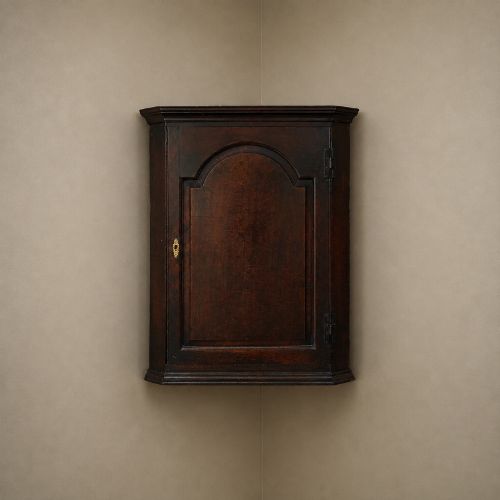
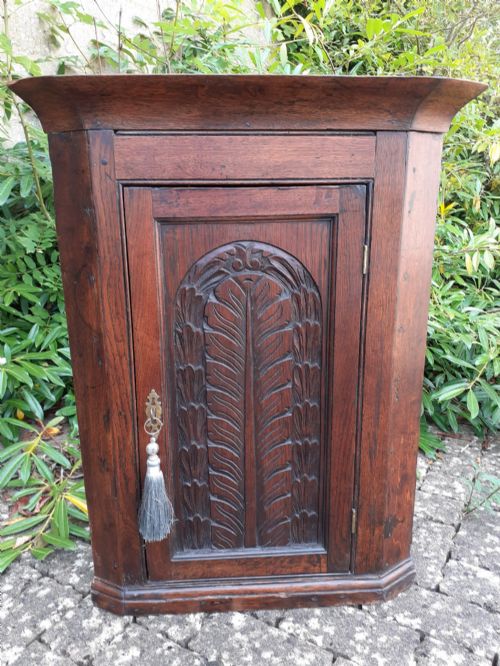
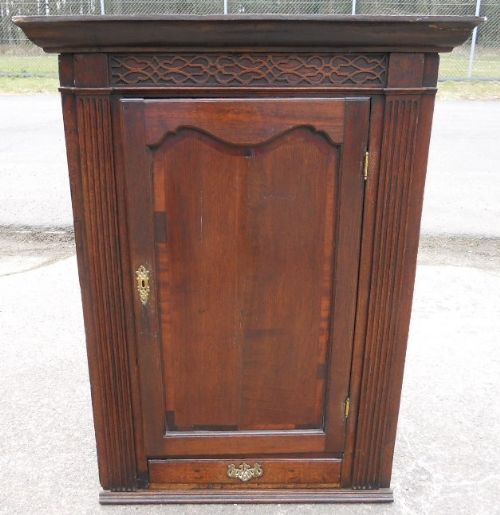
When you search for an antique corner wall locker, you are looking at wall hanging cupboards designed to fit snugly into the 90 degree junction of a room. These pieces make use of neglected spatial dead zones while keeping household goods or china safely enclosed behind timber panel doors.
The versions you are most likely to meet on this page belong to the Georgian and 18th century periods, often executed in solid oak or mahogany. Forms include simple single door wall cabinets and bow front examples constructed by regional makers in Wales and England, alongside occasional continental walnut pieces.
Makers shaped these carcases to mount directly to wall studs, offering an elevated storage option that sits clear of the floorboards. Their triangular footprints taper sharply towards the back, allowing the front facade to display fielded panels, brass H hinges and sometimes decorative cornice moulding.
How they were made
Joiners built these wall lockers predominantly using solid oak and mahogany timber, selecting planks with straight grain for stability against seasonal humidity shifts. Carcase sides were jointed to fit wall angles precisely, whilst doors utilised frame and panel construction to prevent warping across the wider facade.
Hardware played a functional and decorative role, with hinges and escutcheons cast in brass to secure doors against the timber frame. Workshops relied on traditional hand tools such as planes and chisels to shape mouldings and bevel panels without modern power machinery.
Regional English and Welsh country workshops produced the majority of these oak wall hanging lockers.
What varies in quality
The grade of timber selection and the precision of the carcase joinery set the baseline for quality across these lockers. Pieces featuring finely figured mahogany veneers or carefully chosen quarter sawn oak display greater ambition from the original cabinetmaker.
Proportion and surface finish dictate the upper tier of examples, where original brass hardware, uncompromised patination on the timber and crisp mouldings remain intact. Lesser examples show heavy alterations to hanging points or replacement timber sections that alter the original geometric balance of the facade.
The Antique Corner Wall Locker Glossary
- Bow front
- A cabinet front that curves outwards in a convex arc, softening the hard angles typical of standard corner furniture.
- Fielded panel
- A wooden panel with bevelled edges that fit into a surrounding groove, allowing the wood to expand and contract naturally.
- Hinge butterfly
- A decorative surface mounted brass hinge shaped like insect wings, commonly found on period country furniture.
- Cornice
- The decorative moulding crowning the top of the cabinet carcase, often featuring dentil or cove details.
Antique Corner Wall Locker: Frequently Asked Questions
Were these lockers used in kitchens or parlours?
Period households utilised these wall mounted cabinets wherever vertical storage was required without sacrificing floor space. They kept foodstuffs, spices, or valued ceramics clean and secure in everyday rooms.
Kitchens and dining parlours both accommodated them, serving as practical larders or display spaces depending on whether the door was solid timber or glazed.
How can I tell a Georgian piece from a Victorian revival?
Georgian pieces display the tool marks, timber shrinkage and construction methods characteristic of 18th century workshops. Their secondary woods and hand cut fixings match the period of manufacture rather than later interpretations.
Victorian Chippendale revival examples often exhibit machine sawn elements, cleaner uniformity in the timber, and hardware styled to mimic earlier centuries without the genuine wear patterns.
How do I clean and feed dry antique oak?
Apply natural beeswax sparingly with a soft cloth to nourish dry oak and maintain a soft protective sheen. Avoid modern silicone sprays that build up a sticky residue and attract dust over time.
Gentle buffing brings out the natural grain without stripping the historical patination built up over centuries of handling.