


Antique Corner Seating Pair
These antique corner seating pair options are clever designs that fit awkward spaces, offering sturdy timber frames and comfortable seats.
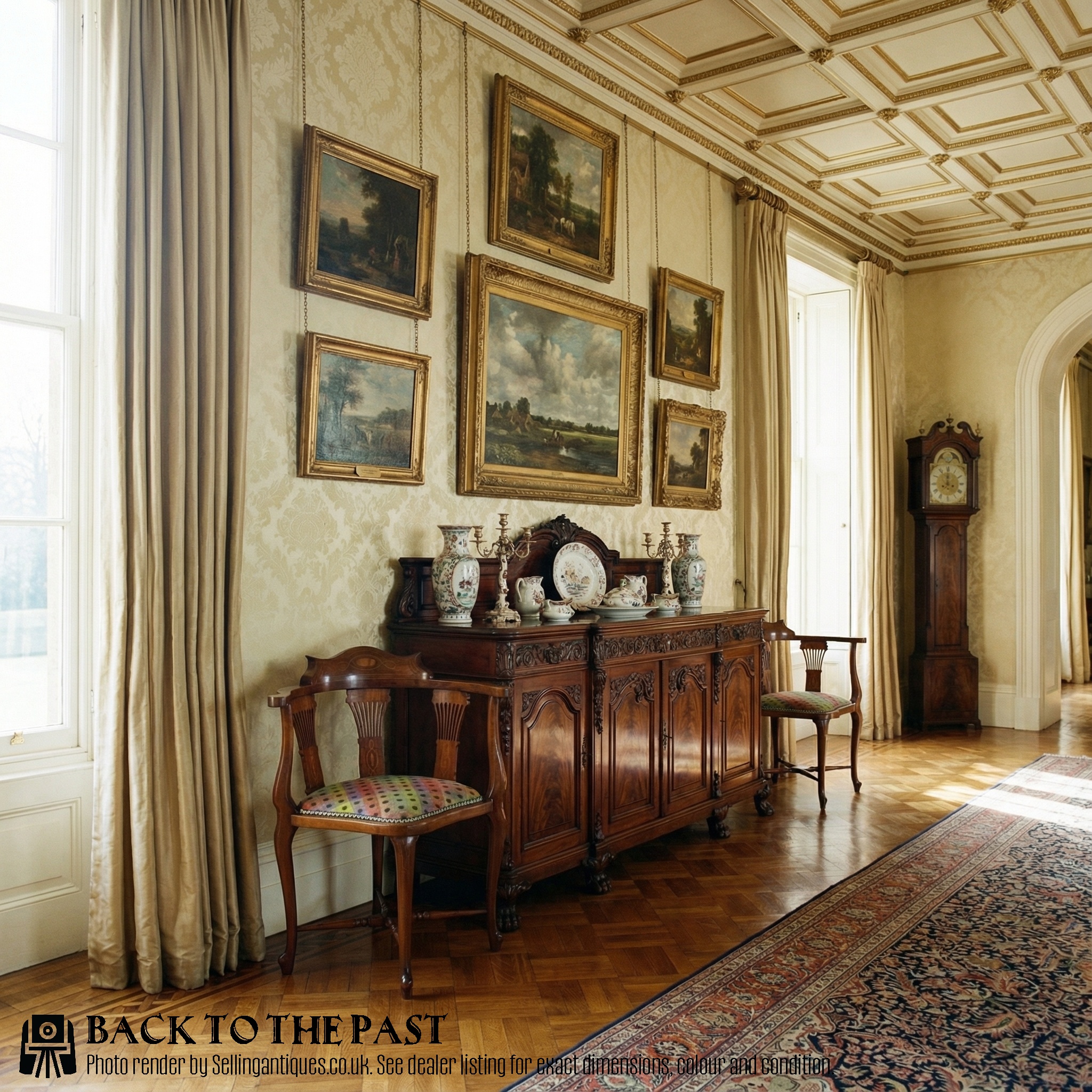
Antique Corner Seating Pair
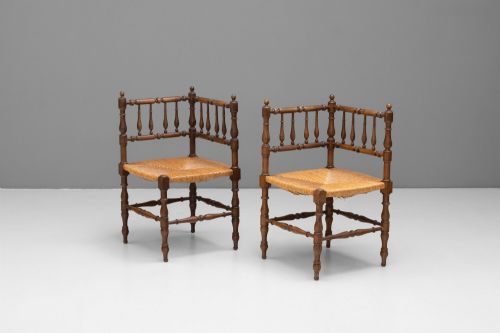
An antique corner seating pair consists of two matching chairs designed specifically to fit into room corners, taking up minimal floor space while providing functional seating. Buyers searching for an antique corner seating pair often find clever architectural timber frames intended for libraries, drawing rooms, and hallways.
The pieces on this page span the Victorian and Edwardian periods, stretching from the 1870s up to the 1920s. Common forms include corner chairs with curved backs, library armchairs, and side chairs fashioned from various woods.
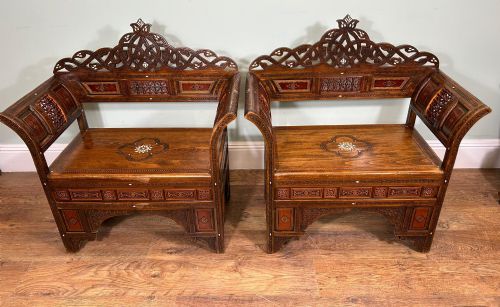
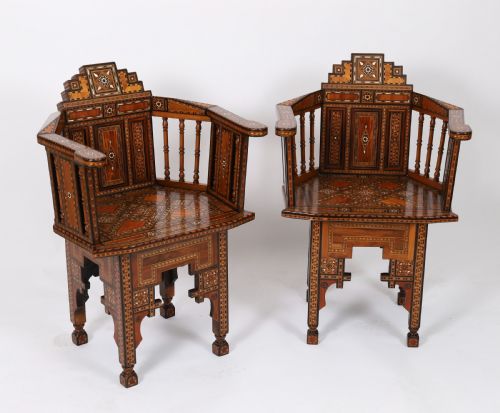
Origins and styles vary considerably across the selection, featuring English vernacular designs alongside more exotic Moorish and Levantine influences. Regional variations show everything from rustic country items to Gothic Revival forms.
How they were made
Wood forms the structural core of these chairs, utilising timbers such as oak, mahogany, and walnut shaped through turning and carving. Makers employed traditional joinery to construct stable corner frames and supporting legs.
Decorative surface techniques enrich the wooden frames, including parquetry inlay, mother-of-pearl, and bone detailing on Levantine and Moorish examples. Bobbin turning and complex carving further distinguish the aesthetic execution of the woodwork.
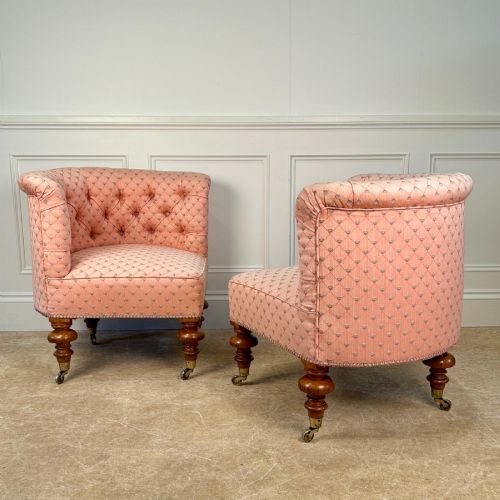
Upholstery fabric provides the seating comfort on relevant models, complementing the exposed wooden frameworks. Artisans combined padded elements with solid wood structures to balance support with decorative appeal.
Some chairs incorporate bone and mother-of-pearl for extra visual flair.
What varies in quality
The sophistication of the timber work and decorative embellishment marks the distinction between standard examples and top tier pieces. Intricate parquetry, delicate mother-of-pearl and bone inlays, and deep hand-carving indicate higher levels of craftsmanship.
Stylistic ambition also divides the selection, ranging from simple rustic country forms to elaborate Gothic Revival and Art Nouveau designs. Superior items often display distinctive regional styling or specialised turned elements like bobbin details.
The Antique Corner Seating Pair Glossary
- Corner Chair
- A chair designed with a diagonal orientation to fit neatly into the corner of a room, typically featuring a semicircular backrest supported by turned columns.
- Parquetry
- Geometric mosaic woodwork used for decorative surface patterns, often seen in inlaid table tops and chair frames.
- Gothic Revival
- A nineteenth-century architectural and decorative style drawing inspiration from medieval forms, pointed arches, and heavy carved woodwork.
- Bobbin Turning
- A woodturning technique that produces a series of rounded spheres resembling bobbins along the length of a furniture leg or stretcher.
- Levantine
- Pertaining to the Levant region of the Eastern Mediterranean, identifying decorative arts characterised by intricate inlaid geometric patterns.
Antique Corner Seating Pair: Frequently Asked Questions
Where should I place a corner chair?
These chairs fit well in unused room corners, hallways, or libraries where standard rectangular furniture might block pathways. Their angled design makes effective use of awkward architectural spaces.
The low footprint allows them to serve as functional seating or decorative accents without dominating the central floor area of a room.
How do I date an antique chair?
Dating relies on identifying period styles, construction methods, and material choices recorded in the piece. Victorian and Edwardian examples often display distinct decorative motifs characteristic of their manufacturing decades.
Comparing the turned elements, joinery style, and inlay techniques helps narrow down whether a chair originates from the nineteenth or early twentieth century.
What is a Glastonbury chair?
A Glastonbury chair is a traditional form of wooden armchair associated with Gothic Revival design. These pieces often feature solid sloping arms and characteristic inscribed panels.
Such chairs reflect historical English vernacular traditions adapted for decorative nineteenth-century domestic interiors.
Are these chairs comfortable for daily use?
Many models feature upholstered fabric seats or supportive wooden backrests designed for sitting. Upholstered versions provide softer padding suitable for reading spaces and studies.
Durability depends on the sturdy oak or mahogany frames that support the seating structure over decades of use.