


Wood Corner Chair
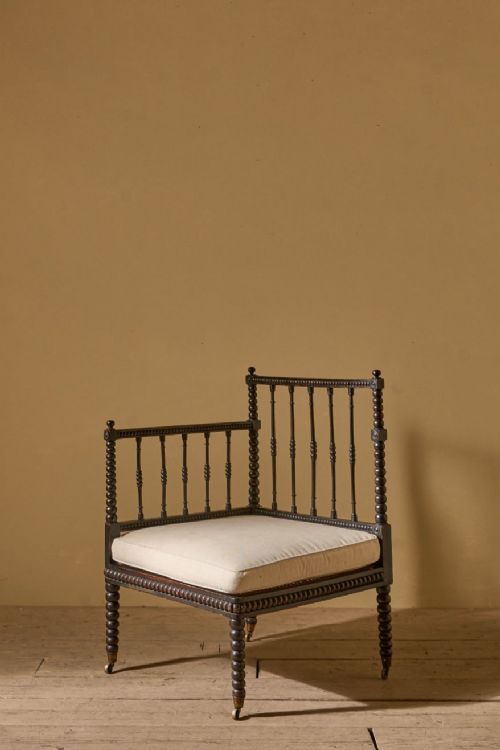
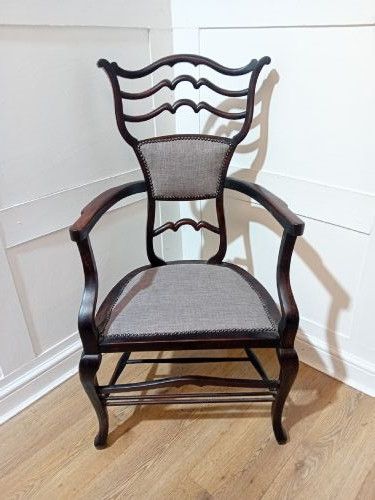
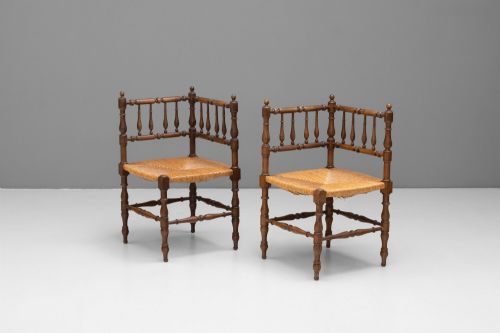
These wood corner chair examples offer clever geometry for awkward angles, combining sturdy corner posts with enveloping curved backs.
Wood Corner Chair
A wood corner chair is designed to fit precisely into room junctions, turning unused angles into practical seating. These chairs feature a diagonal leg layout with a central backrest positioned directly across the corner.
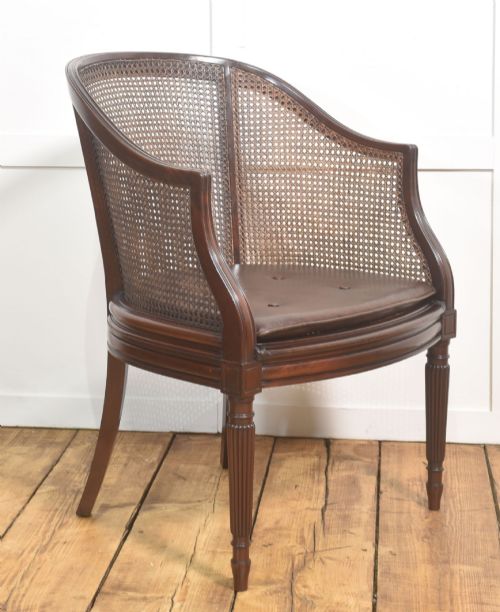
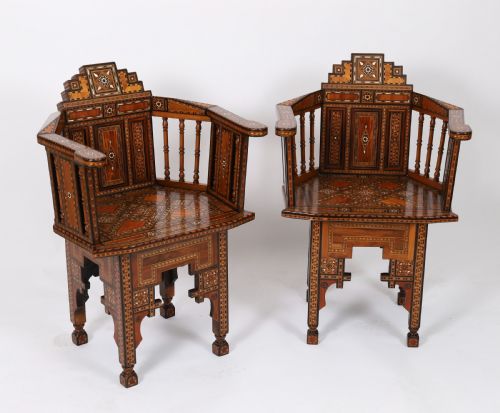
The selections span significant historical periods, running from eighteenth-century Georgian country pieces in elm and oak to Edwardian mahogany variations. Alongside traditional British designs, variants incorporate Chinese hardwood, Syrian marquetry, and French beechwood.
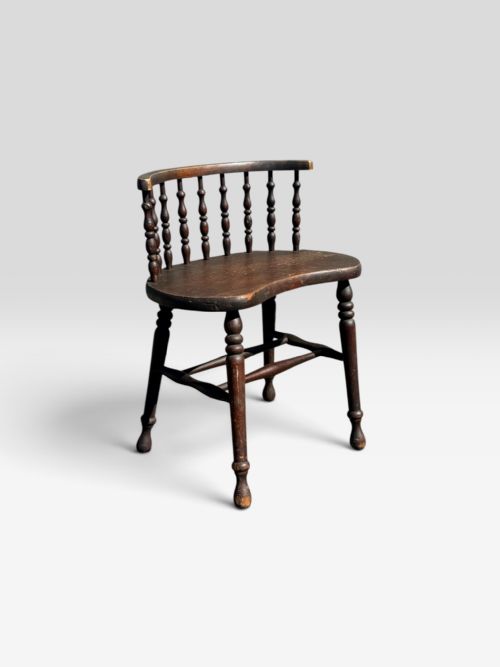
Most entries focus on standard corner configurations, though related seating forms such as tub chairs, armchairs, and occasional stools appear frequently. These variations maintain the fundamental purpose of utilising peripheral space efficiently.
Materials and construction
Makers utilised a range of timbers including mahogany, oak, elm, fruitwood, and walnut, often employing satinwood or boxwood for decorative inlays. Structural elements rely on solid wood construction, sometimes enhanced with ebonised finishes or simulated rosewood effects.
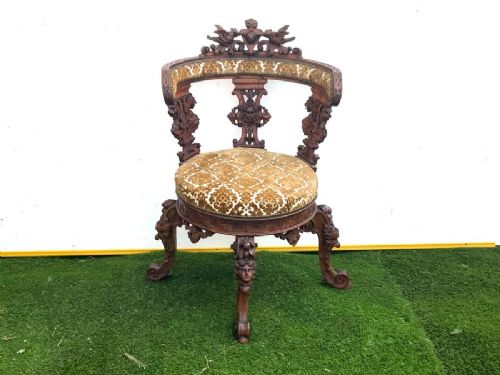
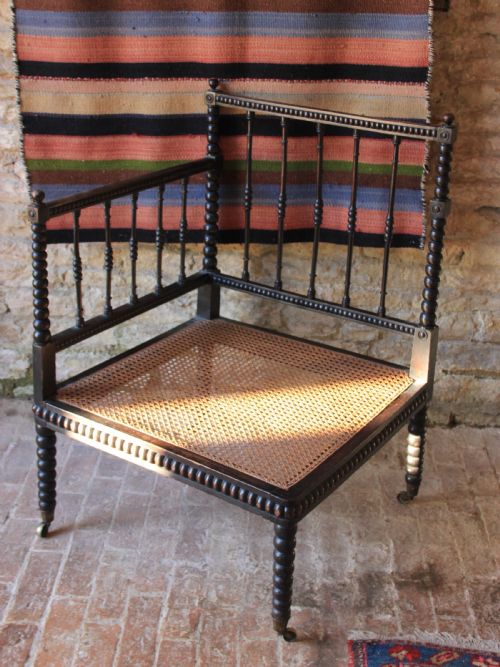
Joinery techniques span traditional turning, bobbin work, and spindle backs, alongside carved details and intricate parquetry or marquetry panels. Surface decoration frequently incorporates mother of pearl, bone, and intricate wood veneers.
Among the unexpected seating options are miniature child dolls chairs and diminutive seventeenth-century turners seats made for very small spaces.
Assessing quality and execution
The distinction between standard and exceptional pieces lies in the crispness of carved details and the precision of inlaid marquetry. Finer examples display meticulous attention to timber selection, ensuring grain patterns complement the angled geometry of the frame.
Structural integrity dictates much of the value, with superior pieces maintaining tight joints and original turning without excessive replacement timber. The sophistication of secondary materials, such as bone inlay or specialised wood veneers, further elevates the stature of specific works.
Liberty and Co
The Wood Corner Chair Glossary
- Corner armchair
- A seat specifically constructed with a diagonal plan to occupy room angles, featuring a continuous curved armrest supported by multiple spindles or corner posts.
- Marquetry
- Decorative veneer work arranged in geometric or pictorial patterns across the wooden surfaces of the chair back or seat rail.
- Bobbin turning
- A form of lathe work creating a series of rounded, spool-like shapes along the legs and stretchers of the frame.
- Squab seat
- A loose upholstered cushion designed to fit directly onto the wooden base of the chair.
- Mashrabiya panels
- Intricate wooden lattice work utilised for decorative inserts within the framework of certain imported or influenced designs.
Wood Corner Chair: Frequently Asked Questions
Why were wood corner chairs originally made?
These seats were designed to fit snugly into the corners of rooms, maximising floor space in domestic interiors where wall space was at a premium. Their diagonal orientation allowed people to sit comfortably in an angle without obstructing doorways or pathways.
Over successive centuries, the form evolved from utilitarian country seating into refined parlour and salon furniture, reflecting changing domestic habits and interior layouts.
How do you date an antique wood corner chair?
Dating relies on examining the timber species, joinery methods, and decorative styles characteristic of specific periods like the Georgian or Edwardian eras. Earlier eighteenth-century examples often feature dense fruitwoods or elm with simpler turned supports, while later pieces frequently incorporate mahogany and intricate marquetry.
Tool marks, wear patterns, and the construction of the seat frame also provide vital clues regarding the exact period of manufacture.
Where should you place a corner chair at home?
True to their original purpose, these chairs excel in unused room angles, stair landings, or hallways where standard furniture fails to fit properly. They provide an unexpected seating option without protruding into the main flow of traffic.
They also work effectively as accent pieces beside a desk or paired with a small side table to create a quiet reading nook.