


Antique Corner Case
An antique corner case turns awkward intersections into focal points, offering architectural storage designed to fit snug against household angles.
Antique Corner Case
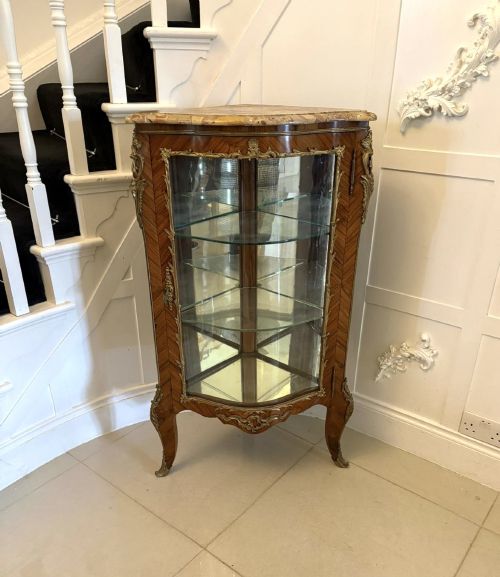
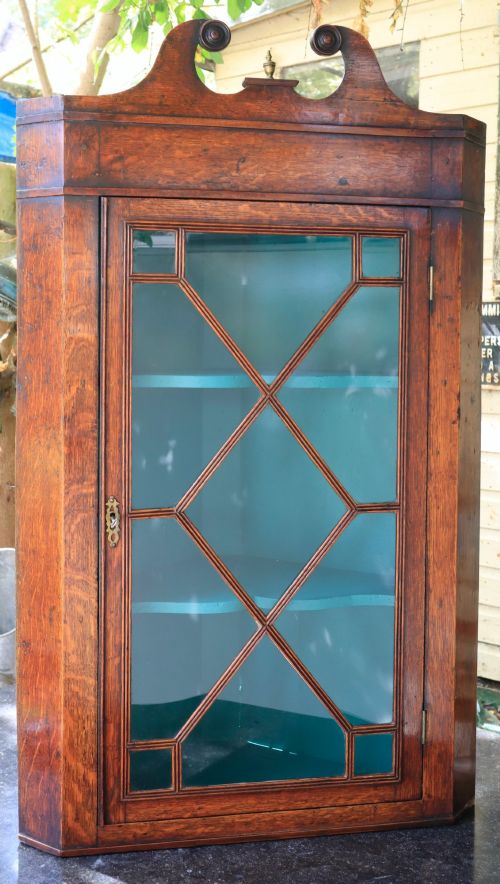
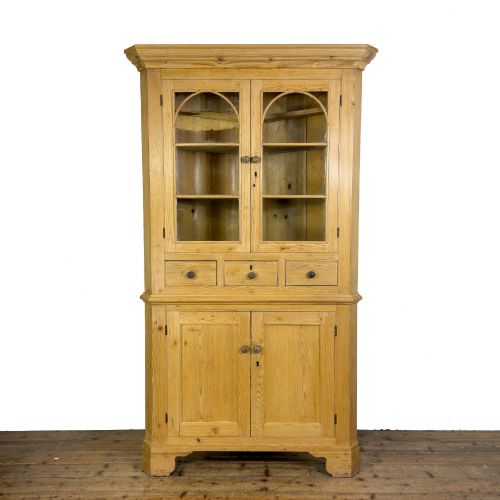
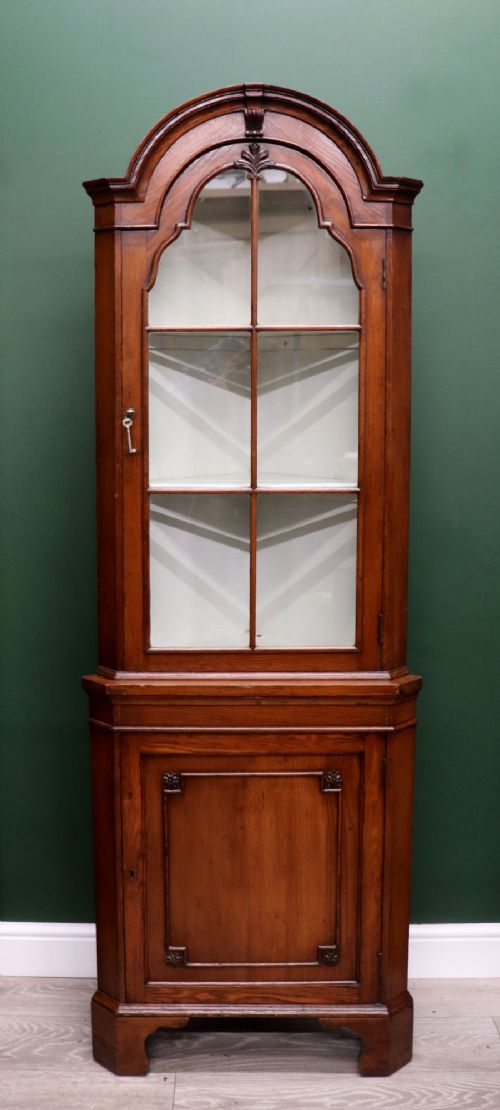
An antique corner case encompasses wall-hanging corner cupboards, floor-standing display cabinets, and tall two-part storage pieces designed specifically for room junctions. The pieces you encounter most often span the Georgian, Victorian, and Edwardian eras, utilising the architectural footprint of a corner to maximise interior space.
Early examples tend to favour solid timber construction with single panelled doors, whilst later nineteenth and early twentieth-century iterations frequently incorporate glazed panels and bow fronts for showcasing contents. You will find both wall-mounted units intended to sit above furniture and grander standing double-height variations resting directly on the floor.
Materials and construction
Cabinet makers relied predominantly on timbers such as mahogany, oak, and walnut, often applying decorative veneers like satinwood inlay or brass mounts to enhance the visual appeal of the facade. Glass was cut for multi-pane glazed doors or curved bow fronts, requiring precise joinery to ensure the heavy frames held true within ninety-degree angles.
Evaluating distinction
The distinction between standard utility storage and high-end cabinet work lies in the choice of timber figurations, the intricacy of marquetry inlay, and the crispness of the mouldings. Superior examples display carefully matched grain patterns across the door panels and flawless curved glass fitted neatly into rebated wooden frames.
Structural integrity also separates the grades, visible in how tightly the corner mitres meet and the weight of the brass hardware employed. Pieces featuring original glazing bars and undisturbed interior paint or polish hold greater coherence than those altered by later restorations.
Edwards And Roberts·John Stow Ltd of Bradford·SAGE & CO
The Antique Corner Case Glossary
- Bow front
- A convex, outwardly curved cabinet face that requires specialised glass bending or segmental woodwork. This technique adds depth and softness to the rigid angles of a room.
- Marquetry
- The art of applying decorative pieces of veneer to a structure to form intricate patterns or pictures. Craftsmen utilise contrasting woods like satinwood and mahogany for this detailing.
- Escutcheon
- A flat plate of brass or other metal placed around a keyhole to protect the surrounding wood. It often serves a decorative purpose alongside its functional role.
- Glazing bar
- The narrow wooden strip that holds individual panes of glass within a sash door. Original bars are slender and delicate compared to later replacements.
- Serpentine
- A wave-like curved shape featuring a convex centre flanked by concave sides. This profile demands advanced woodworking skill to execute cleanly on cabinet fronts.
Antique Corner Case: Frequently Asked Questions
How do I choose between a wall hanging and a standing corner case?
Wall hanging models work best above existing furniture like sideboards or desks, keeping floor space clear while utilising upper room angles. Standing cabinets offer greater storage capacity and often feature two-part construction for easier transport.
Consider the weight of the piece and the wall structure if you opt for a hanging model, whereas standing versions require level flooring to ensure the doors align correctly.
What rooms suit an antique corner case?
These pieces find natural homes in dining rooms for displaying china, studies for books, or living spaces requiring vertical interest in dead corners. Their geometry softens stark junctions without protruding too far into walking paths.
Matching the timber tone to existing furniture helps integrate the cabinet smoothly into both period and contemporary interiors.
How do I tell an 18th-century corner cupboard from a later revival piece?
Examine the construction methods visible on the interior and the backboards, where hand-cut timber and older fastening techniques indicate earlier Georgian origin. Revival pieces made during the Edwardian period often feature cleaner machine-cut uniformity and lighter secondary woods.
Hardware styles and the thickness of the glass also provide strong clues to the true manufacturing date.
Can these cabinets safely hold heavy modern items?
Most antique corner units were built to support ceramics, glassware, and books, though shelf thickness dictates individual capacity. Checking the bracket supports inside will reveal whether the internal ledges are fixed or adjustable.
Wall hanging versions require secure fixing directly into masonry or studs to bear the weight safely over time.