




Antique Copper Charger
An antique copper charger provides a striking focal point for a wall or table, combining domestic utility with intricate decorative artistry from the nineteenth century.
Antique Copper Charger
When you search for an antique copper charger, you encounter large decorative plates, platters, and wall trays primarily originating from the Victorian era and the broader nineteenth century. These vessels served both practical functions and display purposes, ranging from plain hammered kitchenware to highly ornate works of art.
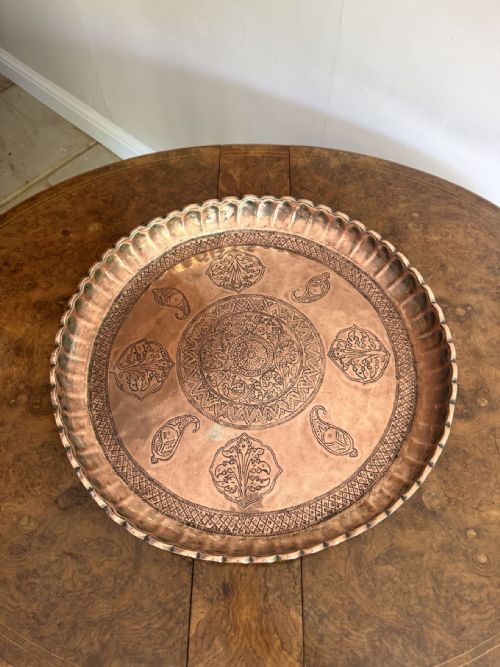
The pieces on this page divide into distinct regional styles, with Japanese Meiji period cloisonne enamels and Middle Eastern Cairo Ware appearing alongside British Arts and Crafts designs. You are just as likely to find a Persian engraved tray or an Indian Raj period repousse platter as a piece from the Newlyn School.
Most examples function as wall chargers or decorative dishes, often measuring substantial diameters and featuring figural, botanical, or geometric motifs. The form stretches across various cultures, capturing the global tastes of the nineteenth century in metalwork.
How they were made
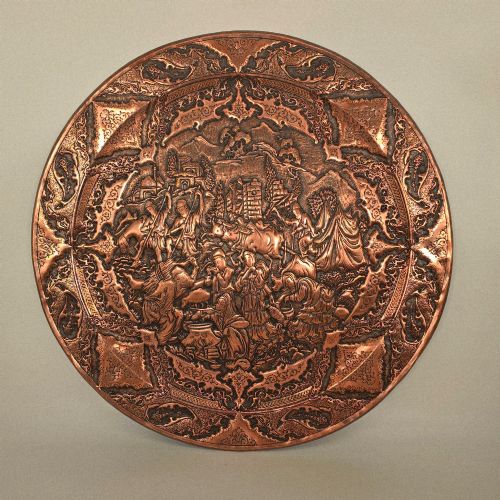
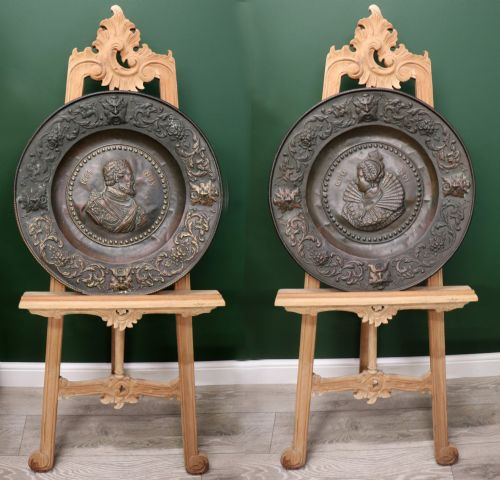
Makers shaped the primary body through hammering and beating copper, brass, or bronze sheets to form the heavy plates and trays. Artisans then applied surface decoration using repousse techniques, pushing the metal from the reverse to create raised motifs of foliage, animals, or portraits.
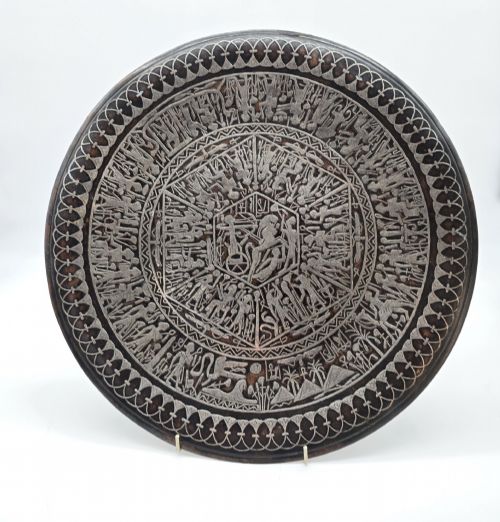
Many Eastern and Middle Eastern pieces incorporate metal inlay, using silver, brass wire, and bronze to trace intricate patterns across the patinated copper surface. Japanese cloisonne examples rely on delicate wire cells soldered to the metal base before workers fill them with coloured enamels and fire the piece.
What varies in quality
Quality in these metal vessels rests on the depth and precision of the handwork, distinguishing a mass-produced item from an artist-signed masterpiece. Finer pieces display crisp, deep repousse work and complex mixed-metal inlay rather than shallow, stamped impressions.
The complexity and condition of the decorative surface dictate the standing of a charger, particularly where fragile cloisonne enamels or delicate silver wire inlays remain intact. Superior examples show harmonious composition, whether in the naturalistic rendering of birds and dragons or the formal geometry of Arts and Crafts pomegranates.
Hugh Wallis·Faulkner Bronze Company
The Antique Copper Charger Glossary
- Repousse
- A metalworking technique where the artisan hammers the design from the reverse side to create a raised relief on the front. This method gives depth to figures, foliage, and crests on heavy plates.
- Cloisonne
- An enamelling process utilising thin metal wires soldered to a base to form compartments, which are then filled with powdered glass paste and fired. Japanese examples frequently employ this technique for vivid pictorial scenes.
- Cairo Ware
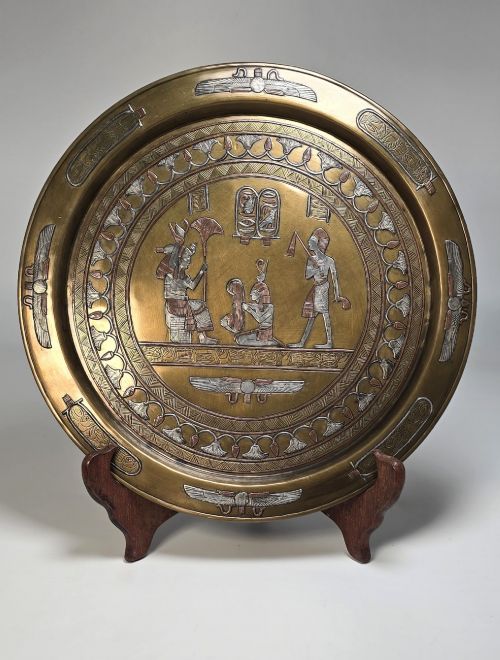
- Nineteenth-century metalwork produced in Egypt, typically featuring heavy copper or bronze bodies inlaid with contrasting silver and brass wire in Islamic geometric patterns. These items were popular among European travellers on the Grand Tour.
- Patinated Copper
- Copper that has developed a chemical surface coating through age or intentional treatment, altering its raw metallic tone into deeper brown, green, or dark hues.
Antique Copper Charger: Frequently Asked Questions
How were antique copper chargers displayed?
Many of these large plates and platters feature integrated hanging loops or holes on the reverse specifically for wall mounting. Victorian households frequently hung them on walls or placed them on sideboards to catch the light.
Smaller trays served functional roles for calling cards, drinks, or dining, though the larger chargers were primarily ornamental showpieces for principal rooms.
How do I identify Japanese Meiji period chargers?
Japanese chargers from the Meiji period frequently employ cloisonne enamel or Komai style mixed-metal work depicting dragons, Ho-o birds, irises, or Mount Fuji. Many of the finest examples bear artist signatures on the reverse or within the enamel design.
The precision of the wirework and the depth of the coloured enamels distinguish these Japanese imports from contemporary European metalware.
What distinguishes Arts and Crafts copperware?
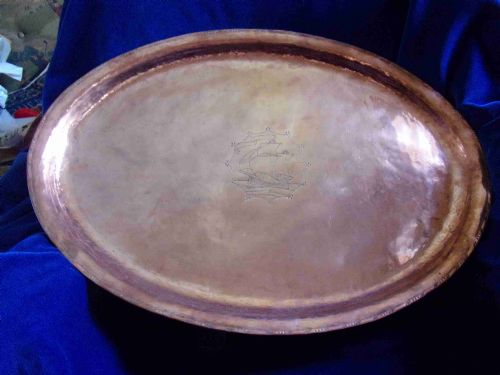
Arts and Crafts copper chargers emphasise visible hand-hammered textures, simple forms, and stylised motifs such as pomegranates and foliage. Makers associated with this movement rejected industrial uniformity in favour of handcrafted individuality.
Pieces often carry attribution to specific workshops or artisans who valued honest construction and traditional metalworking techniques over machine precision.