




Antique Continental Armoire
An antique continental armoire brings grand proportions and generous storage to a room, standing out through rich timber grain and regional craftsmanship.
Antique Continental Armoire
An antique continental armoire is a substantial storage piece taking the form of a large wardrobe, cupboard, or cabinet originating from European workshops. Buyers exploring this selection encounter diverse regional forms spanning centuries of domestic furniture design.
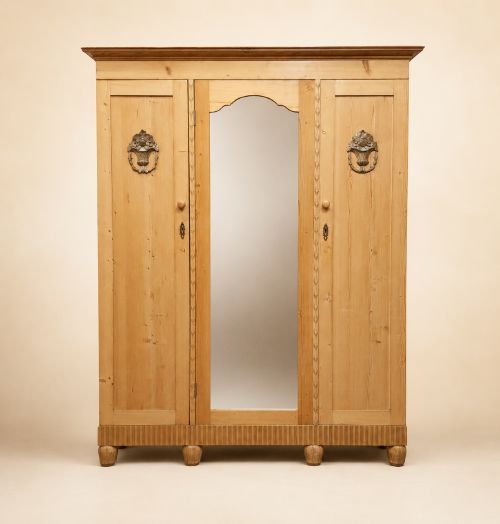
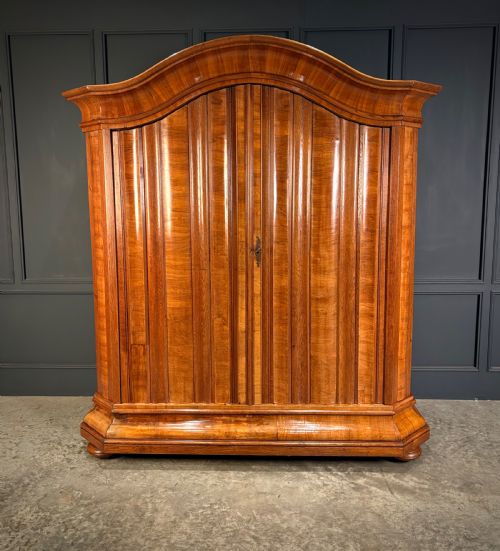
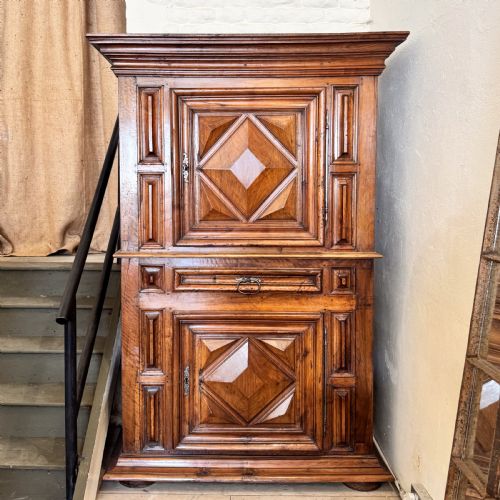
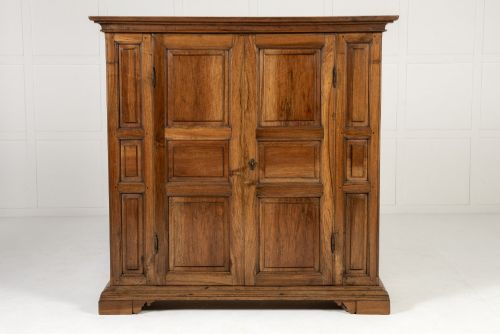
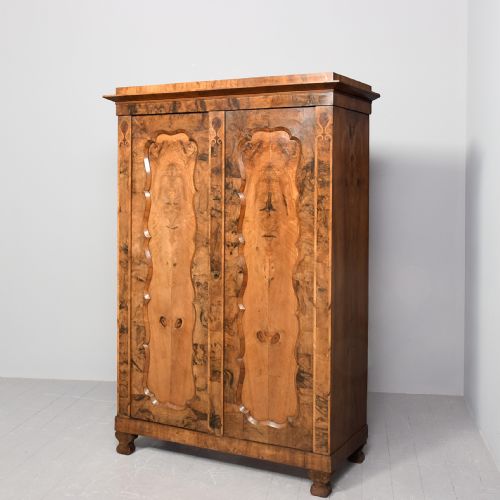
The assortment on this page ranges from tall 18th-century oak and walnut pieces to 19th-century painted pine hall wardrobes and Biedermeier mahogany cabinets. Pieces arrive from various European regions including Italy, Hungary, Germany, and the Netherlands.
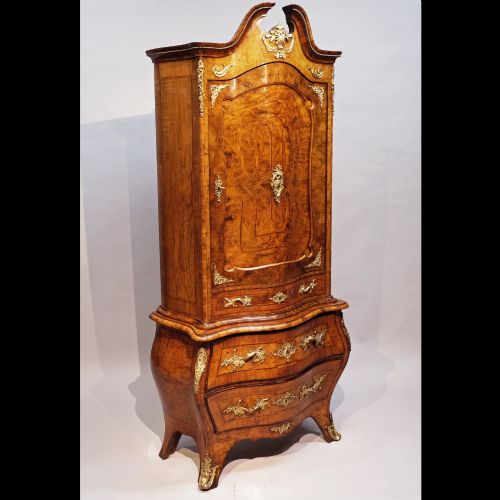
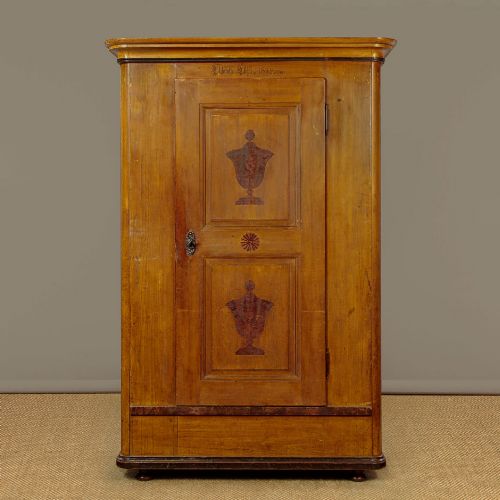
Forms vary from grand triple wardrobes and cabinets on chests to single-door storage cupboards and marriage chests. Walnut and pine appear frequently alongside oak, rosewood, and satinwood within this regional furniture tradition.
How They Were Made
Joiners and cabinet makers constructed these large pieces using sturdy timbers such as oak, walnut, and pine, often applying figured veneers or rich wax finishes to highlight the natural grain. Structural framework relies on traditional joinery methods suited to massive proportions.
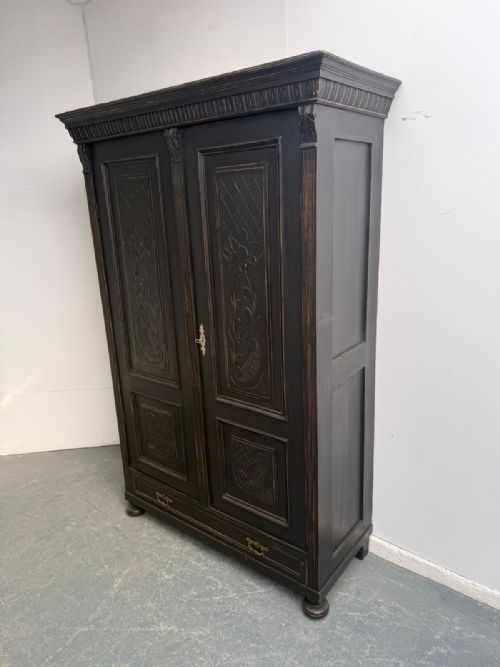
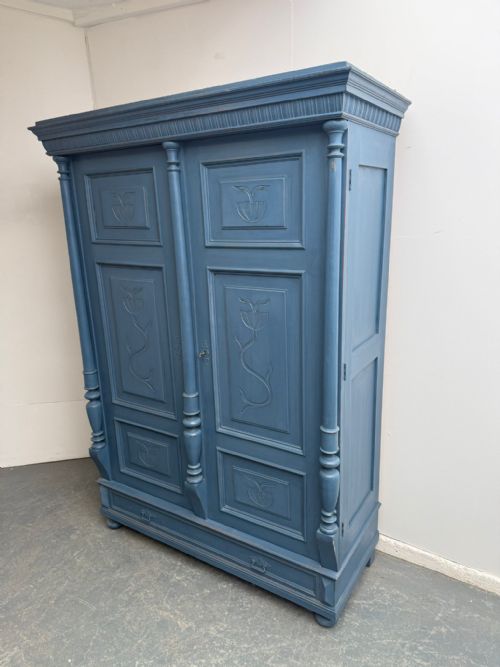
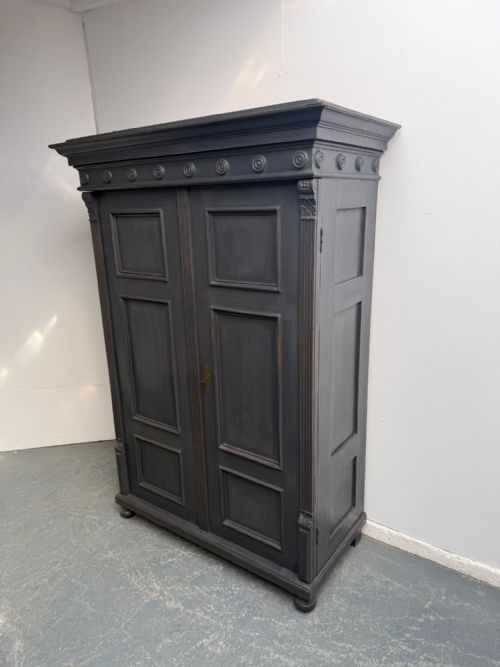
Painted finishes appear across many regional pieces, utilising blue, black, grey, or decorative polychrome schemes directly on pine and oak surfaces. Metal elements including brass and iron provide functional hinges, locks, and handles.
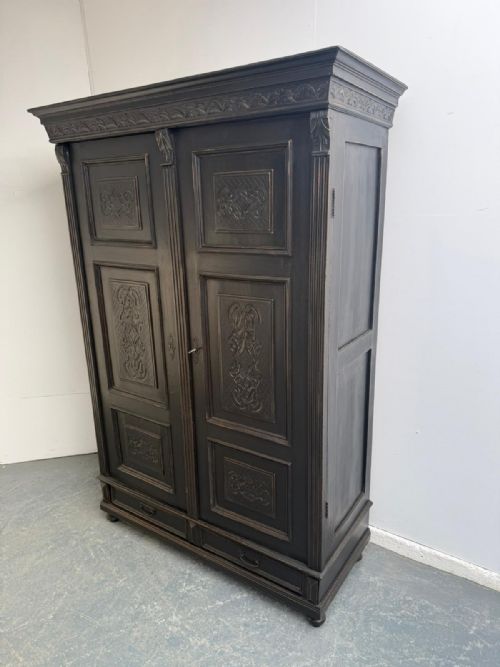
Surface decoration incorporates carved details, paneling, and specialised wood veneers such as mahogany, satinwood, and ebony. Glazed sections appear on display variations, while iron and brass hardware secures the heavy doors.
Several regional pieces arrive with painted dates and marriage motifs, preserving centuries-old domestic celebrations.
What Varies in Quality
The standard of an antique continental armoire depends heavily on the choice of primary timber and the execution of veneer work, where highly figured walnut or rosewood elevates a piece above standard utility items. The sophistication of surface carving and the presence of original painted decoration also distinguish finer examples.
Proportional harmony and regional stylistic purity separate master workshops from simpler provincial output. Pieces retaining their original hardware, fitted interior shelving, and authentic surface patination command stronger interest from collectors.
The Antique Continental Armoire Glossary
- Armoire
- A tall cupboard or wardrobe used for storing clothing. These pieces typically feature double doors and generous interior depth.
- Biedermeier
- A central European style spanning the mid 19th century emphasising clean lines, utilitarian comfort, and minimal ornamentation. This aesthetic lets the natural warmth of mahogany and walnut veneers take prominence.
- Marriage cupboard
- A painted or decorated storage piece traditionally commissioned or gifted for a wedding. These regional European examples frequently display dates, names, or symbolic motifs.
- Grunderzeit
- A late 19th-century central European architectural and decorative period drawing inspiration from historical styles. Furniture from this era often utilises walnut veneers and substantial proportions.
Antique Continental Armoire: Frequently Asked Questions
How do I date an antique armoire?
Dating relies on examining the construction methods, timber types, and stylistic indicators such as baroque carving or Biedermeier veneer work. Regional characteristics also provide clues to the period of origin.
Hardware styles, tool marks, and overall joinery help establish whether a piece belongs to the 18th, 19th, or later centuries.
Are these armoires easy to dismantle?
Many large European armoires were designed with knockdown construction using pegged joints or wedge systems to allow transport through doorways. The ease of dismantling depends on the specific regional workshop method used.
Buyers should verify whether a particular piece separates into modular sections for moving.
Where should I place an armoire?
An armoire functions well in a bedroom, hallway, or large living space where its substantial height and depth can be accommodated. They provide significant vertical storage for clothing, linens, or general household items.
Placing them away from direct heat sources helps protect older timbers and painted finishes.