
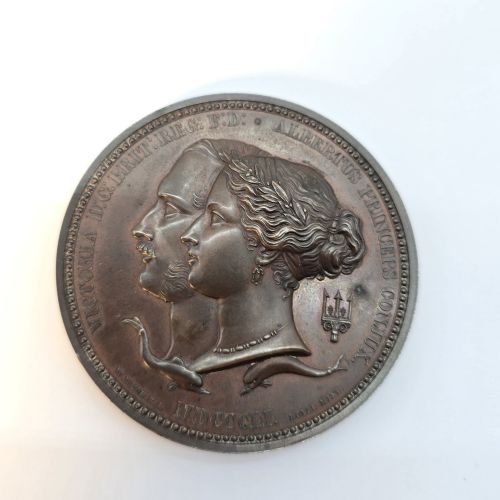


Antique Commemorative Medallion
An antique commemorative medallion marks a notable person or grand international exhibition in metal or bronze.
Antique Commemorative Medallion
When you search for an antique commemorative medallion, you are looking at portable metal records of historical exhibitions, jubilees, and notable figures. These objects capture the likenesses of writers such as William Shakespeare and Charles Dickens alongside industrial achievements from the nineteenth century.
The pieces on this page appear as medals, wall plaques, and framed portraits. They span periods from the early nineteenth century through the Victorian era and into the early twentieth century, reflecting both British and French craftsmanship.
You are most likely to meet exhibition medals issued for major events like the London International Exhibition alongside portrait plaques cast in bronze. These items serve as tangible links to past exhibitions and public commemorations.
How they were made
The construction relies heavily on cast bronze and patinated bronze, often shaped into detailed relief portraits and exhibition plaques. Metal workers utilised brass, copper, and vermeil to give these commemorative pieces their distinct metallic surfaces.
Many of these medals and plaques are housed in fitted cases lined with velvet and satin, or mounted within wood and brass frames. The combination of cast metal and fitted presentation cases shows the formal nature of their original commission.
Periods represented span from the early nineteenth century through the Victorian era to the 1920s.
What varies in quality
The quality of presentation also varies between simple unmounted bronze pieces and elaborate setups featuring custom wooden frames or fitted velvet cases. The inclusion of named inscriptions to specific jurors or makers elevates the historical record of an individual piece.
Smith, Beck & Beck·Waterlow & Sons·De Grave Short & Fanner·Frederic Boucheron
The Antique Commemorative Medallion Glossary
- Bronze
- A copper alloy traditionally used for durable medals and sculptural plaques. It provides the dark patinated surface seen on many nineteenth-century pieces.
- Vermeil
- Sterling silver gilt with a thin layer of gold. This material appears on French remembrance pieces and commemorative coins.
- Exhibition medal
- A prize awarded to participants, makers, or jurors at major industrial fairs such as the London International Exhibition. These items often bear specific recipient names.
- Wall plaque
- A decorative metal panel designed for display on a wall rather than storage in a cabinet. They are frequently housed in brass frames.
- Relief
- A sculptural technique where figures and lettering project from a flat background. This method defines the portraits on commemorative medallions.
Antique Commemorative Medallion: Frequently Asked Questions
What is an antique commemorative medallion?
An antique commemorative medallion is a metal medal or plaque cast to mark a specific exhibition, royal jubilee, or historical personage. They function as portable records of nineteenth-century events and cultural figures.
These pieces were often awarded to exhibition jurors or presented in fitted presentation boxes by makers and printers.
How were exhibition medals used?
Exhibition medals were awarded to manufacturers, chronometer makers, and exhibition jurors as official recognition during major industrial fairs. They served as proof of technical excellence and participation in international trade displays.
Recipients often kept them in fitted velvet or satin lined cases or mounted them for display.
How should I display a wall plaque?
Wall plaques cast in bronze and set within brass or wood frames are designed for direct hanging on domestic walls. They bring a sculptural, historical element to an interior space.
Ensure they are hung securely away from direct moisture to protect the metal patination.
How do I identify Victorian medals?
Victorian medals and plaques often feature portraits of monarchs like Queen Victoria, literary figures like Charles Dickens, or dates tied to nineteenth-century exhibitions. The style follows Victorian and French Historicism aesthetics of the period.
Examining the material, such as patinated bronze or vermeil, helps confirm the nineteenth-century origin.