
Antique Coat Peg Rail
An antique coat peg rail is a functional wall-mounted fixture designed for hanging garments, offering practical utility alongside period character for hallways and boot rooms.
Antique Coat Peg Rail
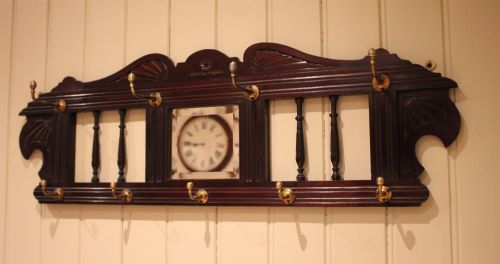
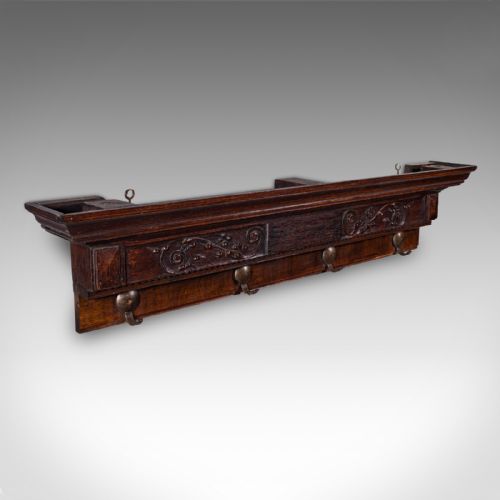
When you search for an antique coat peg rail, you are looking at practical wall-mounted boards fitted with hooks for hanging garments and hats. These fixtures span multiple periods, with Victorian and Edwardian examples appearing most frequently on this page alongside earlier pieces.
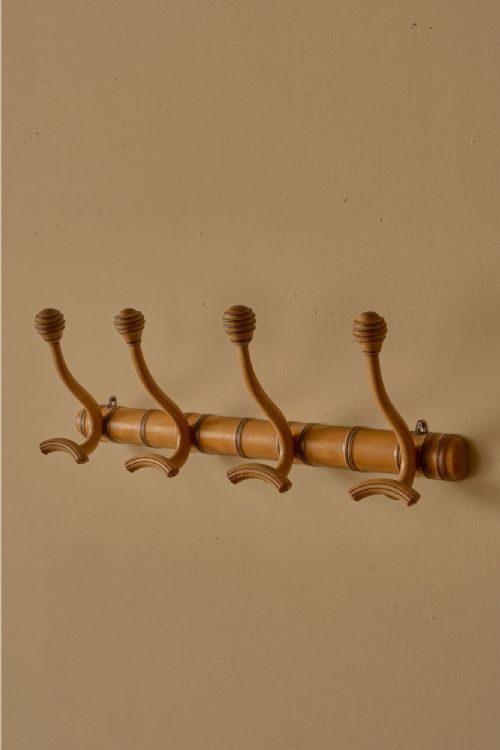
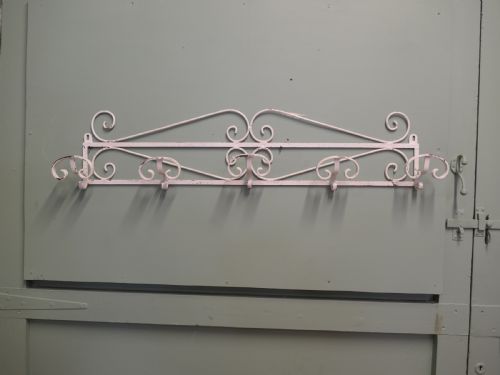
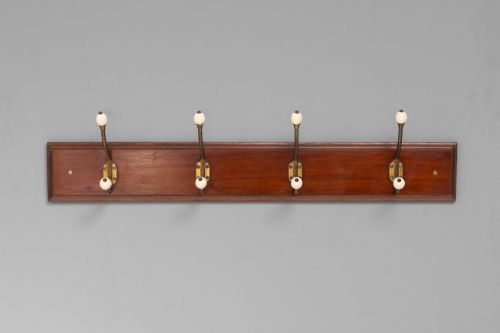
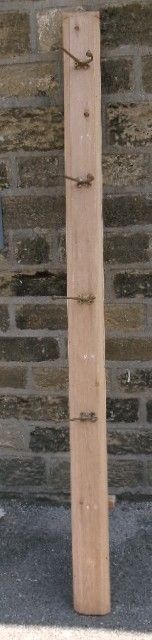
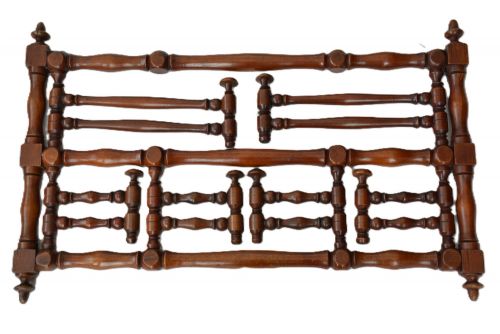
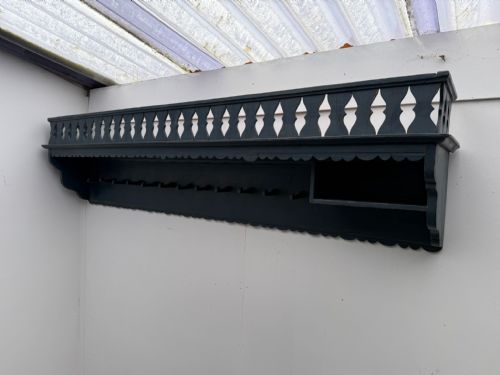
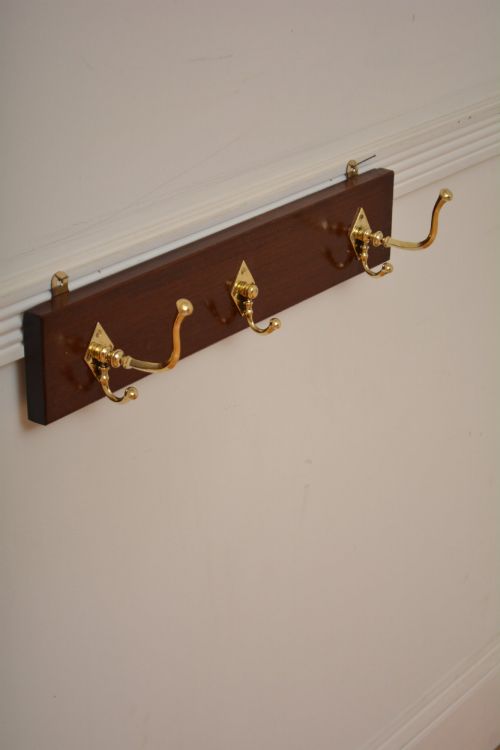
The format typically consists of a timber backboard carrying metal, ceramic, or wooden hooks. Pieces range from simple domestic hallways rails to more substantial cloakroom variants and decorative wall panels.
Origins vary across domestic English workshops and continental traditions, encompassing styles from Georgian simplicity to Aesthetic Movement and Art Deco designs. Each piece reflects the functional storage needs of its respective era.
How they were made
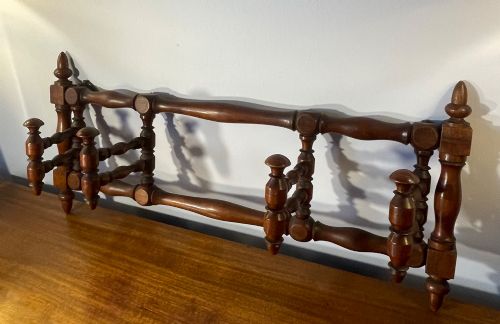
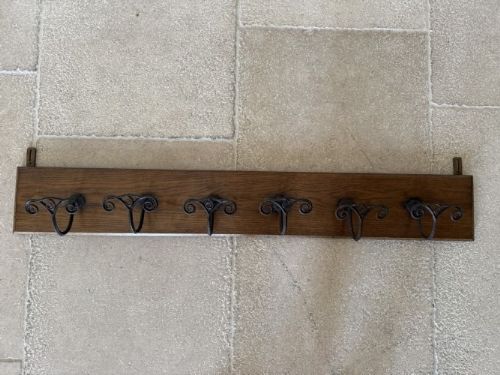
Construction relies primarily on traditional timber backboards fashioned from oak, mahogany, pine, and painted wood. Backboards are shaped and planed to mount flush against walls, supporting the weight of heavy garments.
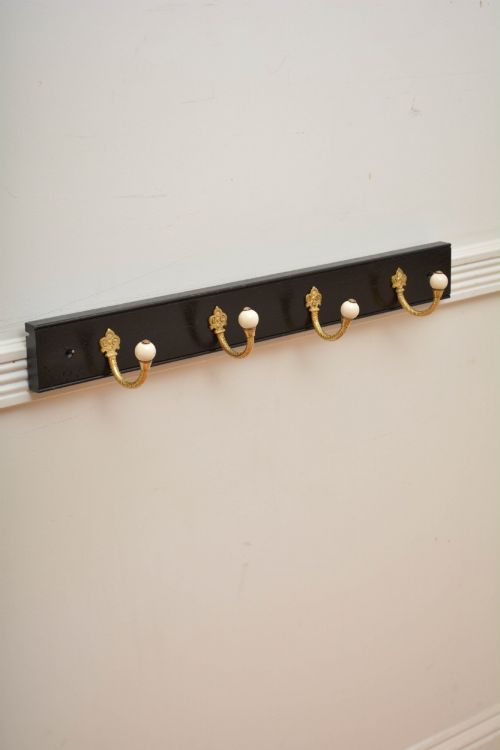
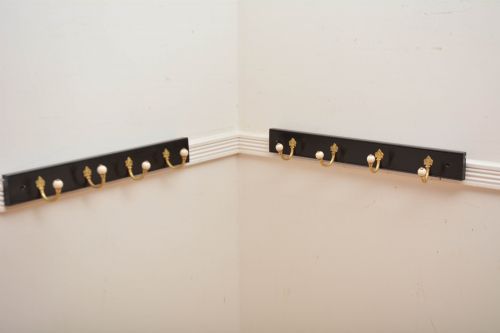
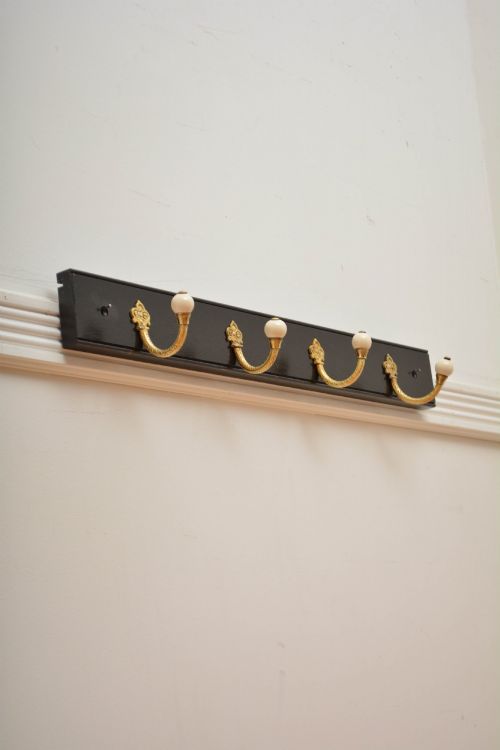
Hooks are secured using brass, wrought iron, and sometimes ceramic elements, often cast or forged with distinct mounting plates. Ebonised finishes and painted surfaces also appear, applied to protect the wood and complement the interior styles of the period.
Listings feature timbers including oak, mahogany, and pine, alongside hardware in brass, wrought iron, and ceramic across Victorian, Edwardian, and Georgian periods.
What varies in quality
Quality rests in the selection of timber and the execution of the metalwork or ceramic fittings on the backboard. Heavier brass castings and robustly mounted hooks indicate superior construction designed for sustained daily use.
The integrity of the backboard and the originality of the fixings dictate the overall standard of the piece. Subtle details in the turning of the wood or the casting of the mounting plates separate utilitarian examples from finer decorative items.
The Antique Coat Peg Rail Glossary
- Backboard
- The horizontal length of timber that supports the individual hooks and mounts to the wall. It provides structural rigidity and distributes the weight of garments.
- Hat and coat rack
- A composite wall fixture featuring upper provisions for hats alongside lower hooks for hanging coats. This combination maximises vertical storage space in a hallway.
- Cloakroom valet
- A traditional term for a larger wall-mounted rack intended for reception areas or entrance halls. These fixtures accommodate multiple garments for guests and household members.
- Ebonised
- Wood treated with a dark stain or finish to simulate the appearance of solid ebony. This technique was popular in Victorian and later design to create high-contrast decorative effects.
- Aesthetic Movement
- A late nineteenth-century design style that emphasised visual beauty over narrative or moral function. Pieces from this movement often incorporate refined materials and distinct artistic detailing.
Antique Coat Peg Rail: Frequently Asked Questions
How do I hang a heavy coat rack safely?
Wall-mounted racks require firm fixing directly into wall studs or masonry using appropriate screws and plugs to support the downward weight of heavy winter garments.
Ensuring the mounting holes align with solid structural points prevents the board from pulling away from the plaster under load.
Are the ceramic hooks original to the board?
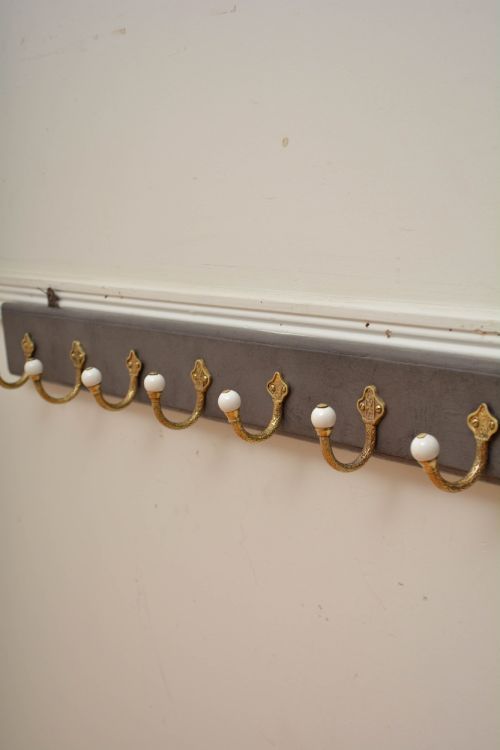
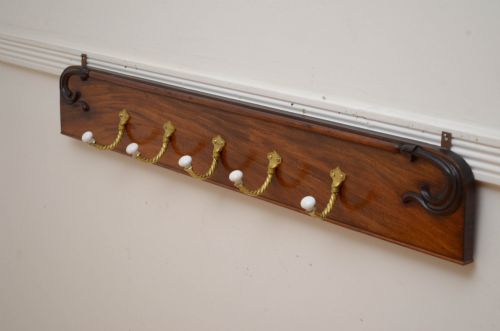
Many Victorian and Edwardian rails utilise ceramic and brass hooks secured with threaded screws into the timber backboard. Replacement hooks sometimes occur during the working life of these practical domestic objects.
Inspect the screw slots and timber grain around the base of each hook to determine period consistency.
What is the difference between oak and pine rails?
Oak examples tend to originate from earlier periods and offer a dense, hard-wearing grain with a natural or polished finish. Pine variants are often softer, lighter, and frequently found painted in period colours.
Both woods served domestic functions, but oak was typically reserved for sturdier construction.
How do I clean an old painted finish?
Painted pine and ebonised surfaces require gentle cleaning with a soft cloth and mild soap solution to preserve the historic layers. Avoid harsh chemical solvents that can strip or soften aged paintwork.
Regular dusting maintains the surface without disturbing the patina built up over decades of use.