

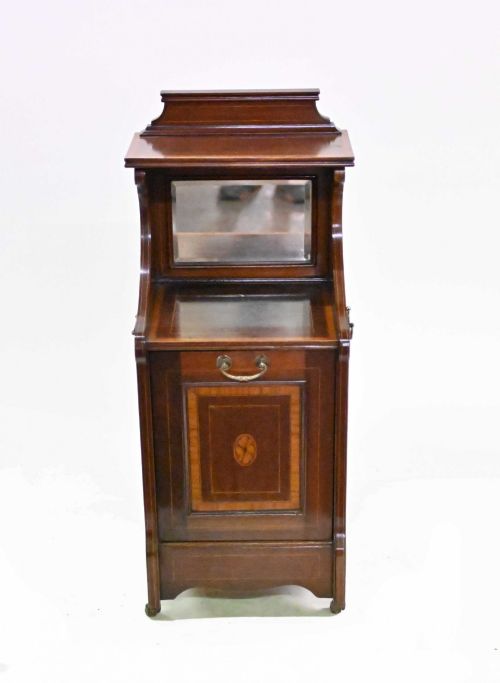
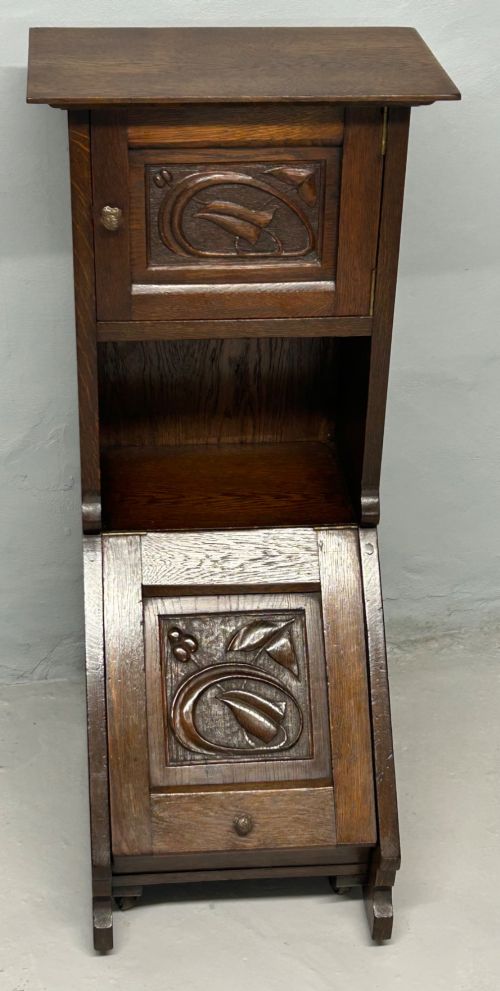


Antique Coal Scuttle Cabinet
An antique coal scuttle cabinet is a practical fireside receptacle built to store fuel with elegance.

Antique Coal Scuttle Cabinet
An antique coal scuttle cabinet is a fireside necessity designed to keep fuel tidy beside the hearth. These pieces combine domestic utility with the elaborate craftsmanship characteristic of late nineteenth and early twentieth-century interiors.
The versions met most frequently on this page span the Victorian and Edwardian periods, appearing in forms such as purdoniums, drop-front boxes, and freestanding cabinets. Makers constructed them to conceal coal dust and shovels while complementing formal reception room decor.
Examples range from solid oak and mahogany designs to rosewood pieces featuring marquetry inlay and ormolu mounts. Buyers select them both for historical character and for functional fireside storage.

How they were made
Cabinet makers utilised dense hardwoods such as oak, mahogany, walnut, and rosewood for the structural carcase, often applying marquetry inlay or fine carvings to the exterior panels. These timbers provided the durability required to withstand daily domestic use.
Metal components played a dual role in both reinforcement and decoration, incorporating brass handles, hinges, and linings alongside iron shovel fittings. Ormolu mounts and glass details occasionally added further refinement to high-status pieces.
Antique Coal Scuttle Cabinet Retail Price Guide 2026
Typical asking prices for coal scuttle cabinet among the pieces listed under this phrase on Sellingantiques today, from the lower quarter to the upper quarter. They describe what is for sale here now, not the wider market.
Decorative techniques represented across the inventory include marquetry inlay, ormolu mounts, and Gothic revival carvings.
What varies in quality
The distinction between standard and superior pieces rests upon the choice of timber and the complexity of surface decoration. Elaborate marquetry, intricate wood carving, and substantial brass hardware elevate a piece far above plain utilitarian boxes.
Internal construction also defines the grade of the cabinet, particularly the condition of the metal or tin lining designed to hold fuel safely. Refined proportions and faithful adherence to styles such as Art Nouveau or Gothic Revival distinguish the finest examples.
The Antique Coal Scuttle Cabinet Glossary
- Purdonium
- A specialised coal cabinet featuring a hinged drop-front or tilting bin designed for domestic firesides. It typically houses an internal metal liner and includes clips for a coal shovel.
- Marquetry
- The art of applying decorative veneer pieces in various woods to form geometric or floral patterns. This technique frequently graces the lids and doors of rosewood and mahogany cabinets.
- Ormolu
- Gilded bronze or brass applied as a decorative mount to furniture. It adds metallic contrast to dark hardwood surfaces.
- Drop front
- A hinged panel that opens downwards to grant access to the fuel compartment within. This mechanism conceals the contents until needed for the fire.
Antique Coal Scuttle Cabinet: Frequently Asked Questions
What is a coal purdonium?
A purdonium is a specialised cabinet designed specifically to hold household coal near the fireplace. It keeps fuel enclosed and tidy out of sight.
Most examples feature an internal metal lining to contain dirt and debris from the coal. They often include matching shovels stored in side clips or dedicated interior compartments.
How do I date an antique coal cabinet?
Dating relies on observing the prevailing wood choices, decorative styles, and construction methods. Pieces from the Victorian era often display heavier carving and dark rosewood or mahogany.
Edwardian examples frequently exhibit lighter oak timbers and inlaid marquetry or Art Nouveau motifs. Historical records show these pieces spanning the late nineteenth and early twentieth centuries.
Where should I place a coal cabinet?
These cabinets suit a position immediately beside an active fireplace or hearth. Their traditional function was to sit within arm's reach of the grate.
Many buyers continue to use them as fireside storage or repurpose them as side cabinets in living rooms. Their decorative exteriors allow them to blend seamlessly with traditional furniture.
Did these cabinets come with shovels?
Original coal scuttle cabinets frequently included a dedicated brass or metal shovel. These implements were stored neatly inside the drop-front compartment or on the side.
Surviving shovels add completeness to the piece, though many cabinets have lost their original accessories over time. Collectors look for pieces retaining their fitted internal linings and matching hardware.