




Antique Clock Under Dome
An antique clock under dome protects delicate skeleton and portico movements beneath blown glass covers, keeping dust away while displaying intricate brass wheelwork.
Antique Clock Under Dome
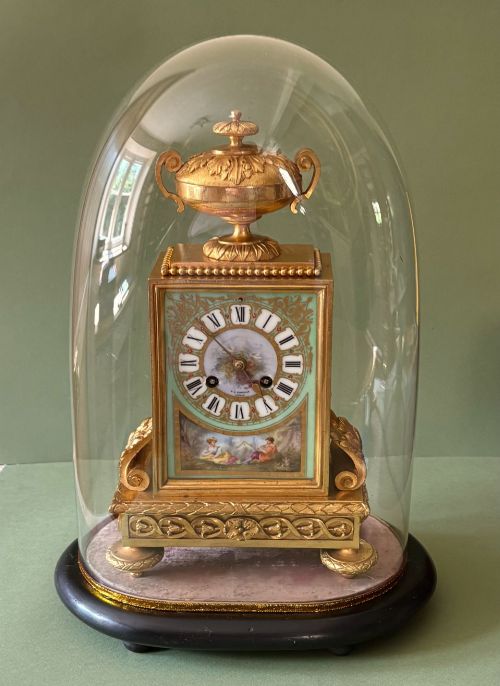
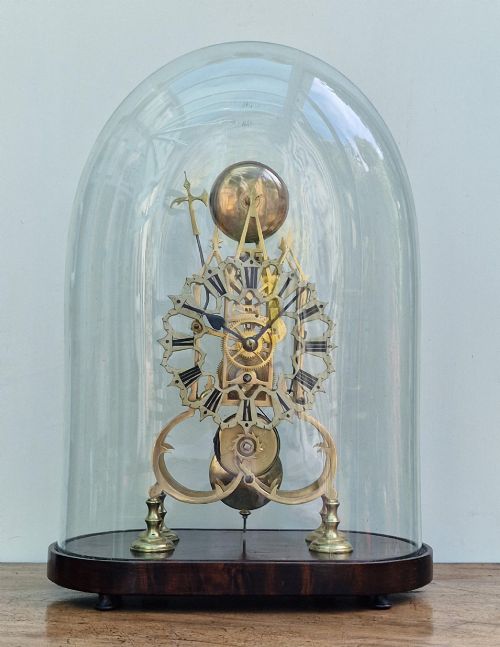
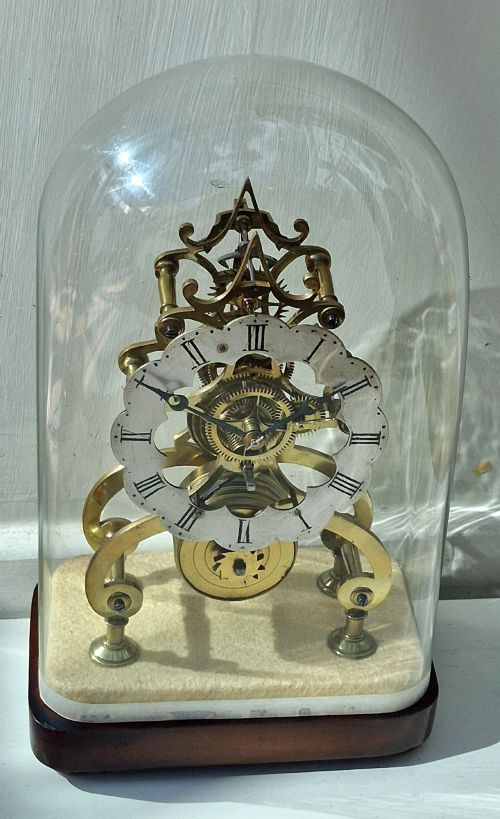
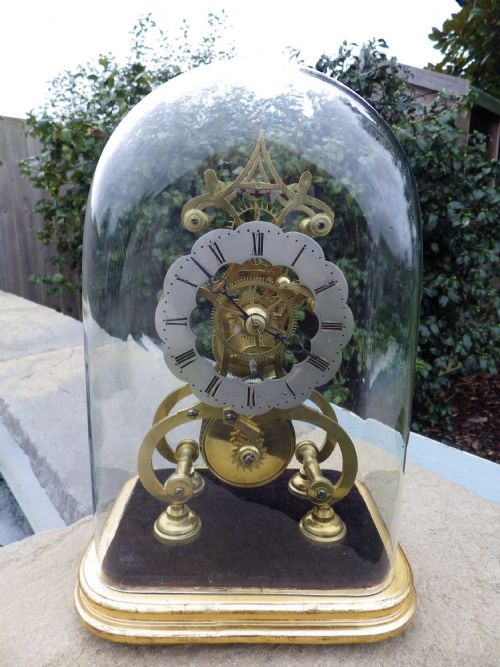
When searching for an antique clock under dome, you encounter Victorian skeleton clocks, French portico clocks, and porcelain mounted mantel clocks protected by glass covers. These timepieces range from English fusee movements with six spoke wheel work to ornate French ormolu garniture sets.
The version most commonly met on this page is the Victorian skeleton clock or French mantel clock housed beneath its original glass dome and wooden or ebonised base. These pieces span the nineteenth century, from mid century English timepieces to later Victorian Gothic and Neoclassical designs.
How they were made
Maker workshops constructed movements from brass, steel, and ormolu, often incorporating porcelain panels or carved alabaster into the architectural cases. Skilled blowers formed the thick glass domes by hand, resting them upon matching timber stands.
English makers utilised fusee movements for steady power delivery, whilst French workshops produced bell striking and passing strike mechanisms housed in elaborate gilt or bronze frames.
Listings feature periods from the mid nineteenth century through the 1930s and 1950s, utilising materials including brass, porcelain, alabaster, and ebonised wood.
What varies in quality
Quality rests in the crispness of the skeleton wheel work, the weight and fire gilding of the ormolu mounts, and whether the glass dome is the original hand blown piece rather than a later replacement. English fusee movements represent a different tier of horological ambition compared to standard spring driven alternatives.
The integration of the wooden base, the complexity of architectural details such as Gothic Revival spires or Neoclassical porticos, and the presence of matching garniture pieces dictate the standing of an individual clock.
The Antique Clock Under Dome Glossary
- Fusee
- A conical pulley used in clock movements to maintain even tension on the chain as the mainspring unwinds. This mechanism improves timekeeping accuracy across the power reserve.
- Skeleton clock
- A timepiece designed with open brass plates and wheel work so the internal mechanics remain fully visible. These skeleton movements sit exposed beneath their glass covers.
- Ormolu
- Gilded bronze produced by applying a mercury and gold amalgam to a bronze base and heating it. This technique creates a durable golden finish seen on French mantel clocks.
- Garniture
- A set consisting of a central clock flanked by matching decorative objects such as urns or candelabra. These sets frequently share the protection of glass domes.
- Portico clock
- A mantel clock housed within a architectural frame supported by four or more columns. The pendulum typically swings visibly in the open central space.
Antique Clock Under Dome: Frequently Asked Questions
Are these domes original to the clocks?
Many nineteenth century pieces retain their original hand blown glass domes, identifiable by faint surface ripples, small air bubbles, and a slight variation in thickness. Replacement domes tend to be perfectly uniform and lack these subtle historic characteristics.
The matching wooden base often shows identical wear and ageing to the clock case itself, confirming they have remained together since manufacture.
How do fusee clocks work?
A fusee movement uses a conical pulley connected to the mainspring barrel by a fine chain or gut line. As the spring unwinds and loses strength, the chain moves to a wider part of the cone to maintain consistent torque on the escapement.
This clever mechanical arrangement ensures the clock maintains an even force and more accurate timekeeping until the spring requires winding again.
Where should I place a domed clock?
Position the clock on a sturdy, level surface away from direct sunlight, drafts, and heavy foot traffic that could cause vibrations. Mantelpieces, sturdy sideboards, and dedicated display tables provide a stable environment for delicate mechanisms.
Because the dome protects the movement from dust, keeping the clock covered preserves the exposed brass wheel work of skeleton and portico designs for longer periods.