
Antique Clock Inlay
Antique clock inlay pieces bring together precise timekeeping and the intricate art of cabinetwork in rosewood, mahogany, and brass.
Antique Clock Inlay
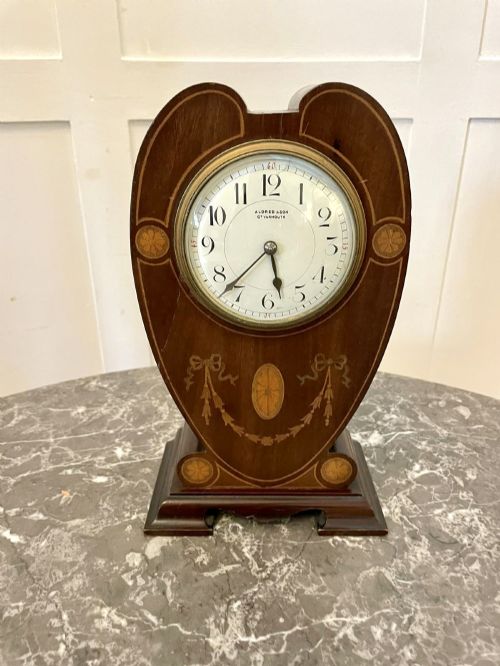
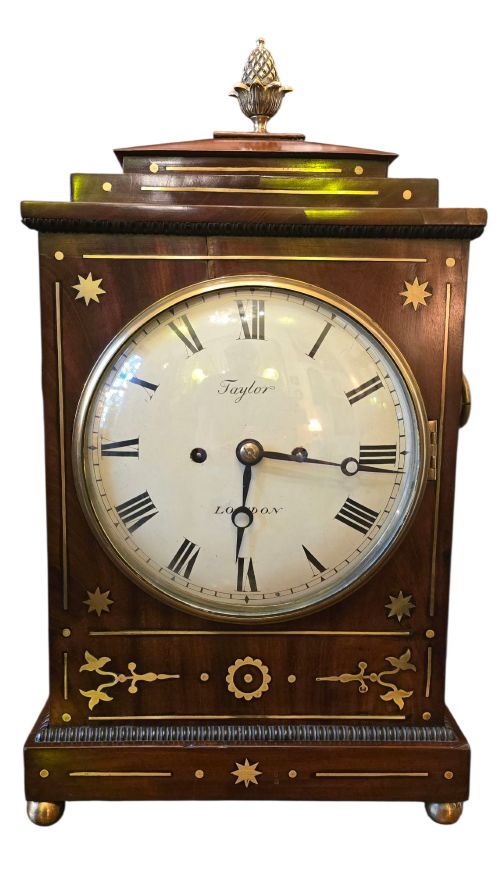
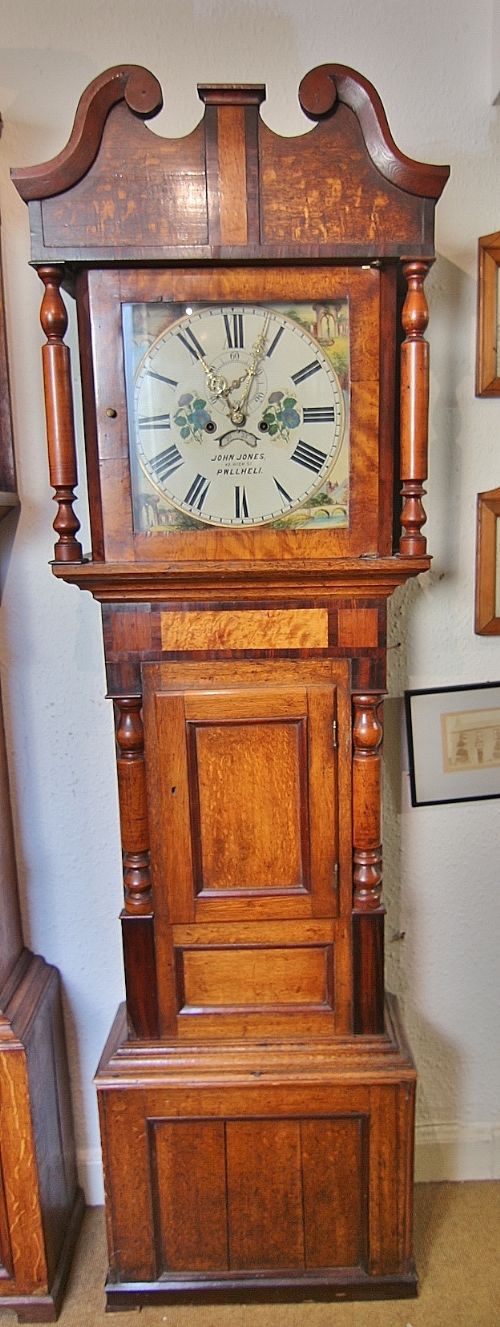
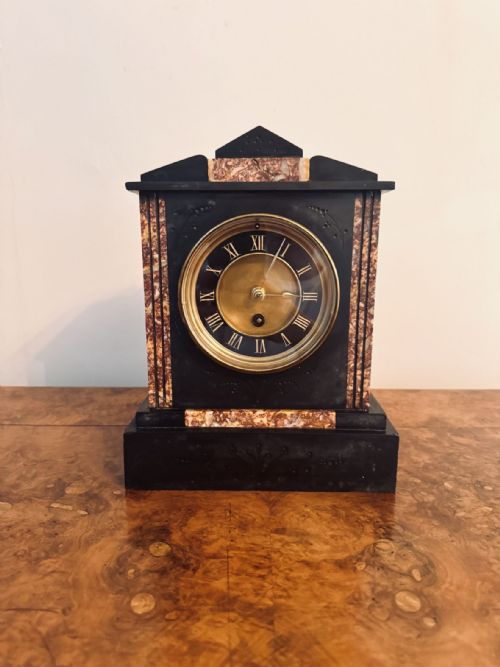
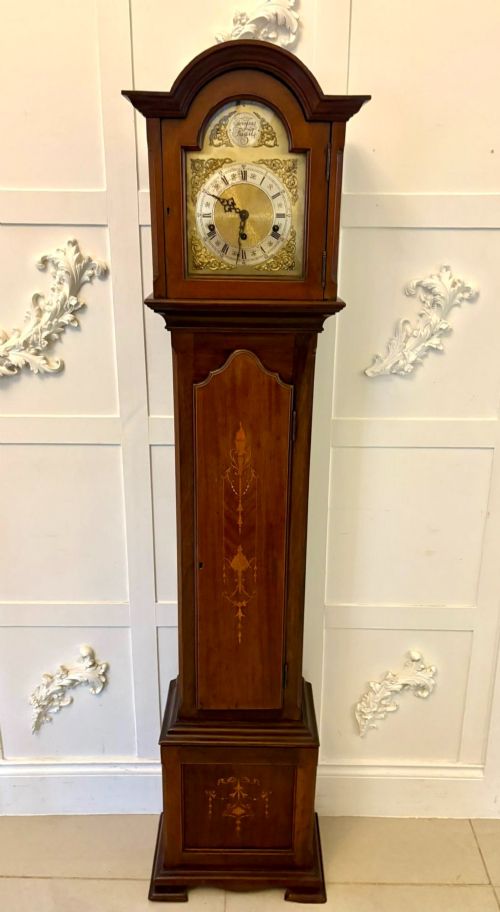
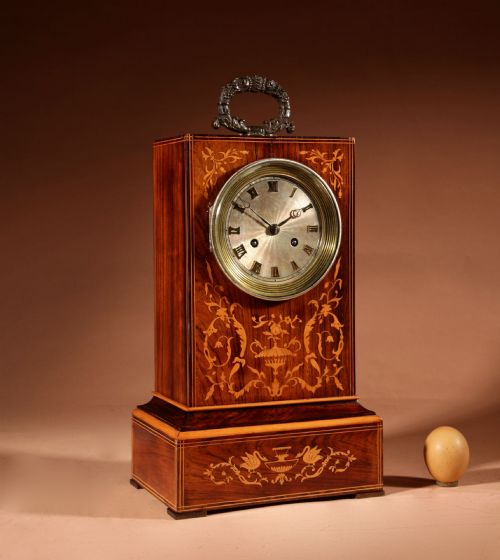
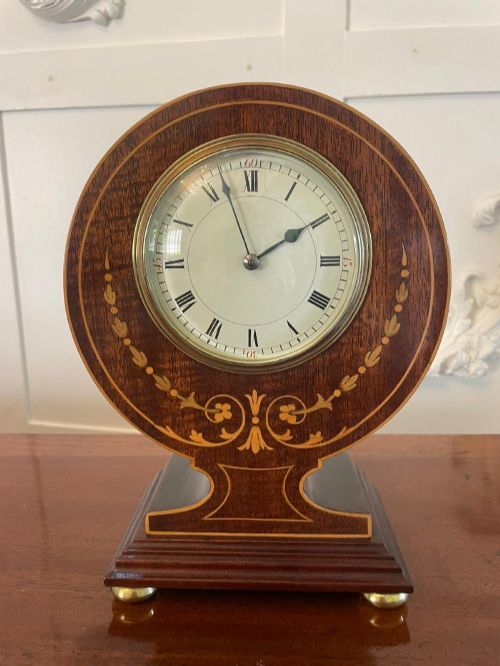
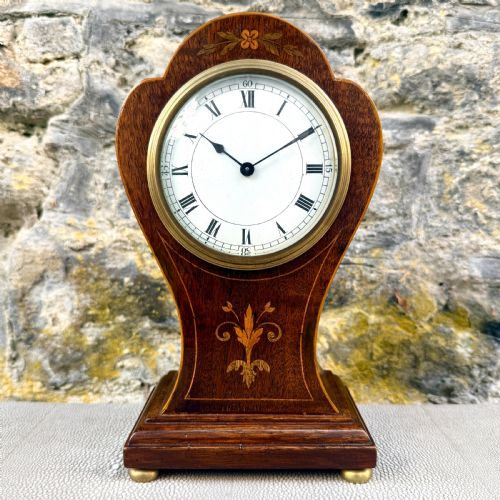
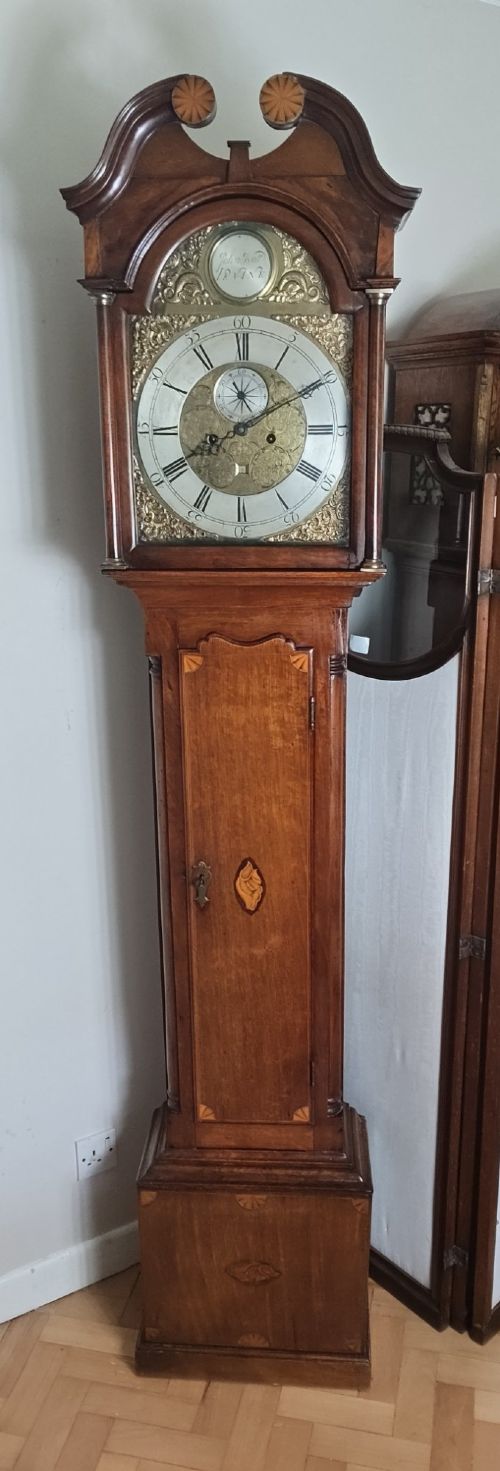
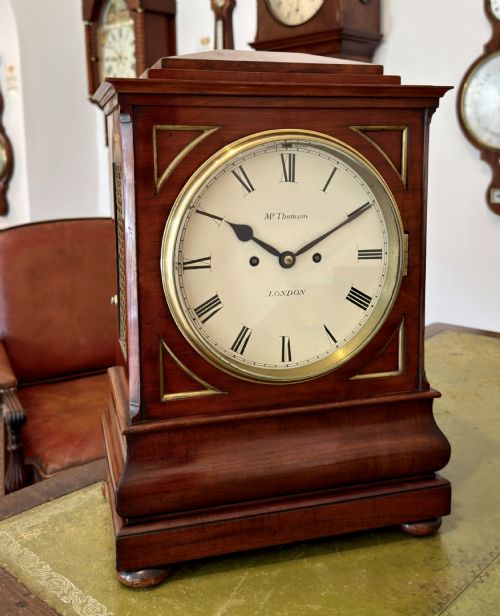
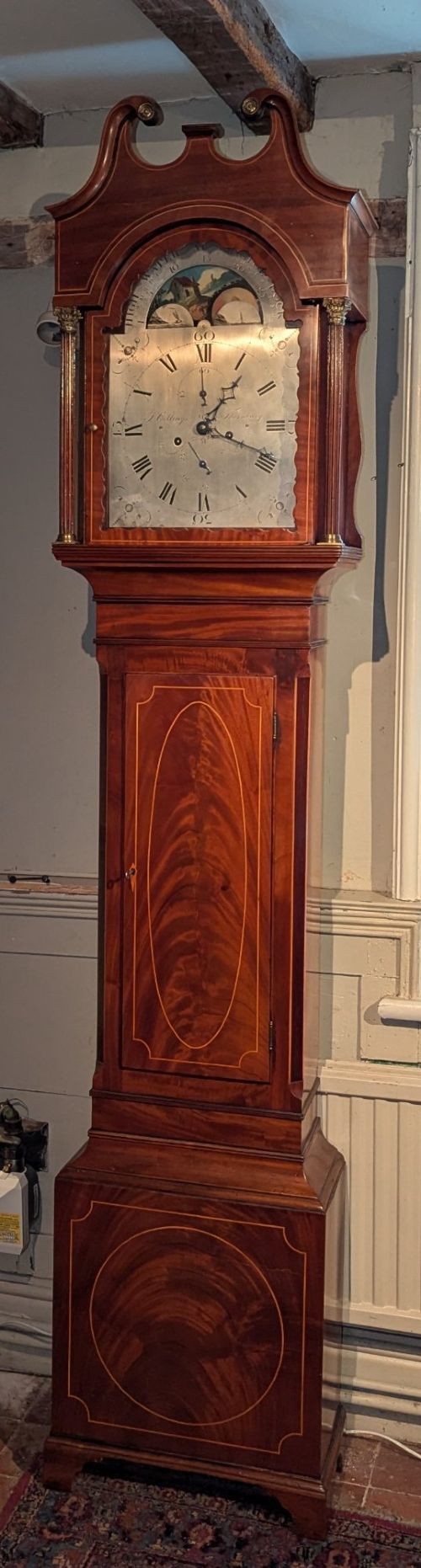
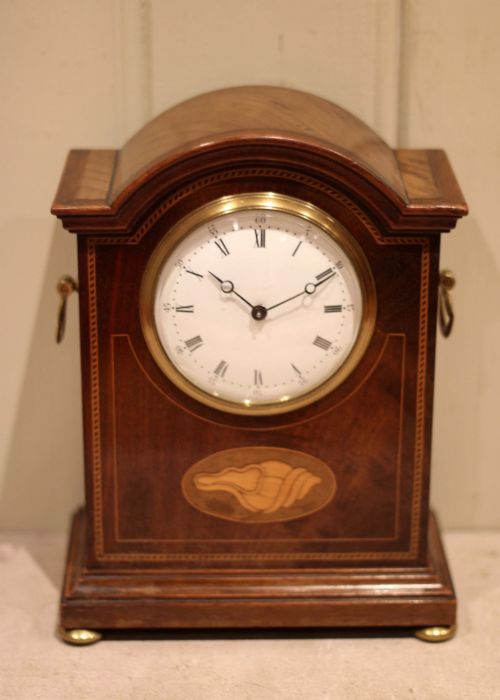
When you search for antique clock inlay, you meet timepieces housed in wooden cases decorated with contrasting veneers, stringing, or metal work. These range from substantial longcase and grandfather clocks down to bracket clocks, library clocks, and mantel clock formats.
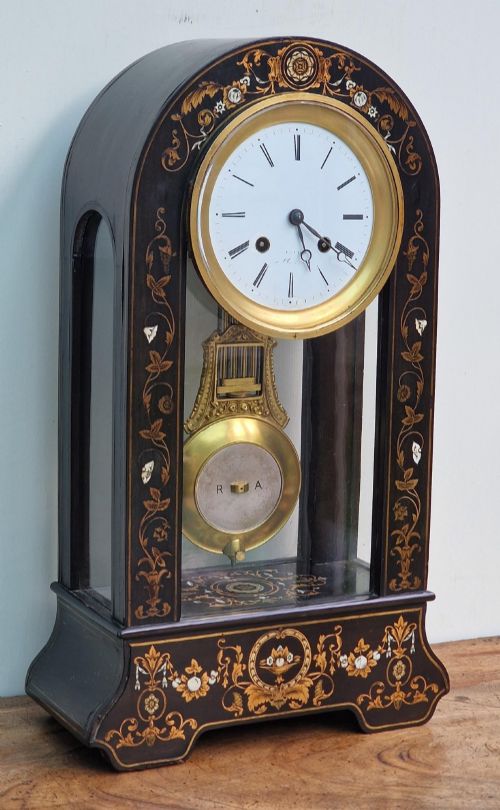
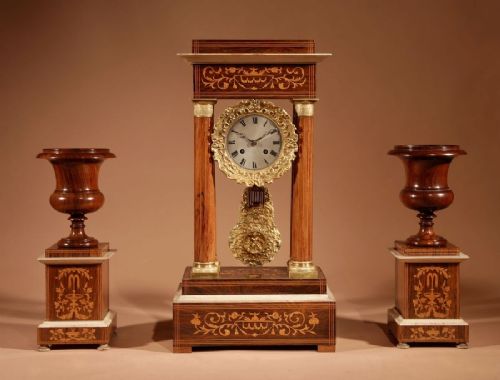
The pieces on this page span the Georgian, Regency, Victorian, and Edwardian eras, alongside continental French designs from the nineteenth century. Mahogany and rosewood form the main body of the English examples, while French makers often employ ebonised wood or tortoiseshell.
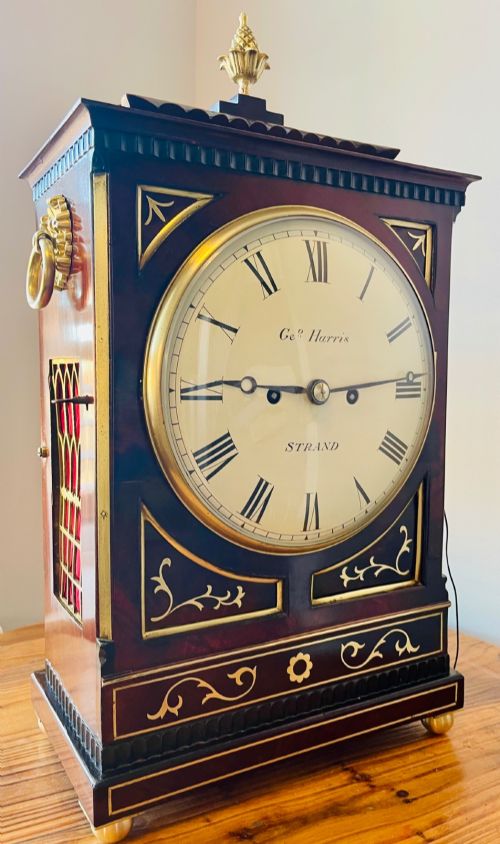
Mantel clocks and wall clocks appear frequently, alongside tall floor-standing longcase clocks. Many incorporate brass inlay or paterae details within the wood, showing how makers integrated decoration directly into the structure of the case.
Materials and methods in the workshop
Cabinetmakers constructed the wooden housings primarily from dense timbers like mahogany and rosewood, applying thinner decorative veneers to the exterior surfaces. They cut contrasting strips of boxwood, lemon wood, or satinwood to create geometric stringing and delicate borders.
Metal inlay required precise hand-cutting of brass, or in some French examples, tortoiseshell combined with brass and mother-of-pearl. Craftsmen set these materials flush into the wood before polishing the entire surface to a smooth finish.
Movements relied on mechanical brass gear trains, often featuring fusee mechanisms or pendulum regulation. Enamel dials and cast or chased ormolu mounts completed the composition, uniting metalwork and joinery.
The documented periods span from the eighteenth century through the Georgian, Regency, and Victorian eras into Edwardian times.
Distinctions in execution and design
Quality rests in the crispness of the inlay work and the tightness of the veneer joints. Finer pieces show no gaps between the contrasting woods or metals, whereas simpler items rely on painted details rather than true marquetry.
The selection of timber dictates the visual depth of the case, with flame mahogany and figured walnut sitting at the upper end. Plain timber veneers with minimal banding represent more utilitarian workshop output.
The integration of the movement into the case matters equally. High-grade examples feature signed movements by known makers housed in heavy, well-proportioned timber or stone cases with matching pendulum bobs and original key escutcheons.
Thomson of London·Webster London·Charles Pratt London·Charles Louch St Albans·George Orpwood·Bush of London·L Vick of Stroud·Chave Taunton
The Antique Clock Inlay Glossary
- Fusee
- A conical pulley connected to a cord or chain that equalises the driving force of the mainspring as it unwinds. This mechanism helps the clock maintain a consistent rate throughout its run.
- Marquetry
- The art of forming decorative patterns by fitting together thin veneers of different coloured woods, shells, or metals. It differs from inlay by assembling the pattern across the entire surface before applying it to the core.
- Paterae
- Small, circular ornamental roundels carved or inlaid into furniture and clock cases, often featuring floral or geometric motifs. They punctuate friezes and corners on Georgian and Regency pieces.
- Portico clock
- A mantel clock designed with architectural columns supporting a classical pediment, housing the movement in a central or suspended position. These French styles frequently feature extensive wood inlay or ormolu mounts.
- Bracket clock
- A portable table or shelf clock, originally designed to sit on a wall bracket to aid sound projection. Later examples retain the name despite resting directly on mantelpieces or furniture.
Antique Clock Inlay: Frequently Asked Questions
What is fusee clock inlay?
It refers to a clock driven by a fusee mechanism housed in a case decorated with contrasting wood veneers or metal banding. These movements offer superior timekeeping accuracy through consistent power delivery.
Cabinetmakers paired this mechanical complexity with fine mahogany or rosewood surfaces inlaid with brass, boxwood, or mother-of-pearl.
How do I identify a Regency clock?
Regency clocks typically display restrained classical proportions, often executed in dark mahogany with precise brass stringing or inlaid octagonal frames. Look for clean architectural lines and unadorned surfaces.
Many wall and bracket examples from this period rely on simple geometric inlays rather than the heavier floral marquetry seen in later Victorian pieces.
Are French clocks different from English ones?
French examples from the nineteenth century frequently utilise tortoiseshell, Boulle brass work, and ormolu mounts alongside ebonised or rosewood cases. They often take distinct architectural forms like portico or balloon shapes.
English pieces tend to focus on timber figure, such as flame mahogany or walnut, paired with precise brass inlay or paterae details.
How should I care for an inlaid clock?
Keep the wooden case away from direct sunlight and sudden temperature shifts to prevent the delicate veneer and inlay from lifting. Regular dusting with a dry cloth protects the polished surface.
Ensure the mechanical movement receives professional servicing every few years to keep the brass gears running smoothly without wearing the original components.