


Antique Classical Side Chairs
Antique classical side chairs are refined seating pieces defined by ancient architectural motifs, offering timeless elegance to any interior.
Antique Classical Side Chairs
When you search for antique classical side chairs, you are looking at seating forms that draw direct inspiration from ancient Greek and Roman design. These pieces bridge formal historic styling and practical domestic use, appearing in variations from the Regency period through to Edwardian revivals.
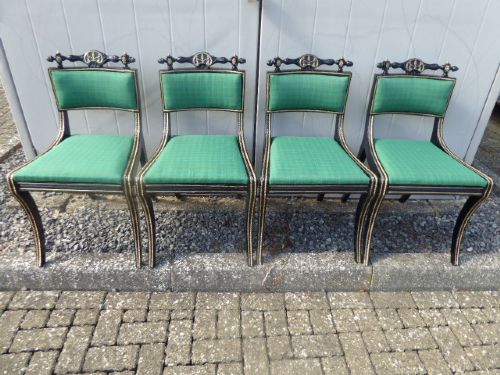
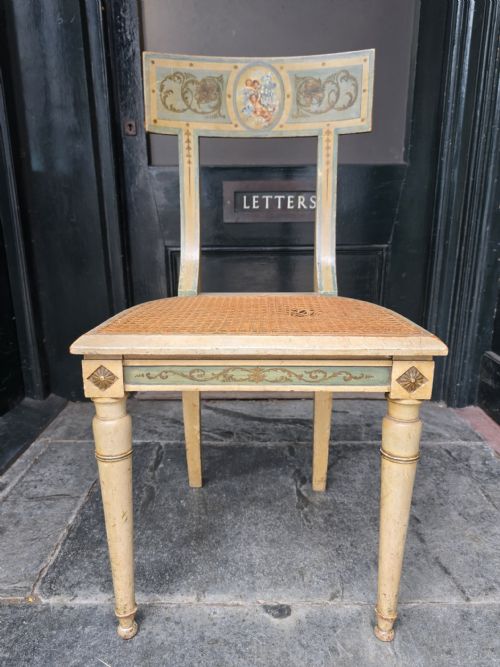
The versions you are most likely to meet on this page span the Regency era and later revivals, executed in forms such as hall chairs and dining seats. They utilise vocabulary derived from classical antiquity, featuring shapes like the pelta back alongside painted and parcel gilt surfaces.
How they were made
Makers utilised dense timbers such as mahogany and oak, often shaping them through traditional joinery to achieve structural integrity. Surfaces frequently received intricate treatments, including hand-painted decoration, ebonising, and parcel gilding to highlight carved architectural details.
Upholstered elements and cane work appear alongside exposed carved wood, demonstrating a range of artisanal techniques. Workshops combined structural woodwork with decorative surface finishes to emulate ancient precedents.
Materials recorded across the inventory include mahogany, oak, cane, fabric, paint, parcel gilt, and ebonised wood.
What varies in quality
The refinement of the carving largely separates standard examples from superior pieces, particularly in the crispness of classical motifs like the pelta back or reeded legs. Superior execution is visible in the balance of proportions and the precision of applied gilding or paintwork.
The choice of primary timber and the integration of decorative details such as inlay also distinguish finer workshops. Consistency between the structural frame and the decorative surface finish indicates a higher standard of original production.
The Antique Classical Side Chairs Glossary
- Pelta back
- A chair back shape resembling a crescent-shaped shield used in ancient Greek and Roman ornamentation. This form is frequently encountered on classical hall chairs.
- Parcel gilt
- A decorative technique where selected parts of a wooden surface are covered with thin gold leaf. This method highlights specific carved details against a contrasting background such as paint or ebonised wood.
- Ebonised wood
- Timber treated to resemble ebony through staining or painting. It is commonly utilised in classical revival furniture to create a stark, formal appearance.
- Federal Revival
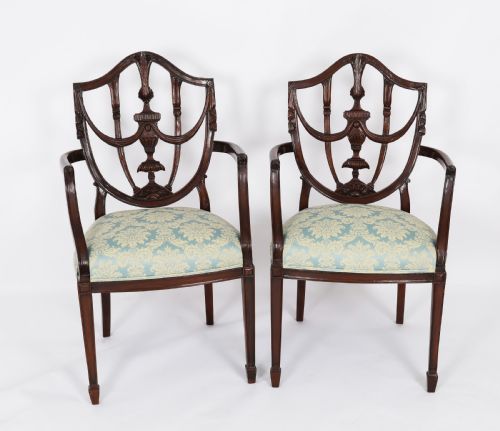
- A decorative movement drawing on early American federal design, which itself reinterpreted classical motifs. Pieces in this style often feature shield backs and classical symmetry.
Antique Classical Side Chairs: Frequently Asked Questions
What defines a classical side chair?
These chairs are defined by their incorporation of ancient Greek and Roman design motifs, such as scrollwork, architectural framing, and symmetrical proportions. They were typically designed without arms for use around dining tables or along hallways.
Unlike standard utilitarian seating, these forms served to project erudition and refined taste within the home. Their silhouettes often reference archaeological discoveries of the period.
How do I identify a Regency piece?
Regency pieces typically display distinct neoclassical influences, utilising materials like mahogany alongside ebonised and gilded surfaces. Look for architectural elements such as reeded legs and classical backrest shapes.
They reflect the design sensibilities of the early nineteenth century, distinct from later Victorian interpretations or Edwardian revivals.
Were these chairs used for dining?
Side chairs without arms were primarily manufactured for dining or for placement against walls in formal hallways and reception rooms. Their compact form allowed multiple chairs to be arranged neatly around a table.
In domestic settings, they functioned as both practical seating and decorative statements along the perimeter of a room.
How should I care for painted wood?
Painted and gilded wooden surfaces require gentle maintenance to preserve the original finish and any delicate detailing. Dusting with a soft, dry cloth is recommended to prevent the accumulation of abrasive particles.
Avoid placing these chairs in direct sunlight or areas of fluctuating humidity to protect the timber and historic surface treatments from degradation.
What is a hall chair?
A hall chair is a rigid wooden seat designed for placement in entrance halls rather than for prolonged lounging. They frequently feature carved wooden backs displaying family crests or classical motifs.
These pieces were intended to impress visitors upon entry while offering brief, upright seating.