




Antique Classical Mantel Vases
Antique classical mantel vases bring nineteenth-century neoclassical design and balanced symmetry to a mantelpiece.
Antique Classical Mantel Vases
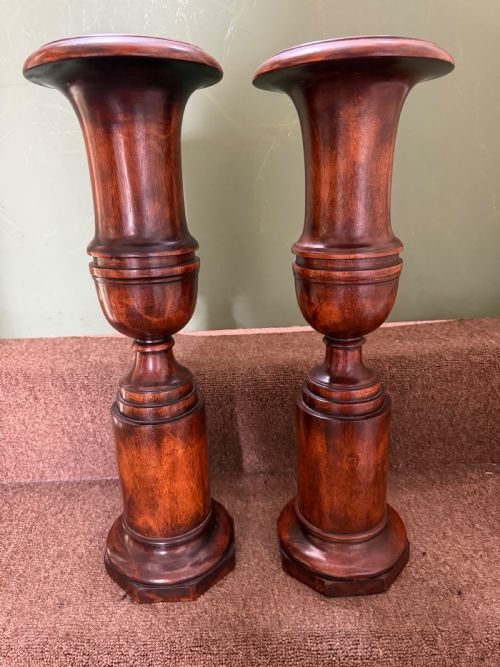
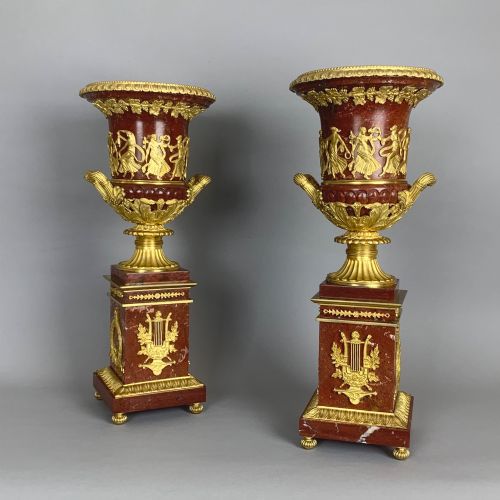
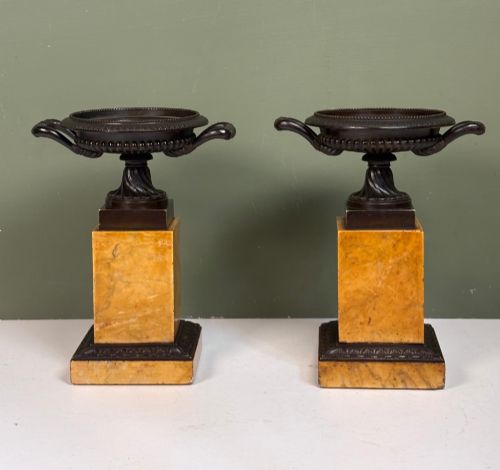
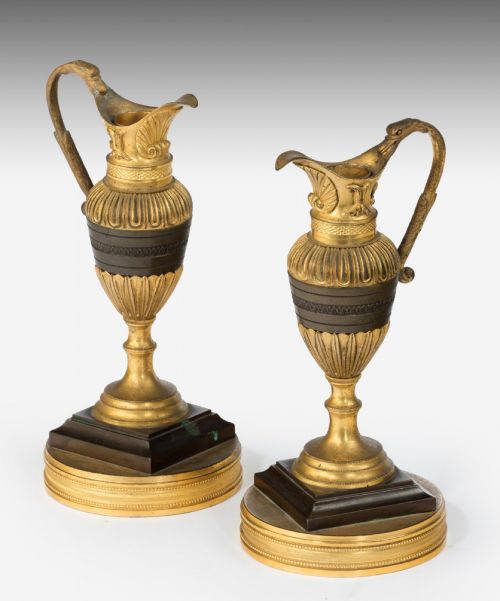
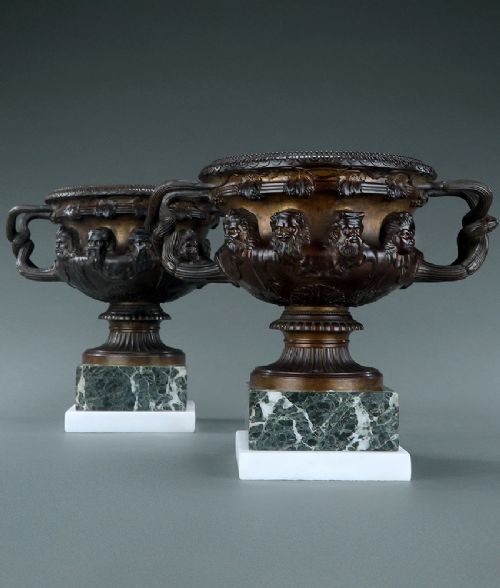
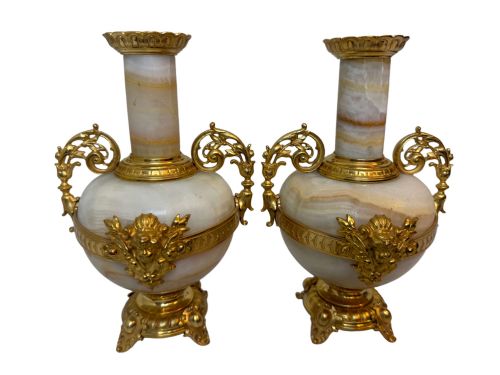
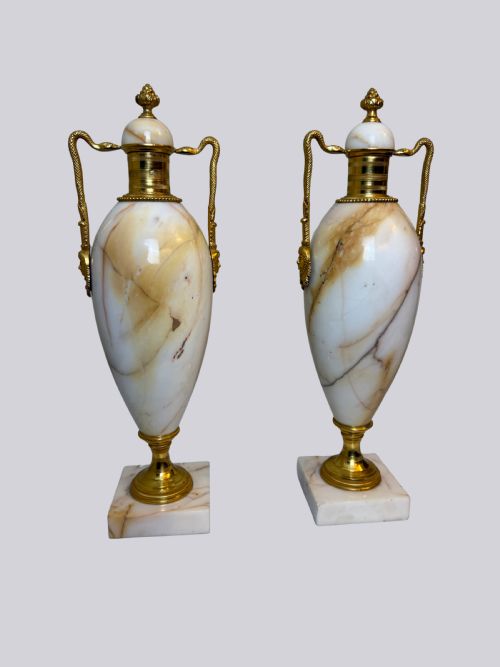
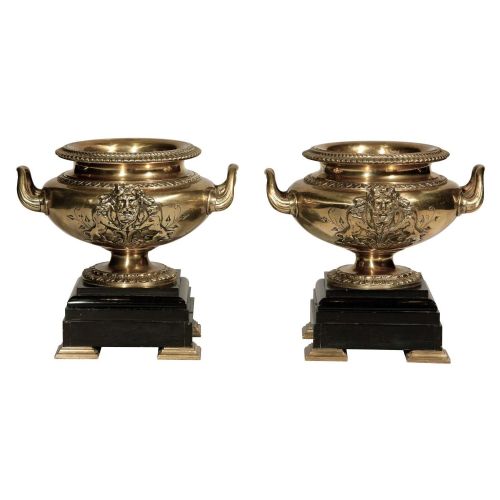
These pieces encompass decorative urns, campana-shaped vessels, and ewers originating from the nineteenth century, including the Regency and Victorian periods. Most examples found here appear as matched pairs, frequently styled after French Empire or Italian Grand Tour models.
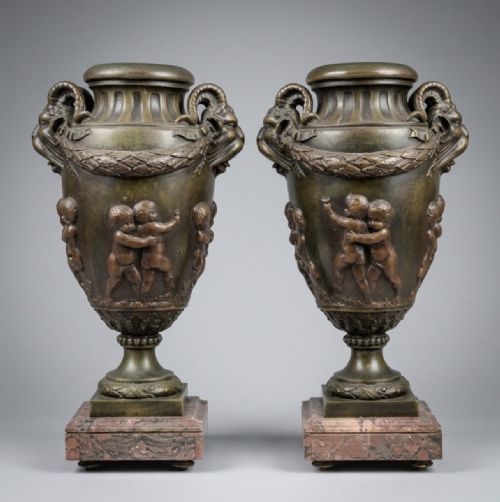
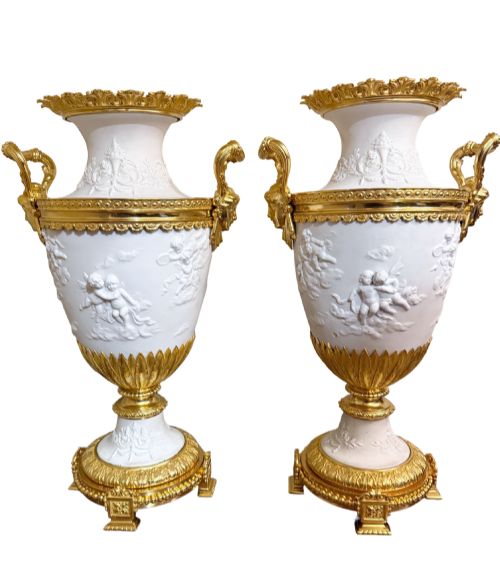
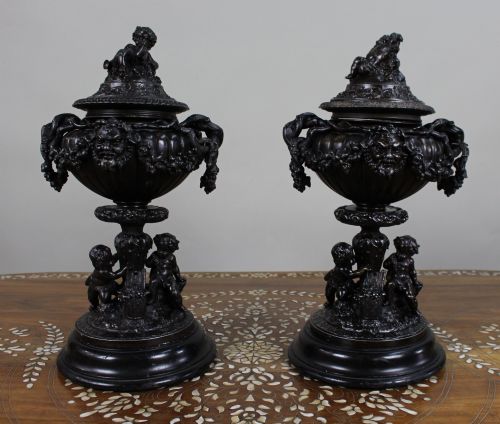
Makers and manufacturers ranging from Sevres and Minton to KPM and Vienna produced these vessels in porcelain, bronze, and marble. They often incorporate classical motifs such as putti, bacchic masks, and ormolu mounts designed to sit centrally on a fireplace mantel.
Materials and construction methods
Foundries and studios utilised cast bronze, spelter, and ormolu alongside carved white onyx, Ashford marble, and Breccia Medicea. Metal components frequently received a patinated or gilt finish to highlight the neoclassical ornamentation.
Potteries shaped porcelain and majolica bodies, applying hand-painted details and enamel work before mounting the vessels onto stepped stone plinths and marble bases.
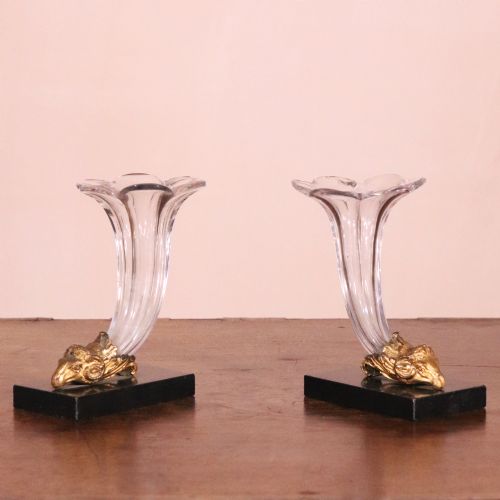
Listings feature nineteenth-century materials including porcelain, gilt bronze, spelter, marble, onyx, glass, and enamel across neoclassical and empire styles.
Distinctions in execution and material
The refinement of the casting and carving separates standard production from superior examples, visible in the crispness of acanthus leaves and sculptural figures. Finishes such as fire-gilding and detailed hand-painting on porcelain indicate greater workshop investment.
The choice of raw materials alters the presence of a piece, with dense marbles, heavy gilt bronze mounts, and hard-paste porcelain commanding stronger architectural weight than spelter and softer ceramic bodies.
Selim Bright·Thomas Steel·Sevres·Minton·KPM·Vienna
The Antique Classical Mantel Vases Glossary
- Campana urn
- A bell-shaped vessel with a flared rim and pedestal foot derived from ancient Roman pottery. These forms frequently serve as the central silhouette for nineteenth-century mantel ornaments.
- Garniture
- A set of three or more matching decorative vases or urns designed to be displayed together on a mantelpiece. They typically comprise a central lidded vessel flanked by two smaller matching pieces.
- Cassolette
- A decorative vase featuring a reversible lid that functions either as an open vessel or a closed urn. Nineteenth-century versions often incorporate gilt bronze and marble.
- Ormolu
- Finely ground high-carat gold applied to a bronze base using a mercury-gilding technique. This treatment imparts a warm, durable metallic sheen to classical mounts.
- Grand Tour
- Souvenir objects acquired by nineteenth-century travellers visiting classical antiquities in Italy and France. These reproductions capture ancient architectural and sculptural themes.
Antique Classical Mantel Vases: Frequently Asked Questions
How are mantel vases displayed?
These vessels typically sit along a fireplace mantel as matched pairs flanking a clock or mirror. They arrange symmetrically to establish formal balance within nineteenth-century interior schemes.
Larger monumental urns require deeper mantel shelves or dedicated side tables to support their substantial marble and bronze bases safely.
What periods do these pieces date from?
The inventory spans the nineteenth century, encompassing Regency, Victorian, and French Empire stylistic revivals. Production dates cluster particularly around the decades between eighteen-twenty and eighteen-ninety.
Earlier Regency examples lean toward restrained classical lines, while later Victorian and late nineteenth-century pieces often display heavier ornamentation and Sevres-style porcelain.
How do I identify French Empire style?
French Empire style pieces rely on classical Roman and Greek motifs executed in gilt bronze, ormolu, and dark patinated bronze. Look for symmetrical forms incorporating bacchic masks, military trophies, and distinct architectural proportions.
These designs reflect the aesthetic preferences popular during the early nineteenth-century Napoleonic era and subsequent Restauration periods.
Are these vases functional?
Most nineteenth-century examples serve purely decorative functions as architectural ornaments rather than utilitarian vessels. Many incorporate fitted lids, solid marble interiors, or fixed metal mounts that preclude holding water.
Cassolettes and lidded urns functioned historically as decorative objects or container housings rather than flower holders.