





Putti Decorative Urns
Putti decorative urns bring classical myth and playful cherubic figures into a room through sculptural metal and porcelain vessels.
Putti Decorative Urns
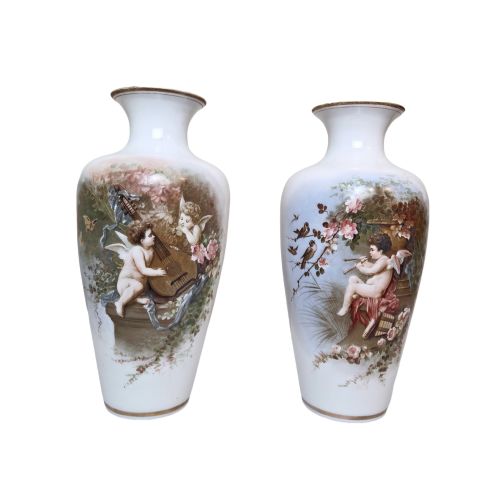
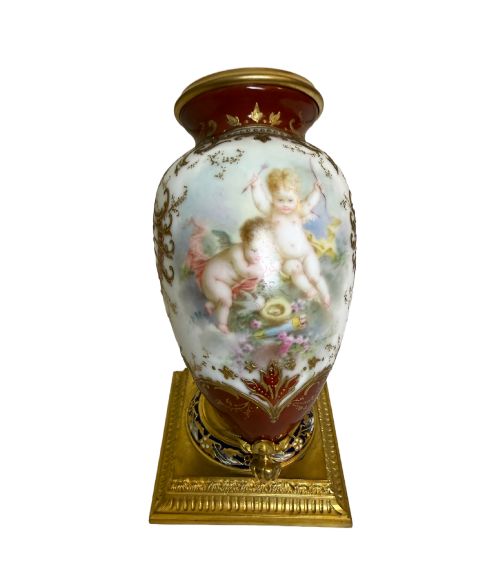
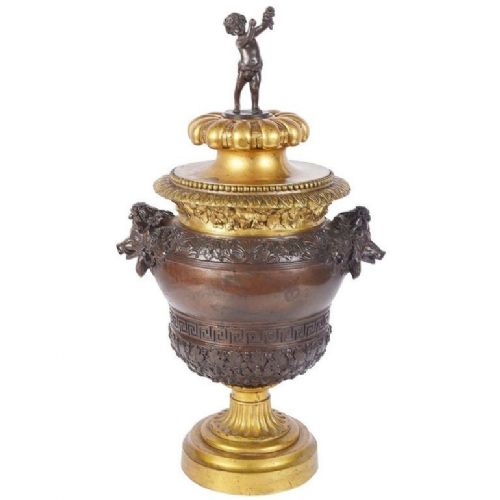
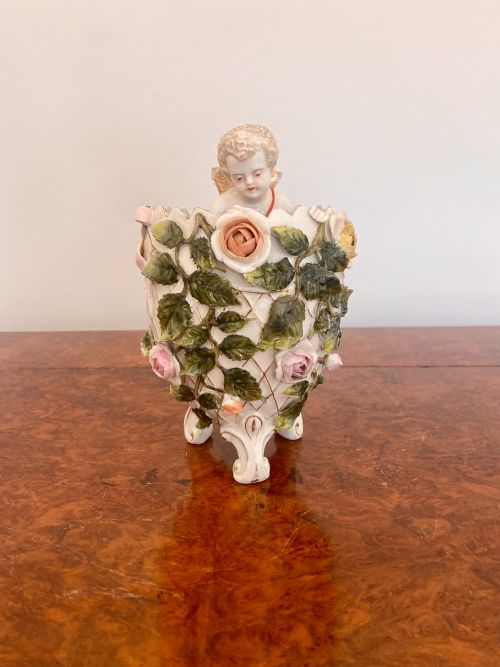
Putti decorative urns combine classical vessel forms with sculpted child figures derived from mythology, appearing across the Victorian era and the late nineteenth century. These pieces function as ornamental centerpieces, paired display objects, and occasionally converted table lamps.
The objects on this page span several distinct aesthetic revivals including French Neoclassical, Rococo Revival, and Grand Tour styles. Buyers encounter both single statement vessels and matched pairs designed for symmetrical mantelpiece or tabletop placement.
Origins represented in the current selection range from French and Italian workshops to continental European porcelain factories. Forms include lidded urns, ewers, and classical vases mounted on marble bases.
How they were made
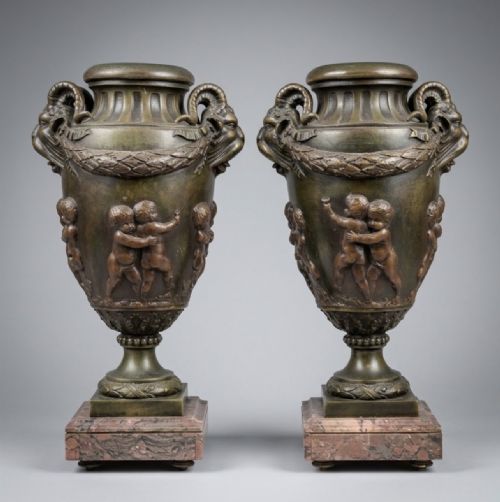
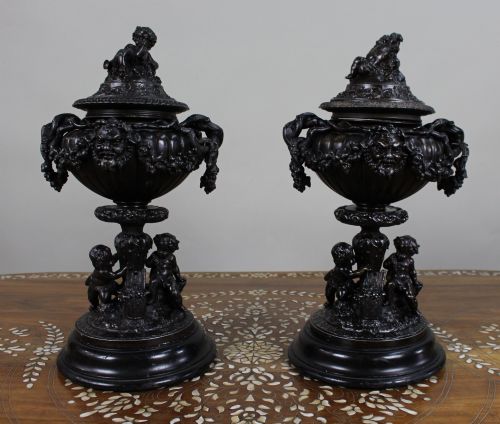
Metal vessels utilise bronze, gilt bronze, patinated bronze, and spelter, often cast with intricate figural attachments such as bacchic masks and putti. Spelter variants frequently receive a dark bronzed finish and sit upon heavy marble plinths for stability.
Ceramic examples employ white porcelain, sometimes associated with Sevres traditions, combined with gilt bronze mounts and enamel detailing. Skilled artisans joined metal fittings to ceramic bodies using threaded hardware and pins.
Putti Decorative Urns Retail Price Guide 2026
Typical asking prices for putti decorative urns among the pieces listed under this phrase on Sellingantiques today, from the lower quarter to the upper quarter. They describe what is for sale here now, not the wider market.
Listings feature items from 1880 and 1890 alongside broader nineteenth-century and Victorian examples.
What varies in quality
The refinement of the metal casting and the crispness of the chasing separate standard production from finer examples. Smoother contours on the putti figures and deep, even patination indicate superior craftsmanship in the bronze and spelter items.
Porcelain bodies paired with detailed hand-painted elements and secure metal mounts represent the higher tier of these decorative objects. The weight and quality of the supporting marble bases also distinguish individual pieces.
Sevres
The Putti Decorative Urns Glossary
- Putti
- Plumed or winged infant figures, often resembling cherubs, used as decorative motifs in classical art. They appear frequently clambering over the sides of nineteenth-century decorative urns.
- Grand Tour
- A traditional trip through Europe undertaken by upper-class travellers who collected classical antiquities and souvenirs. Items in this style reflect the classical architecture and sculpture encountered on these journeys.
- Ewer
- A large pitcher with a wide spout and a curved handle, often produced in decorative bronze or ceramic. In nineteenth-century collections, ewers served purely ornamental functions alongside standard urns.
- Neoclassical
- An artistic movement drawing inspiration from the classical art and culture of ancient Greece and Rome. This style governs the symmetrical forms and mythological motifs seen on these urns.
Putti Decorative Urns: Frequently Asked Questions
What are putti decorative urns?
Putti decorative urns are ornamental vessels featuring sculptural child figures, typically produced during the nineteenth century in Europe.
They draw upon classical and revivalist designs, utilising materials such as bronze, porcelain, and marble.
How were these urns used?
These pieces served primarily as decorative objects for display on mantelpieces, sideboards, and architectural brackets.
Some examples were later adapted into table lamps while retaining their classical figural mounts.
How do I identify a Victorian piece?
Victorian examples often combine continental porcelain with gilt bronze mounts or utilise cast spelter on marble bases.
They typically reflect the revival styles popular during the late nineteenth century.
What is the difference between bronze and spelter?
Bronze is a durable copper alloy capable of capturing fine sculptural detail and deep patination.
Spelter is a softer, zinc-based metal used as an economical alternative for cast figures and urns.