
Neoclassical Bronzed Urns
Neoclassical bronzed urns bring the classical balance and rich patinated metalwork of antiquity into the nineteenth-century interior.
Neoclassical Bronzed Urns
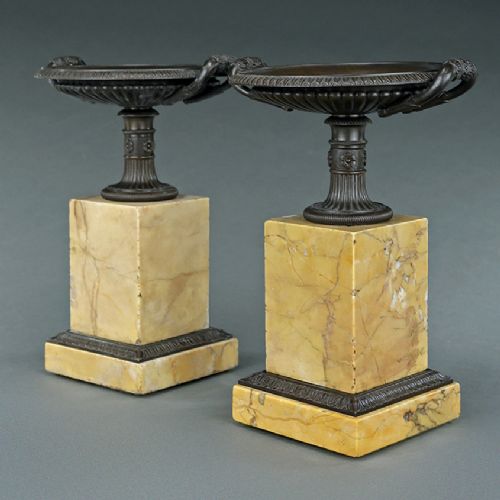
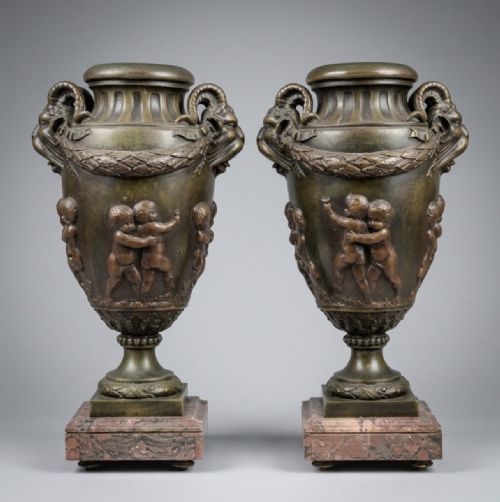
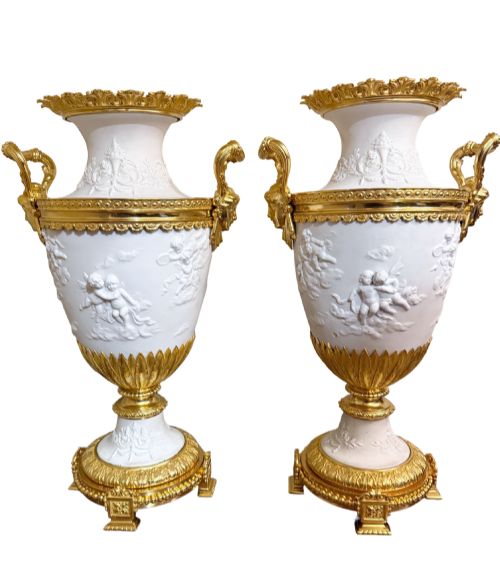
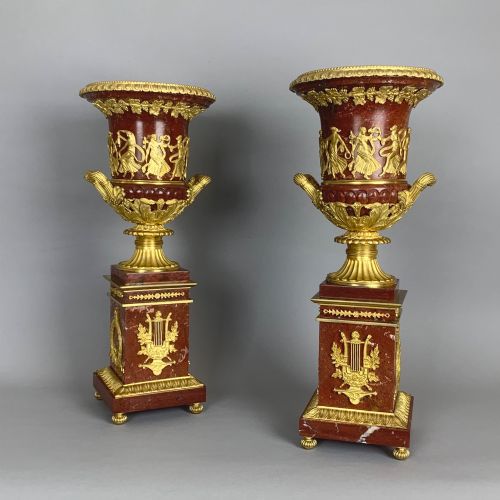
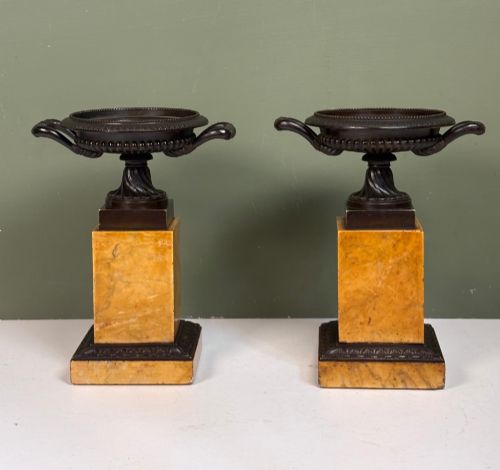
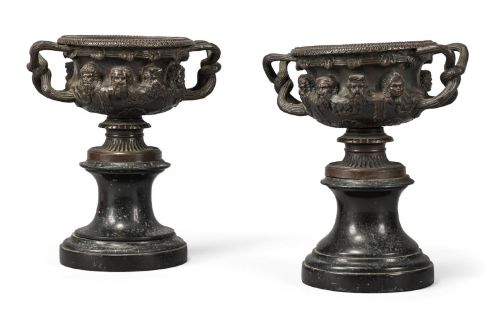
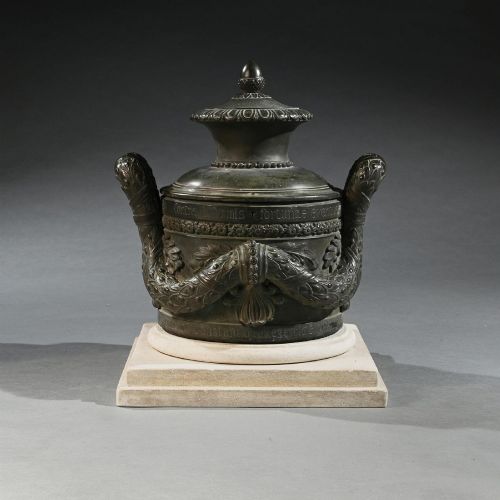
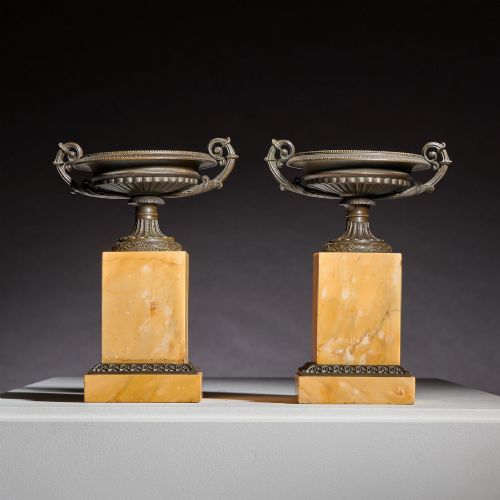
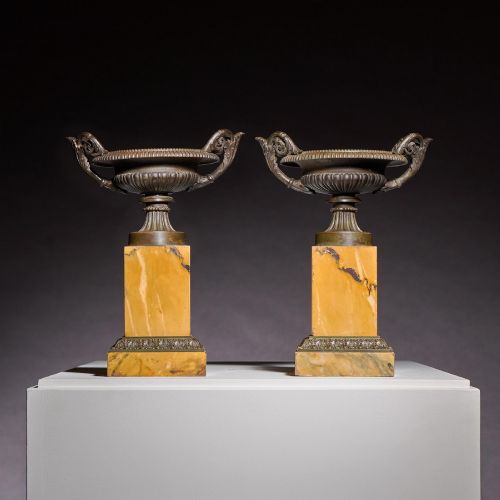
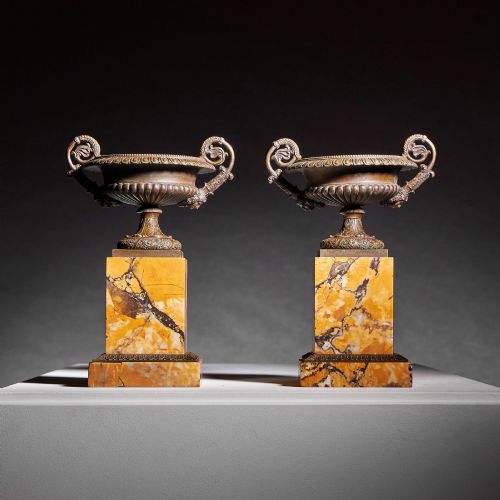
Neoclassical bronzed urns draw directly upon ancient Greek and Roman forms, including Warwick and Campana shapes recorded across the nineteenth century. These decorative vessels appear frequently paired as mantle or pedestal ornaments, often combining metal finishes with contrasting marble bases.
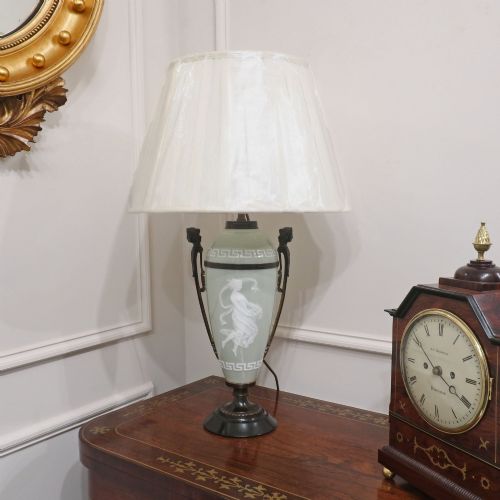
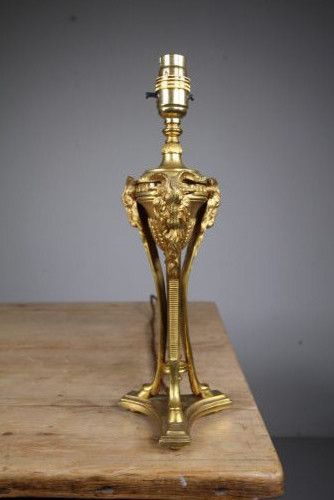
The selection ranges from French Empire and Louis XVI revival designs to English Regency pieces and Italian Grand Tour reductions. Alongside traditional covered urns, the category encompasses tazzas, ewers, and classical vases adapted into table lamps or inkwells.
Originating predominantly from nineteenth-century European workshops, these items reflect a sustained fascination with classical antiquity. Buyers encounter patinated and gilt bronze surfaces frequently mounted on white onyx, Siena, or rouge marble.
Materials and Technique
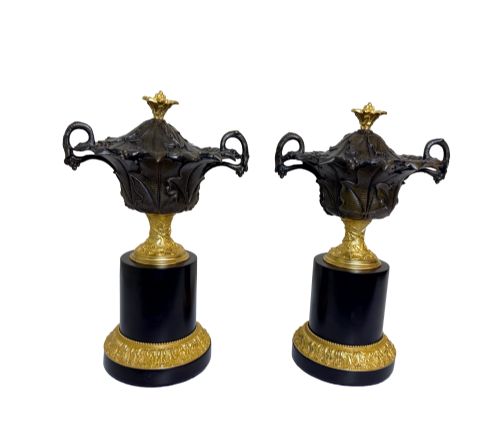
Foundry work relies upon traditional bronze casting, yielding patinated or gilt surfaces that receive precise chased detailing. Ormolu mounts in cast brass or bronze provide gilded highlights against dark patinated metal bodies.
Natural stones serve as heavy structural plinths, with marble and white onyx turned and polished to support metal urns and tazzas. Porcelains from Sevres occasionally appear combined with metal mounts, adding painted decorative contrast to the composition.
Design styles span French Empire, Regency, and Louis XVI revival periods across various decorative objects.
Evaluating Quality
The refinement of the chasing work on the bronze surfaces dictates the definition of classical motifs like acanthus leaves and ram heads. Sharp, deeply articulated casting distinguishes superior workshop production from softer, later reductions.
The choice and execution of the stone base contribute significantly to overall balance, with dense Siena or rouge marble adding structural weight. Harmonious proportions between the metal vessel and its stone or ormolu mount signal higher manufacturing standards.
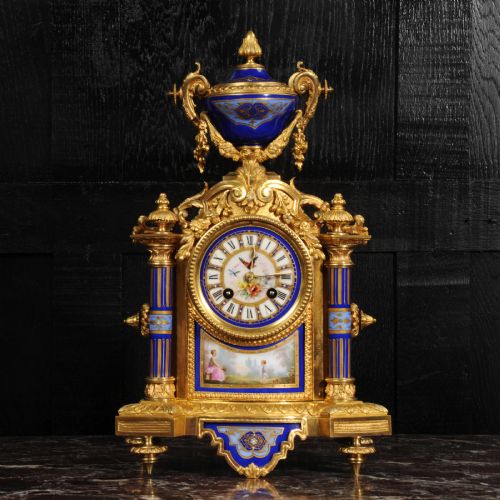
Japy Freres
The Neoclassical Bronzed Urns Glossary
- Ormolu
- Gilded bronze produced by applying a mercury-gilding amalgam to cast bronze. This technique creates a durable, luminous golden finish characteristic of French decorative metalwork.
- Grand Tour
- A cultural journey undertaken by nineteenth-century elites across Europe, acquiring classical reductions and antiquities. Souvenirs from these travels included miniature bronze vases and architectural models.
- Tazza
- A shallow bowl or cup raised on a stem and foot, modelled after ancient vessels. These objects function as decorative centrepieces or mantel ornaments.
- Campana Urn
- A bell-shaped classical vessel with a flared rim and integrated foot, derived from ancient pottery forms. These shapes were frequently cast in bronze during the nineteenth century.
- Cassolette
- A decorative vessel featuring a reversible lid that functions either as a closed urn or an incense burner. They often incorporate ormolu mounts and marble bodies.
Neoclassical Bronzed Urns: Frequently Asked Questions
What are neoclassical bronzed urns?
These decorative metal vessels emulate ancient Greek and Roman forms, produced primarily during the nineteenth century as interior ornaments. They integrate classical motifs such as handles, swags, and foliate borders.
Craftsmen drew inspiration from archaeological excavations of the period, creating items ranging from small desk objects to large architectural mantel ornaments.
How were these urns used historically?
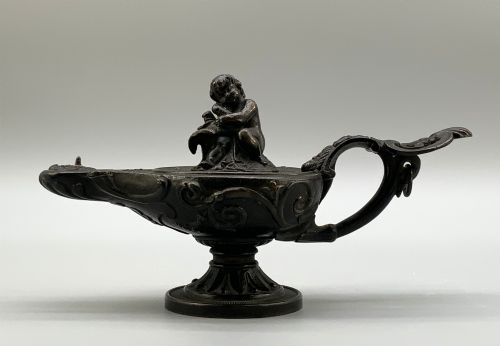
Nineteenth-century interiors utilised these vessels on mantelpieces, sideboards, and pedestals as purely decorative architectural accents. Some examples were adapted into functional objects like inkwells or oil lamps.
Grand Tour travellers collected smaller reductions of famous ancient vases to display their classical erudition at home.
How do you style them in a modern room?
Their sculptural silhouettes suit placement on heavy timber sideboards, neoclassical mantelpieces, or console tables. Paired sets create symmetrical focal points within a room.
The rich patination of bronze and marble contrasts effectively against both traditional panelled walls and minimalist contemporary interiors.
How can you tell periods apart?
Early nineteenth-century pieces, including Regency and French Empire designs, demonstrate sharper casting and tighter adherence to classical proportions. Later nineteenth-century revivals often incorporate softer detailing and varied stone bases.
The presence of specific foundry marks or mounting techniques helps narrow down the manufacturing decade.