

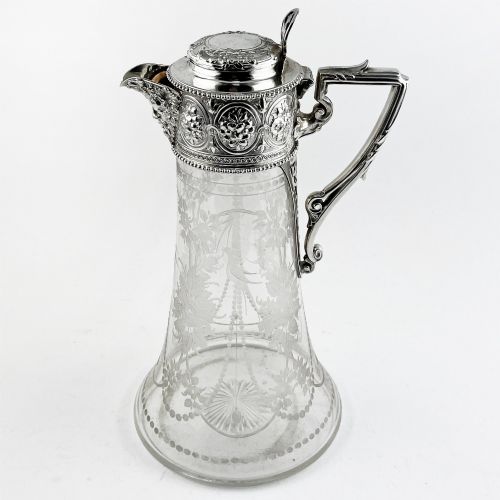
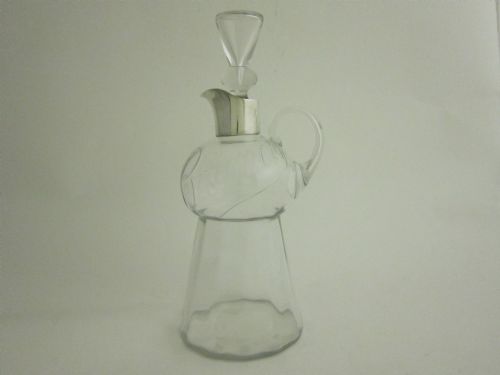
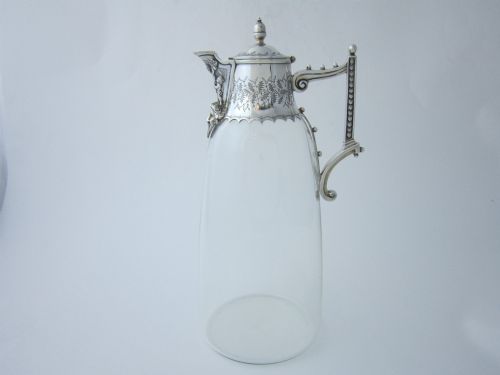
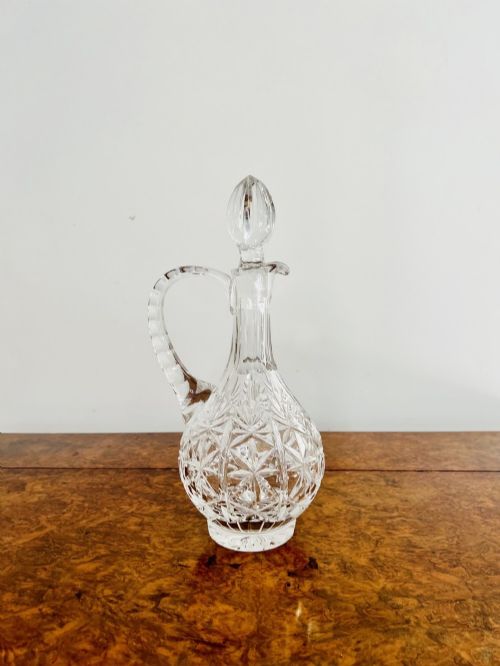
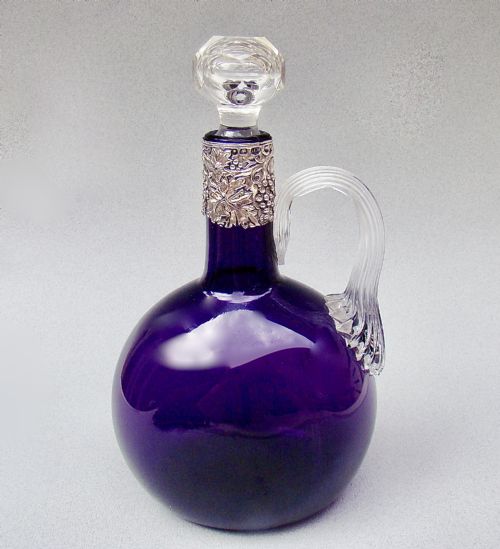
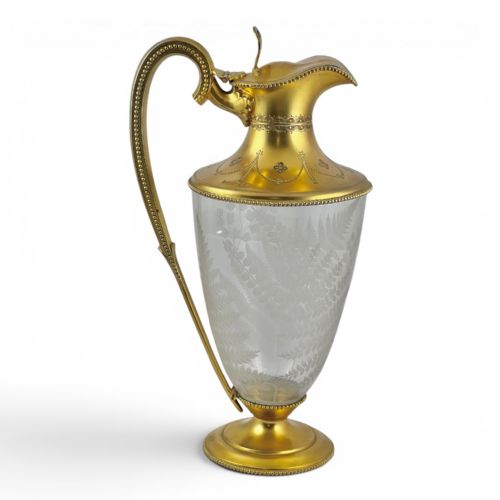
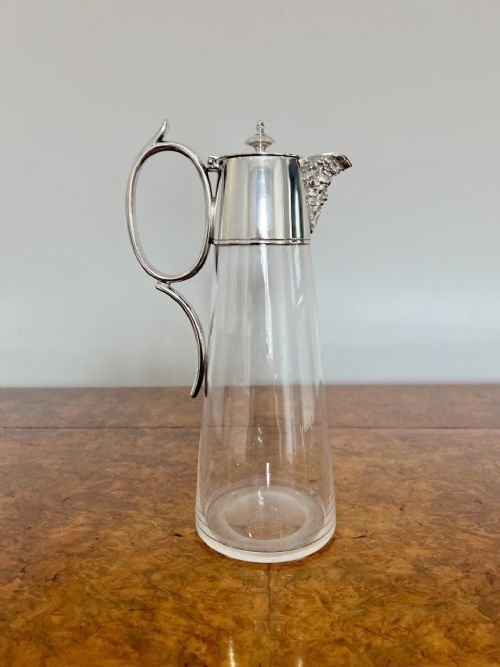
Antique Claret Jug Decanter
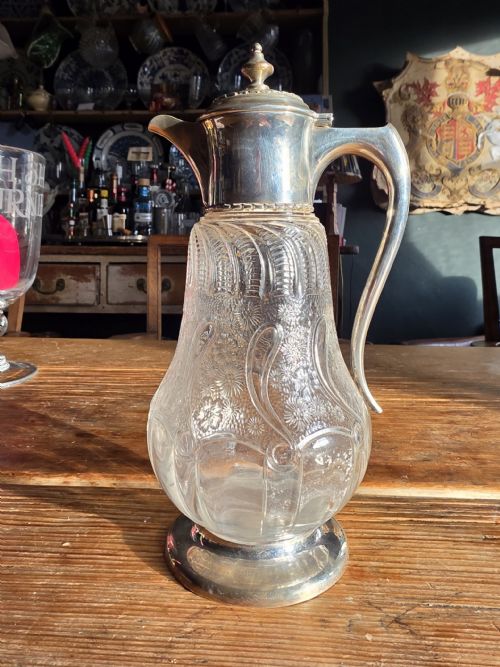
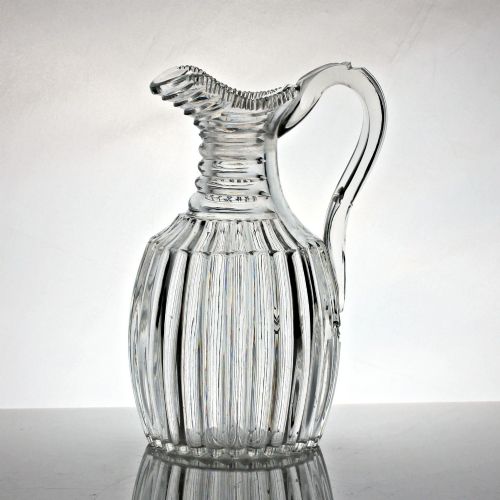
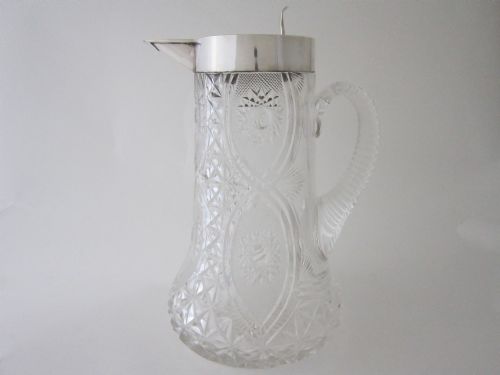
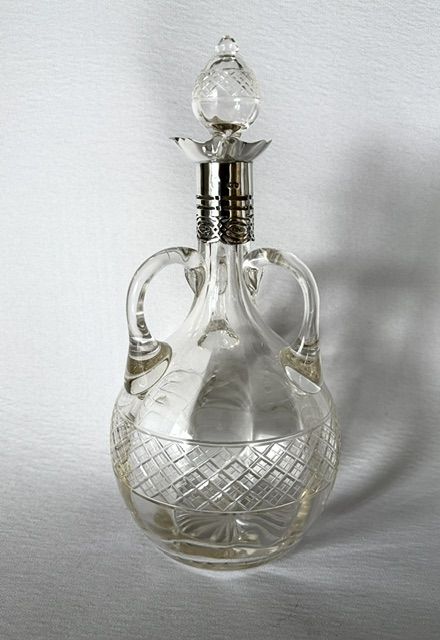
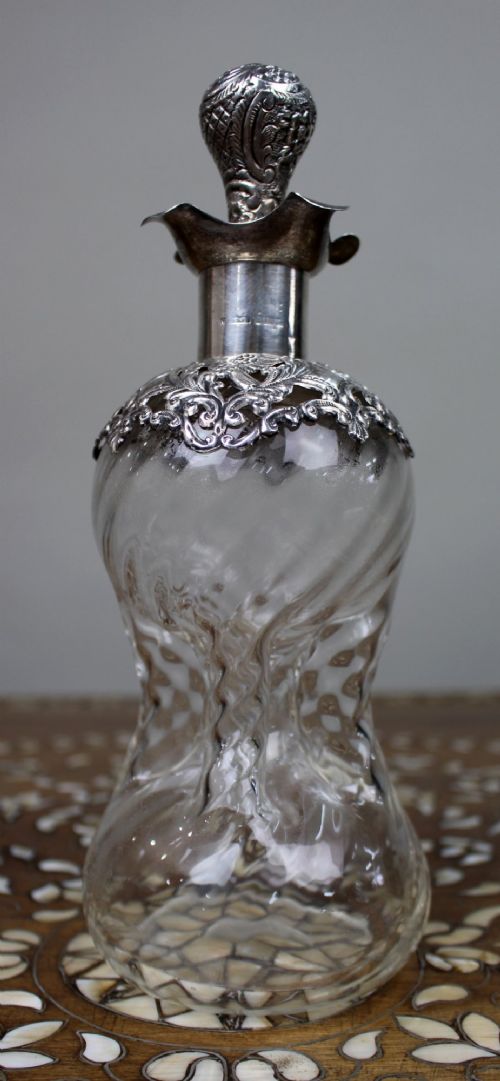
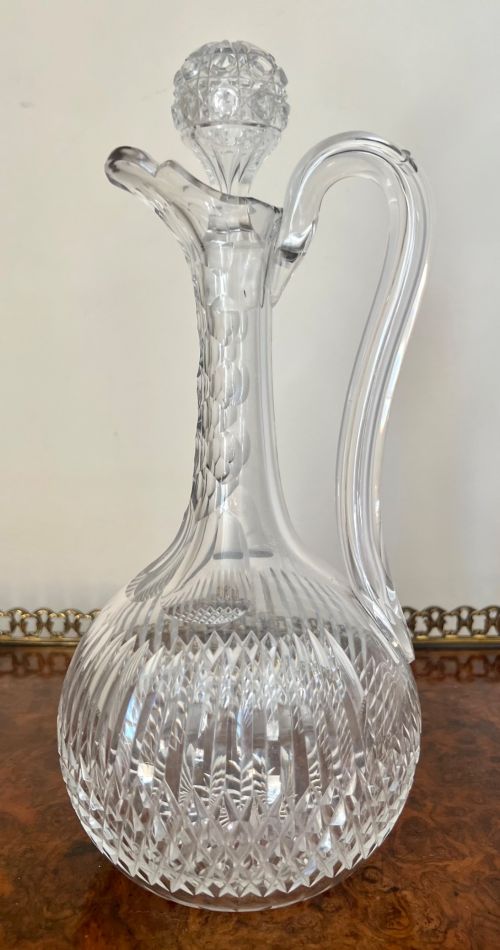
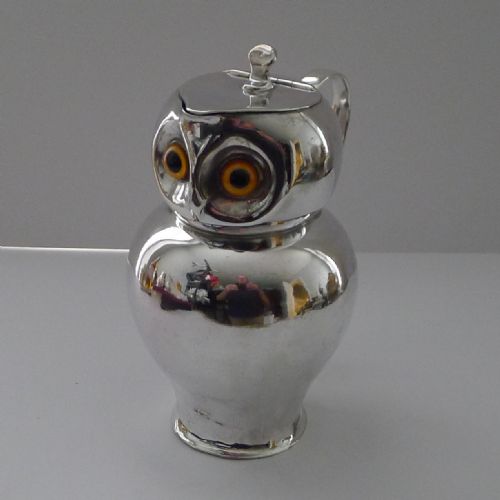
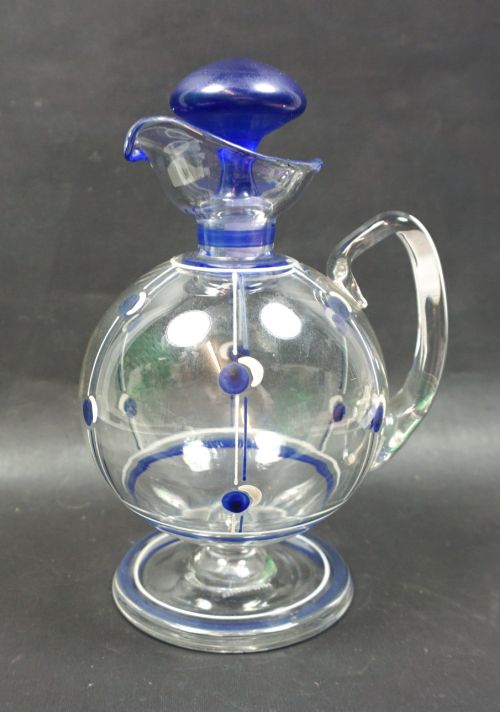
These antique claret jug decanters combine heavy glass vessels with ornate metal mounts for serving wine with formality.
Antique Claret Jug Decanter
An antique claret jug decanter brings together a glass body and a metal pourer, designed specifically for holding and serving wine at the dining table. The most frequent examples you will encounter span the Victorian and Edwardian eras, utilising distinct forms like ewers, pitchers, and carafes.
The vessels range from plain clear glass to deeply coloured bodies in cranberry, green, and amethyst hues. Many incorporate decorative metal mounts, handles, and hinged lids in sterling silver, silver plate, or pewter.
Makers utilised various stylistic movements, resulting in pieces reflecting Georgian restraint, Victorian elaboration, Arts and Crafts simplicity, and Art Deco geometry. These items served a practical domestic purpose in formal dining rooms before transitioning into decorative display pieces.
How they were made
Glass bodies were formed using techniques such as heavy cutting, moulding, and free-blowing, often enhanced with surface engraving, acid etching, enamel painting, or overlay methods. Crystallisation and lead content contributed to the refractive weight and clarity of the material.
Mounts, handles, and spouts were cast or stamped from sterling silver, silver plate, pewter, or Old Sheffield Plate, then secured to the glass neck with collars. Silversmiths and metalworkers incorporated hinged mechanisms and detailed cast elements like Bacchus masks, animal figures, or serpentine handles into the metalwork.
Regional styles span English production alongside Bohemian coloured glass and Czechoslovakian Art Deco enamel designs.
What varies in quality
The standard of an antique claret jug decanter depends heavily on the crispness of the glass cutting and the weight of the metal mounts. Thickly cast sterling silver or heavy silver plate denotes a higher standard of craftsmanship than thin stamped alternatives.
Artistic execution also separates ordinary pieces from exceptional ones, particularly where hand-engraved motifs, enamel decoration, or figural handles such as birds and serpents show precision and anatomical detail. The overall harmony between the glass body and the metal collar determines the visual success of the piece.
Asprey and Co. Ltd·Henry Matthews·Mappin & Webb·Liberty Co·Richardsons
The Antique Claret Jug Decanter Glossary
- Claret jug
- A specialised pouring vessel designed for serving red wine, typically featuring a handle and a hinged lid. These pieces combine glass bodies with metal mounts.
- Cut glass
- Glass decorated by grinding facets or patterns into the surface using rotating wheels. This technique enhances the refractive quality of the material.
- Silver plate
- A base metal such as copper or Britannia metal coated with a thin layer of silver. This method offered the appearance of solid silver at a lower cost.
- Ewer
- A large jug with a wide spout and a curved handle, often used for water or wine. The form derives from classical ceramic and metal shapes.
- Nailsea glass
- Glassware produced in the English village of Nailsea, known for characteristic looped or splashed surface decorations. Pieces frequently feature white or coloured glass trails on a contrasting ground.
Antique Claret Jug Decanter: Frequently Asked Questions
How do I clean an antique claret jug decanter?
Fill the vessel with warm water and mild detergent, avoiding harsh abrasives that might scratch the glass or damage silver mounts. Use soft bottle brushes designed for narrow necks to remove residue gently.
Dry the metal components immediately after washing to prevent tarnish or water spots. Leave the stopper or lid off until the interior is completely dry.
Can I still use these for serving wine?
Many antique decanters remain fully functional for serving claret and other wines at the table. Ensure the interior is thoroughly cleaned and inspect the mount to confirm the collar remains secure.
Avoid exposing antique glass to sudden temperature changes, such as pouring very cold liquids into a warm vessel, to prevent cracking.
How do I distinguish Victorian from Edwardian examples?
Victorian pieces often display heavier ornamentation, deeply cut glass patterns, and elaborate motifs like floral engraving or classical masks. Silver mounts from this era frequently carry clear hallmarks indicating the exact year of assay.
Edwardian items tend to lean towards lighter proportions and cleaner lines, sometimes reflecting neoclassical revivals or simpler cut glass designs.
What is the difference between crystal and glass?
Crystal contains added lead oxide, which increases the weight, brilliance, and acoustic resonance of the material compared to standard soda-lime glass. This high lead content allows for deeper and sharper facet cutting.
Many nineteenth-century claret jugs utilised high-clarity crystal to showcase the colour of the wine within.