

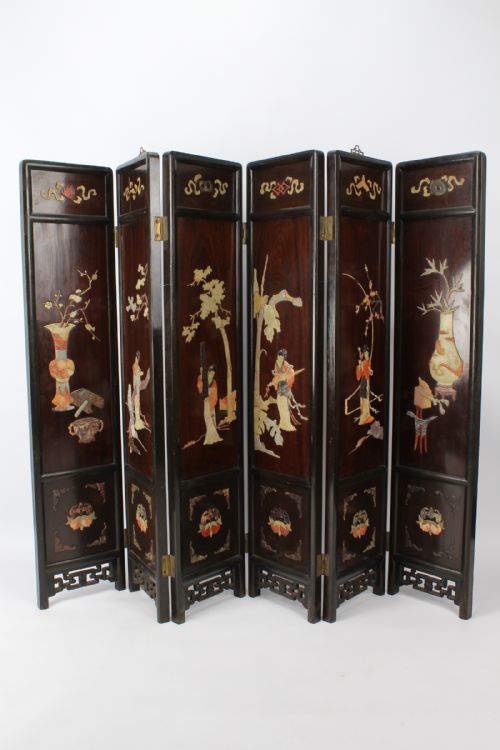


Antique Chinoiserie Screen
An antique chinoiserie screen brings painted lacquer, carved wood, and gilded motifs together to divide a room or catch the firelight.
Antique Chinoiserie Screen
An antique chinoiserie screen encompasses multi-panel folding room dividers, freestanding dressing screens, and smaller hearth pieces designed to deflect fireplace heat. These items emerge in diverse scales, ranging from intimate three-fold dressing screens up to grand eight-fold room dividers that command an entire wall.
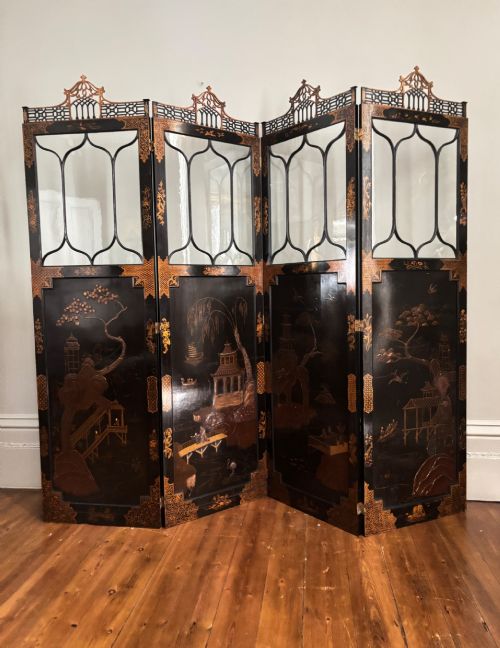
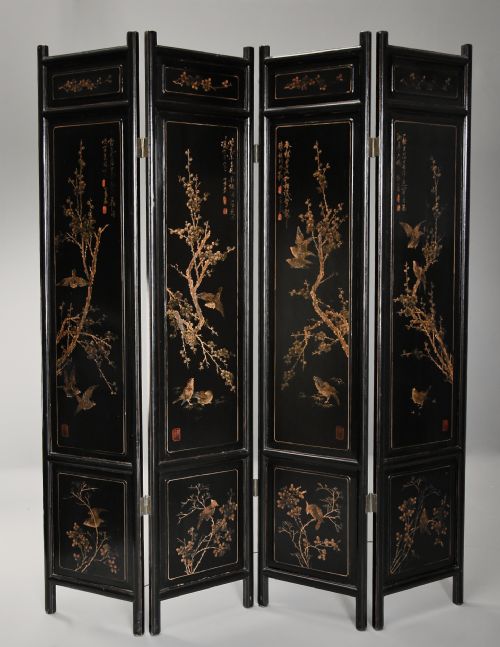
The version most commonly met on this page is the black lacquered folding screen, often spanning four to eight leaves, decorated with painted scenes or incised coromandel work. Alongside these stand smaller pole screens and fire screens, which adapt the decorative vocabulary for specific domestic uses.
Materials and construction methods
Wood and hardwood form the structural core for the majority of these panels, providing the stable armature necessary for multi-fold hinges and heavy surface treatments. Lacquer is then applied in multiple layers to create deep, dark grounds.
Gold leaf and painted pigments build up the pictorial scenes, while specialised techniques such as coromandel incision cut directly through layers of lacquer to reveal contrasting grounds beneath. Silk and glass also appear in specific fire screen and wall panel formats.
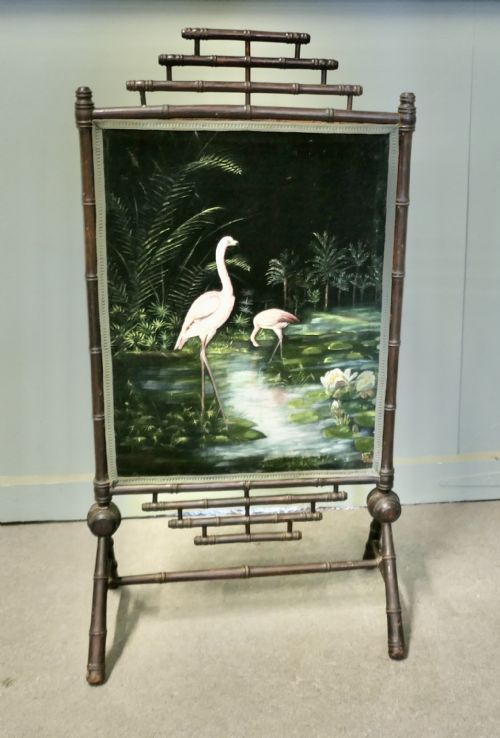
Flamingos occasionally make unexpected appearances alongside traditional dragons and pagodas on nineteenth-century painted lacquer panels.
Distinctions in execution and depth
Quality rests in the depth of the lacquer layers and the precision of the hand-painted or incised details, where finer examples display intricate figures, architecture, and flora with distinct perspective. Surface wear tells a story of age, but the crispness of the carving and the richness of the gilding set superior pieces apart.
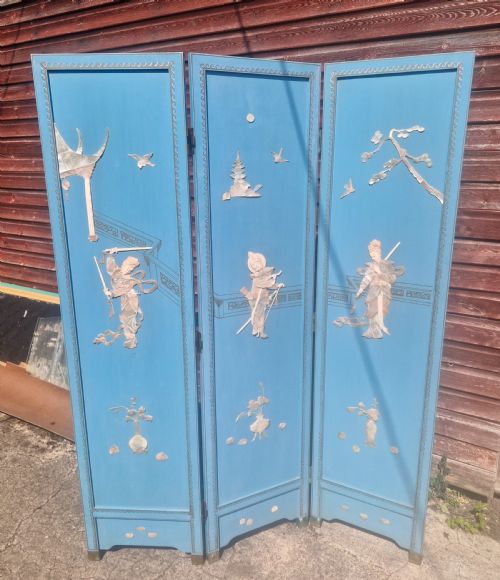
The integrity of the folding hinges and the stability of the wooden panels also govern the standing of a piece. Substantial hardwood frames support heavier compositions, whereas simpler constructs rely on lighter timber or alternative base materials.
The Antique Chinoiserie Screen Glossary
- Chinoiserie
- European artistic interpretation of Chinese and East Asian decorative styles, popular across various centuries. It emphasises painted landscapes, figures, and gilded motifs.
- Coromandel lacquer
- A Chinese incised lacquer technique where designs are cut into the lacquer ground and filled with colours or gold. These are typically found on substantial multi-fold panels.
- Pole screen
- A freestanding fireplace screen featuring an adjustable vertical wooden rod holding a small panel. It was designed to shield a person's face from the direct heat of an open fire.
- Fire screen
- A protective panel placed before a hearth when the fire is unlit or banked down. They take various forms, including folding wooden panels and fabric inserts.
- Dressing screen
- A portable folding screen utilised for privacy during changing or washing. They often appear in domestic bedchambers and dressing rooms.
Antique Chinoiserie Screen: Frequently Asked Questions
What is an antique chinoiserie screen?
An antique chinoiserie screen is a decorative folding panel or room divider decorated with European interpretations of East Asian motifs, landscapes, and figures. These pieces range from intimate dressing screens to large eight-fold room dividers.
They serve both practical and aesthetic functions within a domestic interior, functioning to divide open spaces, create privacy alcoves, or add decorative focus to a room.
How were fire screens used?
Fire screens were positioned in front of fireplaces during warmer months or when fires were not actively burning. They disguised dark hearths and added colour to the room.
Pole screens specifically allowed the user to slide the decorative panel up or down the vertical rod to shield their face from intense fireplace heat.
Where should I place a room divider?
Room dividers work well in open-plan spaces to define distinct seating areas or create a subtle corridor near an entryway. They also function effectively against plain walls as large-scale background art.
Positioning them away from direct, harsh sunlight helps protect the delicate lacquer work, gold leaf, and painted surfaces over time.