





Antique Chinese Portrait
These antique chinese portrait pieces bring historic East Asian artistry and character into your home.
Antique Chinese Portrait
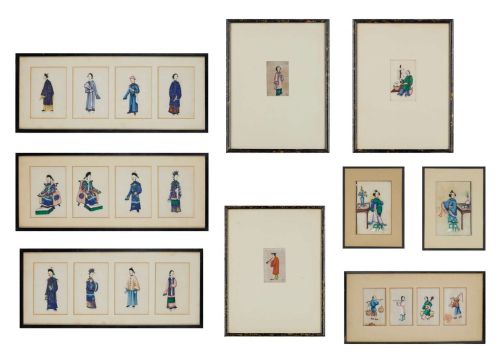
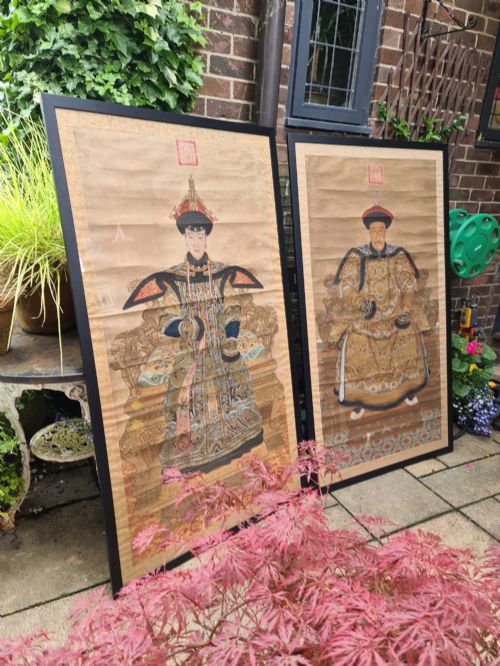
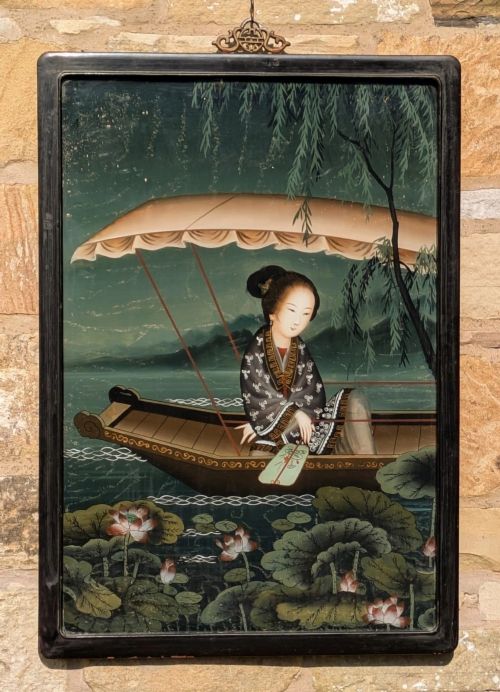
When you search for antique chinese portrait pieces, you encounter a fascinating mix of wall art, scroll paintings, and reverse glass paintings spanning the eighteenth century through to the mid twentieth century. These works capture ancestral figures, dignitaries, and historical scenes originating from Chinese domestic workshops and China Trade centres.
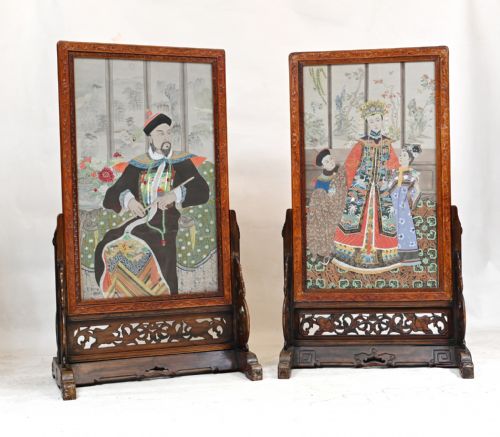
Makers and artists worked within distinct stylistic traditions such as the Qing Dynasty and Chinese Export, utilising traditional formats like silk woven screens and hanging scrolls. Each piece serves as a visual record of historical costume, status, and portraiture conventions.
Materials and construction methods
Artists applied ink, pigment, and watercolour onto traditional supports including pith paper, silk, canvas, and paper. Reverse glass paintings required meticulous brushwork applied directly to the rear of the glass panel to be viewed from the front.
Frames and structural elements commonly incorporate wood and brass fittings, while scroll paintings utilise fabric mountings. Silk woven screens combine textile artistry with hardwood frames for stability and display.
Antique Chinese Portrait Retail Price Guide 2026
Typical asking prices for chinese portrait among the pieces listed under this phrase on Sellingantiques today, from the lower quarter to the upper quarter. They describe what is for sale here now, not the wider market.
Sailors and merchants on the Pearl River commissioned bustling marine oil paintings alongside traditional ancestral portraits.
Assessing quality in portraiture
Quality rests upon the precision of the brushwork, the vibrancy and preservation of the pigments, and the integrity of the original mount or frame. Finer examples display meticulous detail in facial expressions, textiles, and regalia.
Condition plays a significant role, as delicate materials like pith paper and silk are susceptible to fading, staining, and surface abrasion over time. Pieces retaining their original frames and vibrant colour retain stronger visual impact.
The Antique Chinese Portrait Glossary
- Pith paper
- A delicate material formed from the pith of the Tetrapanax papyrifer plant, commonly used in nineteenth-century Chinese watercolour painting. It has a velvet-like texture that absorbs pigment vividly.
- Reverse glass painting
- An artwork painted directly on the back of a glass panel so the finished image is viewed through the front. This technique protects the paint layer from atmospheric damage.
- Scroll painting
- A traditional East Asian format mounted on flexible materials such as silk or paper, designed to be rolled up when not displayed. They often depict immortals, landscapes, or ancestral subjects.
- China Trade
- Goods produced in China specifically for export to Western markets during the eighteenth and nineteenth centuries. These items often blended traditional Chinese techniques with Western subject matter.
- Qing Dynasty
- The last imperial dynasty of China, ruling from sixteen forty-four until nineteen twelve. Many surviving portraits date from the later decades of this period.
Antique Chinese Portrait: Frequently Asked Questions
What are antique chinese portraits made of?
These works utilise diverse materials including silk, pith paper, canvas, and glass, decorated with ink, watercolour, and pigment.
Supports are often housed in wood frames or mounted as scrolls with brass hardware.
How do I hang a scroll painting?
Traditional scroll paintings require careful handling due to their flexible silk or paper mountings.
Display them away from direct sunlight and excessive humidity to preserve the delicate pigments.
What is reverse glass painting?
This technique involves painting an image on the reverse side of a glass sheet.
When viewed from the front, the glossy surface gives the colours a luminous depth.
How do I date these portraits?
Dating relies on stylistic markers, costume details, materials, and framing techniques.
Most pieces span the eighteenth to mid twentieth centuries, reflecting Qing Dynasty and export trade aesthetics.