




Antique Chinese Pendant
These antique chinese pendant pieces combine traditional carving with precious metals and fine hardstones from the nineteenth and early twentieth centuries.
Antique Chinese Pendant
An antique chinese pendant is an ornamental carving suspended from a cord or mounted in metal, often taking the form of a deity, mythical beast, or symbolic disc. Pieces matching this search phrase span the Qing Dynasty, the Republic Period, and the Edwardian era.
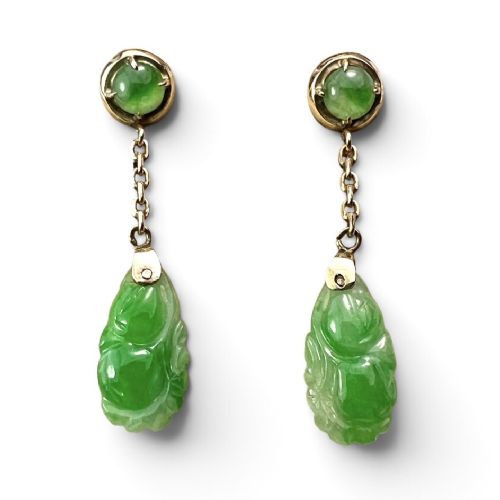
The materials centre heavily on jade, jadeite, nephrite jade, and amber, frequently paired with gold or platinum settings. Certain items arrive as part of necklaces or drop earrings rather than standalone pendants.
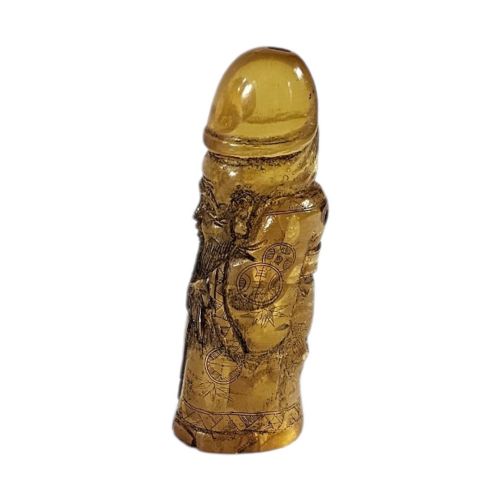
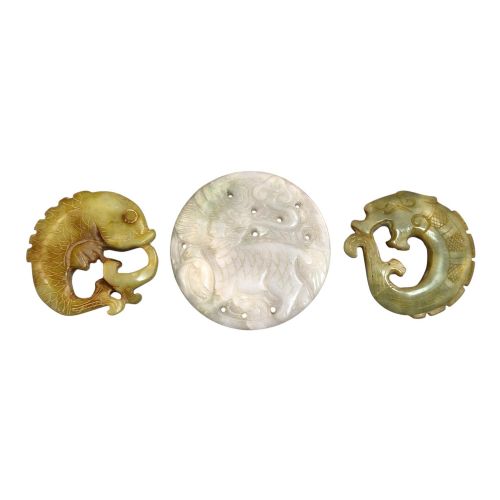
Carved motifs draw upon traditional imagery, depicting figures such as Shoulao alongside dragons, fish, and auspicious symbols. These objects reflect both domestic Chinese taste and export markets of the period.
Materials and techniques
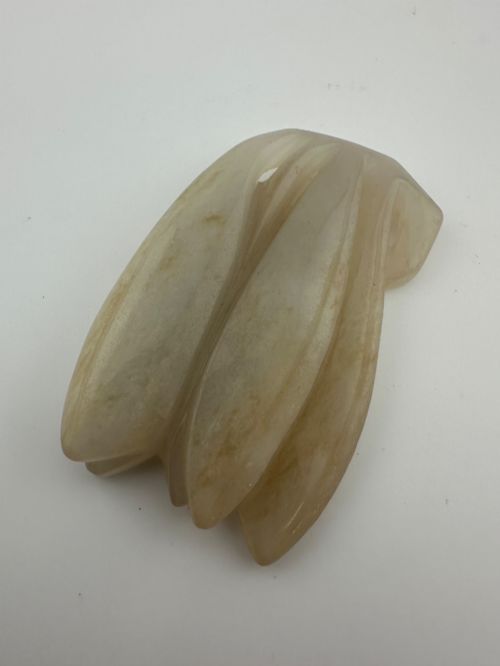
Hardstones like jadeite and nephrite jade are shaped and drilled using abrasive grinding techniques developed over centuries. Artisans also carve organic materials such as amber into intricate figurative shapes.
Precious metals including gold and platinum provide mounts and suspension loops, occasionally accented with diamonds. Bronze and champleve enamel also appear among the decorative metalwork of the period.
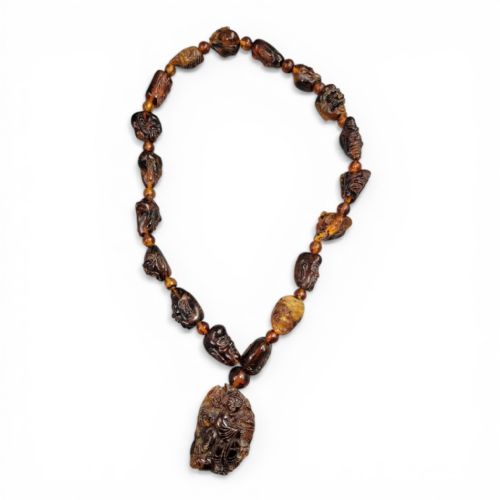
Eighteen carved luohan heads march along an amber necklace, keeping company with a small figural pendant.
Quality and execution
The crispness and depth of the carving define the visual merit of the piece. Master carvers achieve smooth surfaces and precise anatomical or symbolic details within dense mineral structures.
Material selection dictates the underlying value, from translucent pale celadon jade to richly coloured amber and high-carat gold mountings. The harmony between the natural stone and the chosen motif guides the overall success of the object.
The Antique Chinese Pendant Glossary
- Celadon
- A pale green jade or ceramic glaze resembling greyish-green sea water. This tone is particularly sought after in nineteenth-century carvings.
- Bi disc
- A flat circular jade piece with a circular hole in the centre. These ancient ritual forms continued as popular decorative pendants.
- Qing Dynasty
- The last imperial dynasty of China, lasting from sixteen forty-four to nineteen twelve. Pieces from this era often display formal court iconography.
- Republic Period
- The era in Chinese history following the fall of the Qing Dynasty, spanning nineteen twelve to nineteen forty-nine. Design during this phase frequently incorporated traditional motifs with slight Western stylistic influences.
- Pixiu
- A mythical winged celestial creature of good omen in Chinese culture. Carvings of this beast serve as protective amulets.
Antique Chinese Pendant: Frequently Asked Questions
How do I date an antique chinese pendant?
Dating relies upon the stylistic conventions of the carving, the nature of the mineral, and any accompanying precious metal mounts. Nineteenth-century examples often display deep Qing Dynasty iconography, whilst early twentieth-century pieces align with Republic Period production.
Material tests and examination of drill holes or wear patterns further clarify the age of the stone. Comparing the piece to dated comparative examples in museum collections establishes its chronological context.
What is the difference between jade and jadeite?
Jade is a term encompassing two distinct minerals: nephrite and jadeite. Nephrite is a tough, fibrous calcium-magnesium silicate historically dominant in earlier Chinese carvings.
Jadeite is a sodium-aluminium silicate that typically exhibits a more crystalline structure and vibrant colour range. Both materials feature prominently across antique Asian jewellery and decorative items.
How were these pendants worn?
Pendants were suspended from silk cords, textile sashes, or precious metal chains as personal ornaments. They often functioned as toggle pieces for pouches or were hung from clothing as auspicious charms.
In some instances, carved plaques formed the central component of elaborate necklaces or were mounted with gold ear wires to create drop earrings.
What do the animal motifs mean?
Motifs such as dragons, fish, and mythical beasts carry specific symbolic wishes for longevity, wealth, or protection. The Qilin represents prosperity, while bats signify good fortune.
Carvers utilised these visual puns and ancient legends to convey blessings to the wearer. Identifying the creature reveals the intended cultural purpose of the object.