


Antique Chinese Jadeite
Antique chinese jadeite items are carved mineral pieces and jewellery mounted in gold or platinum, offering remarkable depth and vivid green colour.
Antique Chinese Jadeite
When you search for antique chinese jadeite, you encounter carved ornaments, figures, and jewellery spanning the nineteenth and twentieth centuries. These items encompass distinct periods including the Qing Dynasty, Edwardian era, and Art Deco phase, alongside Republic period works.
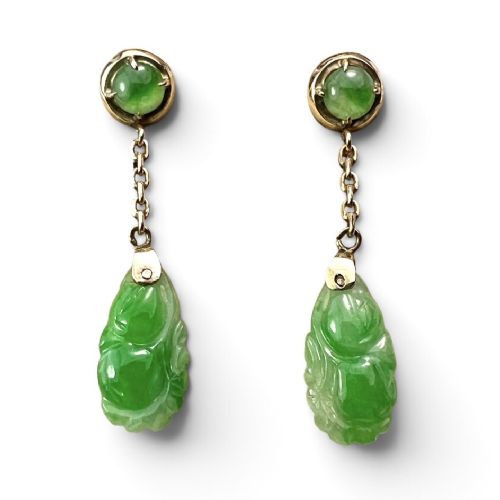
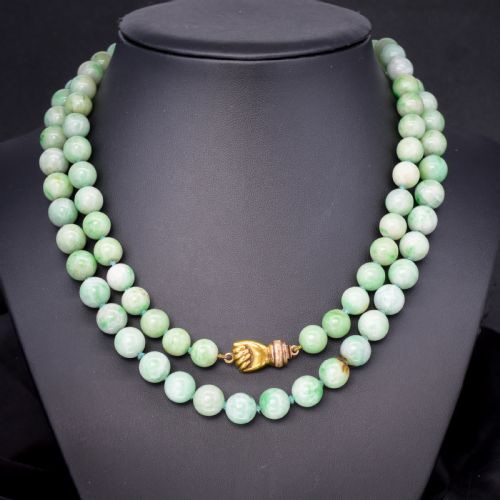
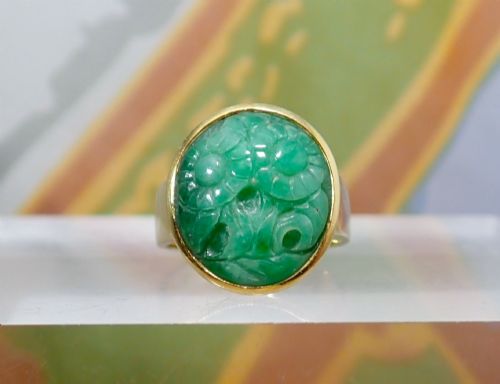
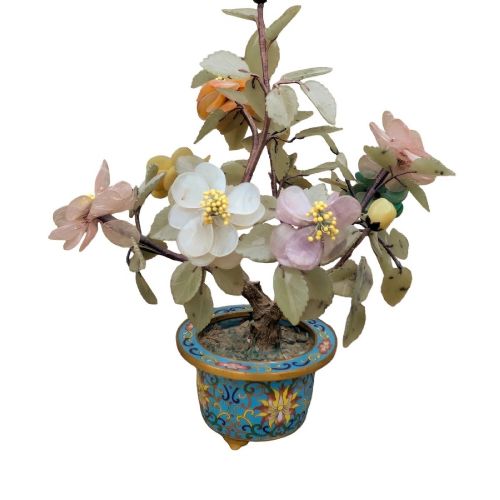
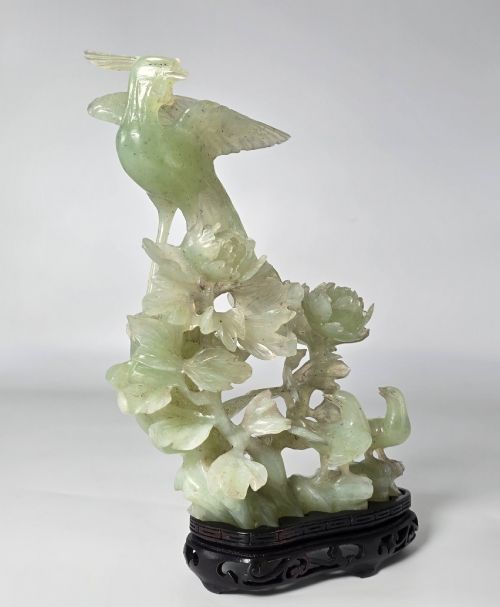
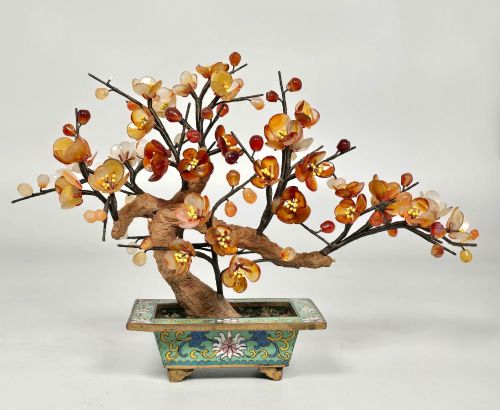
The jewellery forms on this page include drop earrings, panel rings, beaded strand necklaces, and pendants mounted in nine-carat, fourteen-carat, and fifteen-carat gold, as well as platinum and diamond settings. Decorative items comprise carved mountain landscapes, figures with lotus motifs, plaques, and bonsai trees with hardstone leaves.
You are most likely to meet twentieth-century rings and earrings alongside nineteenth-century carvings and pendants. The materials paired with the jadeite range from gold and hardwood stands to pearls and diamonds.
How they were made
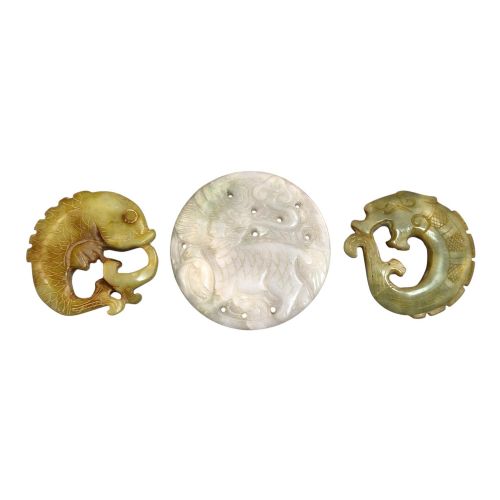
The makers of these items utilised mineral stones including jadeite, nephrite, and general hardstone, often carving them with intricate motifs such as dragons, carp, and floral scenes. Hardwood stands were shaped to support larger landscape sculptures and figures.
Metals such as gold and platinum provide structural settings for jewellery pieces, combined with diamonds and pearls in specific Edwardian and Art Deco designs. Cloisonné work also appears alongside carved hardstone elements in decorative botanical forms.
One unusual nineteenth-century piece combines a jade beaded strand with a figa hand clasp.
What varies in quality
The depth of carving and the intricacy of the motifs separate simpler items from the finest pieces. Figures and landscapes show varying degrees of relief work, from shallow incisions to deep, multi-layered undercut scenes with dragons and figures.
The purity and vibrancy of the natural green colour within the mineral stone influence the character of each piece. Additionally, the quality of the surrounding precious metal mount, whether gold, platinum, or diamond-set, contributes to the overall execution.
The Antique Chinese Jadeite Glossary
- Jadeite
- A pyroxene mineral and one of the primary materials identified in these carvings and jewellery pieces. It displays significant variation in green colour intensity.
- Bi disc
- A flat circular jade or hardstone object with a circular hole in the centre, often associated with ancient Chinese symbolism.
- Qilin
- A mythical hooved creature frequently depicted in traditional Chinese stone carvings and amulets.
- Chilong
- A hornless dragon motif commonly found carved into Qing Dynasty and Republic period jade ornaments.
- Figa hand
- A talismanic gesture hand shape utilised as a clasp on specific beaded strand necklaces in the evidence.
Antique Chinese Jadeite: Frequently Asked Questions
What periods do these pieces date from?
The items span the nineteenth century, including the Qing Dynasty and late Qing periods, through to the Edwardian era and the nineteen-twenties, thirties, and forties.
Twentieth-century examples often reflect Art Deco design influences alongside traditional Chinese motifs.
What metals are used in the jewellery?
Gold of various carat values, including nine-carat, fourteen-carat, and fifteen-carat compositions, appears frequently in the rings and earrings.
Platinum and diamond settings also occur in specific pieces alongside pearl accents.
How were the larger sculptures displayed?
Larger decorative sculptures, figures, and mountain landscapes were produced with bespoke hardwood stands to support the heavy stone carvings.
These stands elevate the carved jadeite and provide a stable base for display.
What motifs appear on the carvings?
Common subjects include dragons such as the chilong, mythical creatures like the qilin, carp, horses, lotus plants, and prunus bonsai trees.
Geometric panels and abstract symbolic shapes like bi discs also feature prominently.