
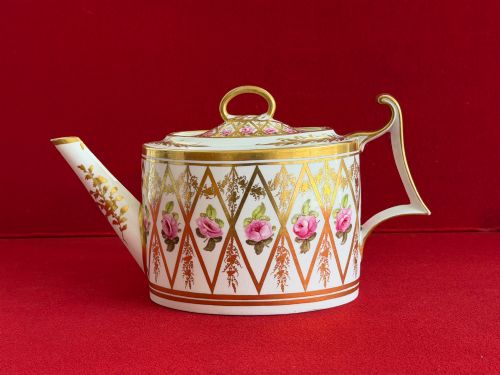
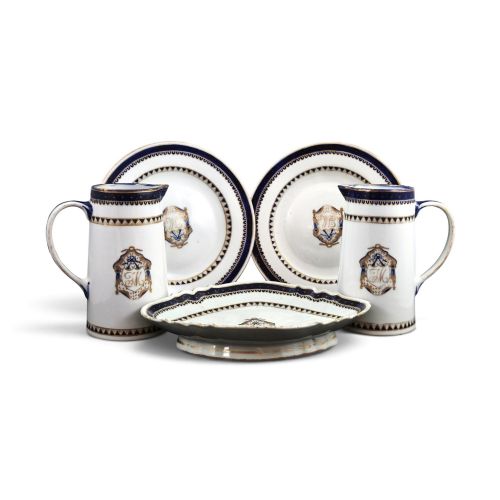
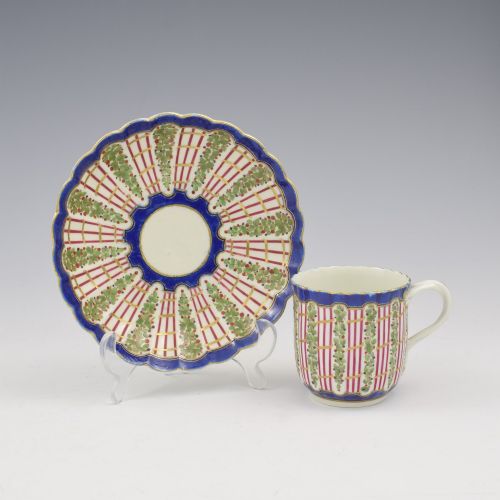
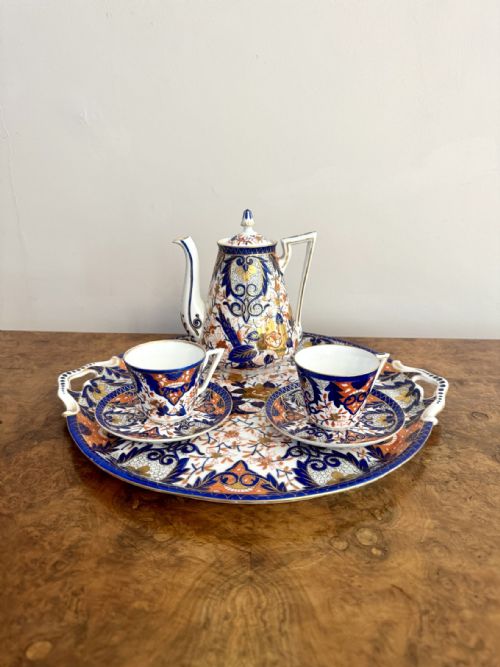



Antique China Tea Service
An antique china tea service brings eighteenth and nineteenth-century ceramic artistry directly to the table, offering a complete historical drinking set for collectors and hosts.
Antique China Tea Service
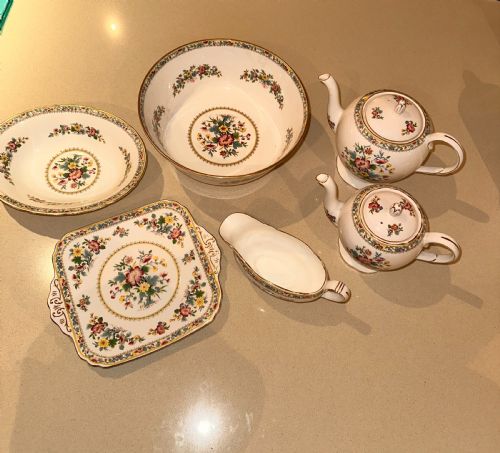
An antique china tea service comprises matched or coordinated groupings of teacups, saucers, teapots, and serving vessels designed for social gatherings.
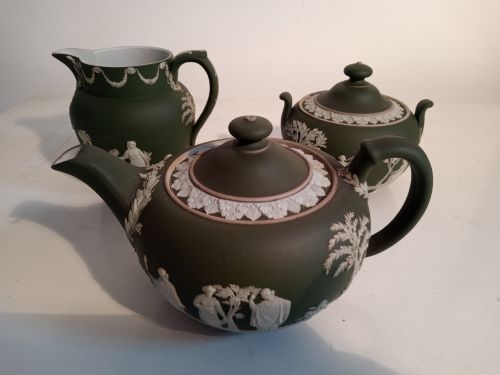
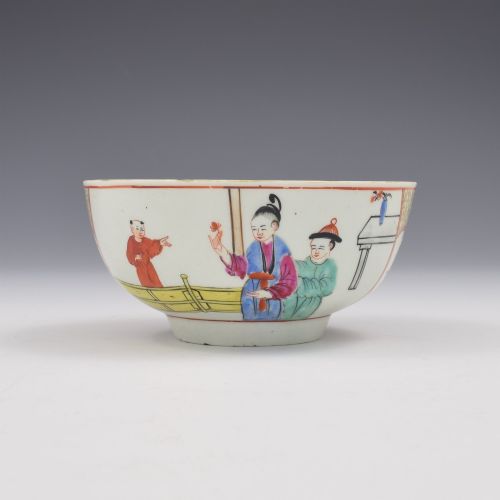
The selections span from eighteenth-century Chinese export porcelain and First Period Worcester to nineteenth-century Victorian services and twentieth-century earthenware sets.
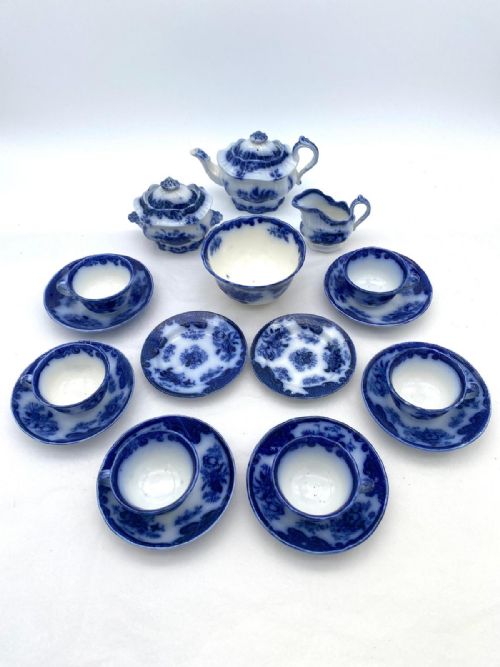
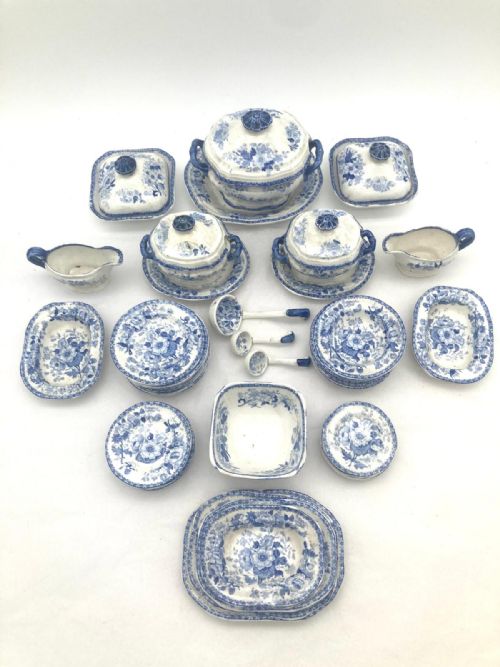
Pieces range from grand ten-person afternoon settings and extensive breakfast services down to miniature child's play sets and solitaire tea sets.
How They Were Made
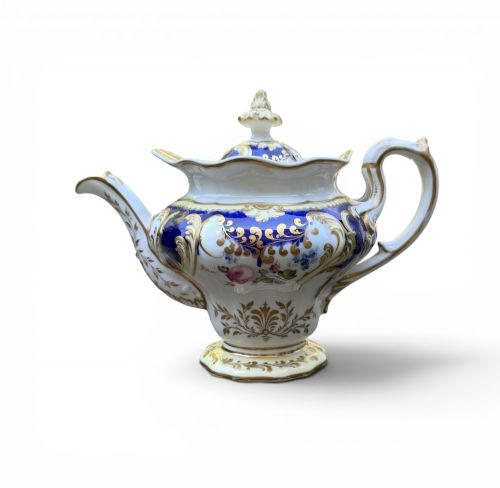
Potters utilised fine porcelain, bone china, and earthenware, shaping vessels by hand or moulding them into classic Georgian, Regency, and Victorian forms.
Decoration relied on hand-painted motifs, blue and white transfer printing, flow blue techniques, and intricate enamel work.
Finishing touches incorporated rich gilding, gold leaf application, and protective glazes fired to secure the detailed patterns.
Several miniature tea sets survive completely intact, proving that historical children possessed remarkably steady hands.
What Varies in Quality
Quality rests upon the fineness of the ceramic body, the precision of the potting, and the complexity of the painted or transferred design.
Early porcelain and specialised factory pieces display superior translucent bodies and meticulous hand-painted details compared to standard utilitarian wares.
Preservation of the original gilding, enamel crispness, and glaze integrity separates standard sets from exceptional examples.
Dr Wall Worcester·Minton·Spode·Coalport·Royal Crown Derby·Shelley·Copeland
The Antique China Tea Service Glossary
- Bone china
- A type of soft-paste porcelain containing bone ash, yielding a strong, highly translucent ceramic body.
- Sucrier
- A small covered sugar bowl designed to accompany a tea or coffee set.
- Flow blue
- A nineteenth-century transfer printing style where the cobalt blue pigment intentionally blurs into the surrounding white glaze.
- Imari
- A decorative style inspired by Japanese export wares, utilising rich iron red, underglaze blue, and heavy gilding.
- Transfer printing
- A mechanical method of applying complex printed designs to ceramics using an engraved copper plate and tissue paper.
Antique China Tea Service: Frequently Asked Questions
How do I date an antique tea service?
Dating relies on factory backstamps, ceramic body composition, and stylistic clues such as Regency shapes or Victorian floral motifs.
Comparing pattern numbers and glaze types against known factory production periods helps narrow down the manufacturing decade.
Can I use an antique tea set daily?
Most collectors reserve these fragile porcelain and bone china sets for display or very careful occasional use.
Hand washing in warm water without harsh detergents protects delicate gilding, enamel work, and centuries-old glazes from damage.
What is a child's tea service?
Child's tea sets are smaller scale ceramic services produced in the nineteenth century for educational play or display.
Despite their diminutive size, they feature the exact same transfer printed or hand-painted patterns as full-sized adult services.
What makes a set a coffee service?
Coffee services typically include taller coffee pots alongside specialised cups rather than standard wide-brimmed teacups.
Many period listings combine tea and coffee items into mixed breakfast sets for versatile morning entertaining.