
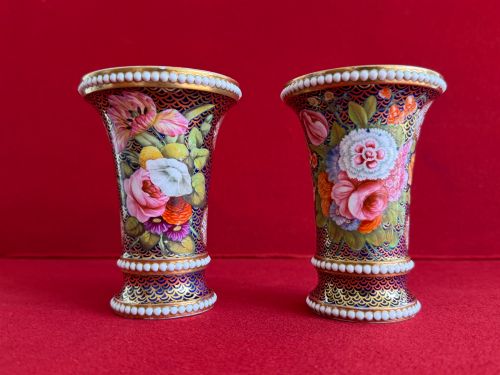
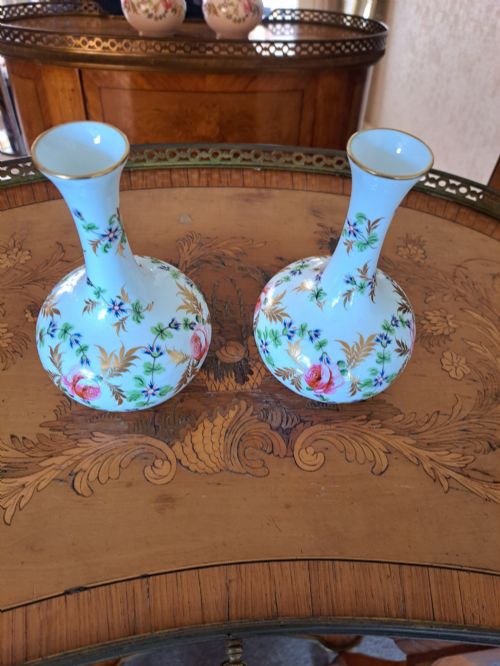


Antique China Flower Vase
These antique china flower vases bring floral decoration and hand-painted artistry from the nineteenth and twentieth centuries into a modern interior.
Antique China Flower Vase
An antique china flower vase is a vessel designed to hold stems while displaying decorative ceramic artistry from periods such as the Victorian, Edwardian, and mid-twentieth-century eras. The examples found here encompass both British factories and continental workshops, ranging from modest bud holders to finely painted ornamental pieces.
Most pieces on this page take familiar forms including bud vases, posy vases, and spill vases. These shapes reflect the domestic arrangements of their respective periods, serving as functional table ornaments or mantelpiece decorations.
The origins span traditional English porcelain houses alongside French Old Paris and Chinese export production. Buyers encounter both single vessels and matching pairs intended for symmetrical display.
Materials and construction methods
Makers utilised porcelain, bone china, and ironstone as the primary ceramic bodies for these vessels. Ironstone offered a heavier, more durable body suitable for dense enamelling, while fine porcelain permitted delicate, thin-walled forms.
Surface decoration relied heavily on hand-painted floral motifs, exotic birds, and highland cattle scenes applied over white or coloured glazes. Gilding, gold leaf, and enamel highlights frequently frame these central painted panels.
Many items incorporate moulded relief work in styles drawing on Rococo Revival or Chinoiserie traditions, combining sculptural forms with painted detail.
Some nineteenth-century spill vases were built tall and narrow simply to hold the paper tapers used for lighting Victorian gas lamps and cigars.
Distinctions in quality
The standard of a vase rests primarily upon the precision and execution of its hand-painted artwork. Superior pieces display detailed brushwork by named artists or skilled factory hands, whereas simpler items rely on repetitive stencilled patterns or basic transfer prints.
The crispness of the porcelain moulding and the richness of the gilding further separate standard production from finer output. Well-preserved enamel colours that retain their original burnished shine indicate careful historic handling and superior initial firing.
Completeness also dictates standing, as matched pairs carry greater decorative presence than solitary survivors.
Crown Derby·Stevenson and Hancock·Mason·Royal Worcester·Jacob Petit
The Antique China Flower Vase Glossary
- Bud vase
- A small, narrow-necked vessel intended to support a single flower stem or a small handful of blooms. These pieces are typically compact and scaled for tables or window sills.
- Posy vase
- A low or medium vessel designed specifically for short arrangements of mixed flowers. They often feature wider mouths to allow stems to fan outwards.
- Spill vase
- A tall, straight-sided cylindrical holder historically used to contain taper spills for lighting fires. In later decades, they served simply as decorative mantel ornaments.
- Ironstone
- A heavy, durable type of earthenware patented in the nineteenth century to imitate Chinese porcelain. It provides a robust body for thick enamel decoration.
- Imari
- A decorative style characterised by a palette of underglaze blue, iron red, and gold, originating in Japan and later imitated by European porcelain factories.
Antique China Flower Vase: Frequently Asked Questions
How were antique vases used?
These vessels served primarily as interior ornaments, holding fresh garden flowers or dried stems upon mantelpieces, side tables, and dining room sideboards.
Many smaller forms also functioned as spill holders or simple decorative accents designed to catch the eye within a formal Victorian or Edwardian room scheme.
Can I still use them for flowers?
Most of these vessels can hold water and fresh stems safely, provided they are handled with care during filling and washing.
However, collectors often prefer to display them dry or use protective liners inside older porous earthenware bodies to prevent moisture damage to historical glazes.
How do I identify Victorian pieces?
Victorian examples often display heavy gilding, vibrant enamel colours, and stylistic influences ranging from Rococo Revival curves to traditional floral painting.
Examining the base for factory marks or impressed numbers helps narrow down the production decade within the nineteenth century.
What is ironstone china?
Ironstone is a dense, hard-wearing ceramic material developed in the nineteenth century as a durable alternative to delicate porcelain.
It provides a sturdy white ground that accepts colourful enamel hand-painting and transfer printing very well.
Are pairs harder to find?
Matched pairs of nineteenth and early twentieth century vases are scarcer because individual pieces frequently became separated or broken over generations of domestic use.
Finding two identical surviving vessels that share the same decoration and factory marks adds considerably to their decorative unity.