



Antique Childs Furniture
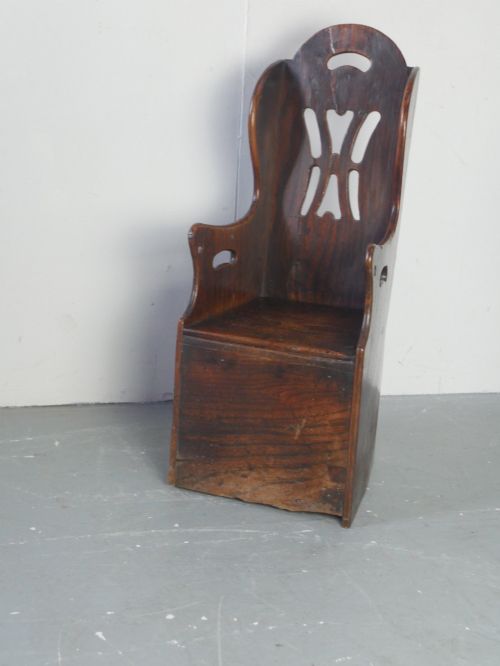
Antique childs furniture comprises scaled-down seating and desks made for younger members of the household across past centuries.
Antique Childs Furniture
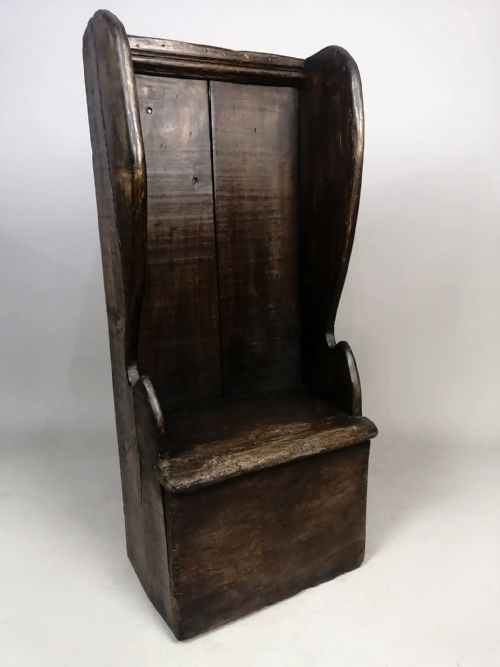
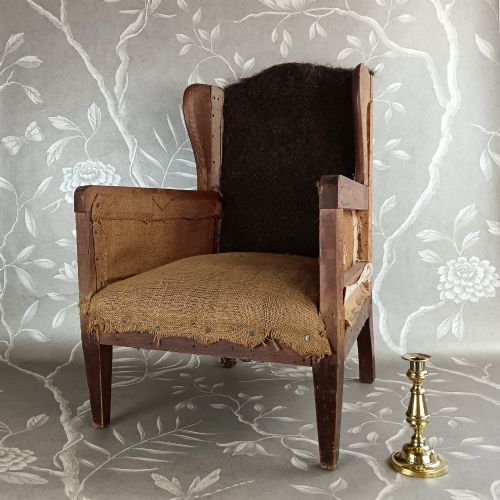
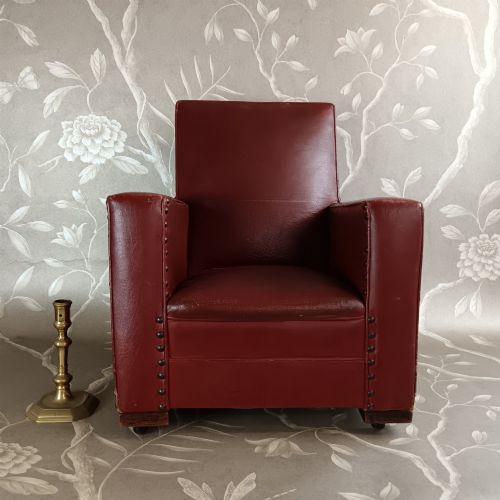
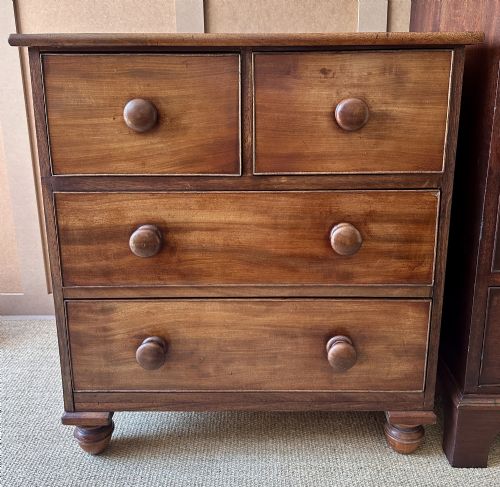
Antique childs furniture encompasses domestic items scaled down for younger occupants, ranging from small armchairs and high chairs to rocking chairs and miniature chests of drawers. These pieces reflect adult designs of their respective eras, translated into miniature proportions for practical household use or nursery settings.
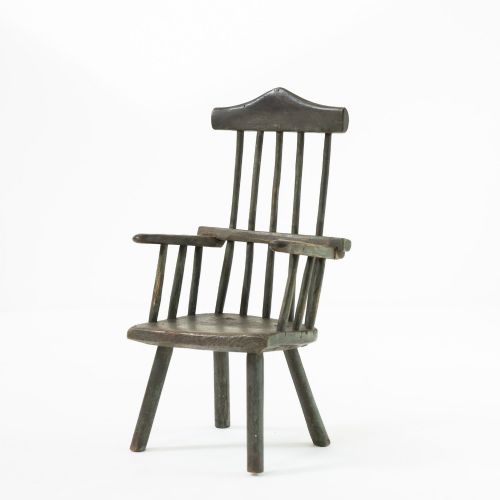
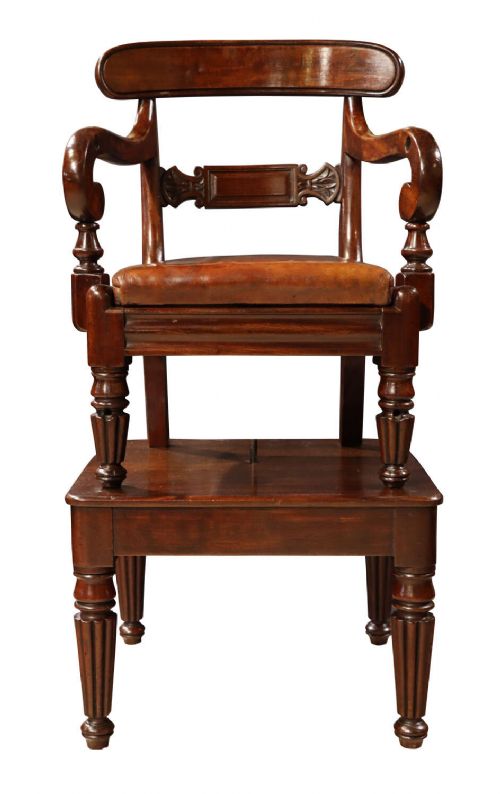
The selection frequently encounters nineteenth-century vernacular pieces alongside Georgian examples, spanning stick-back windsors, commode chairs, and metamorphic high chairs. Regional country styles appear alongside more formal mahogany and rosewood library or tub chairs, demonstrating how domestic craftsmanship adapted to domestic nursery requirements over generations.
How they were made
Wood selection relied on traditional timbers such as elm, ash, fruitwood, and oak for country seating, whilst formal pieces utilised mahogany, yew, and rosewood. Turnery, steam-bending, and dovetail joinery formed the structural backbone of these smaller items, often employing solid boards for seats and backs.
Surface treatments incorporated natural wax polishing, occasional polychrome paintwork, or rush and cane weaving for seats. Upholstered variants utilised horsehair stuffing beneath leather, tapestry, or velvet coverings secured with brass tacks.
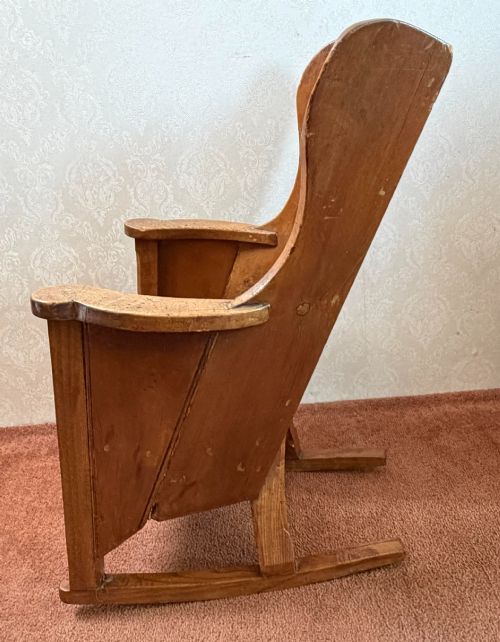
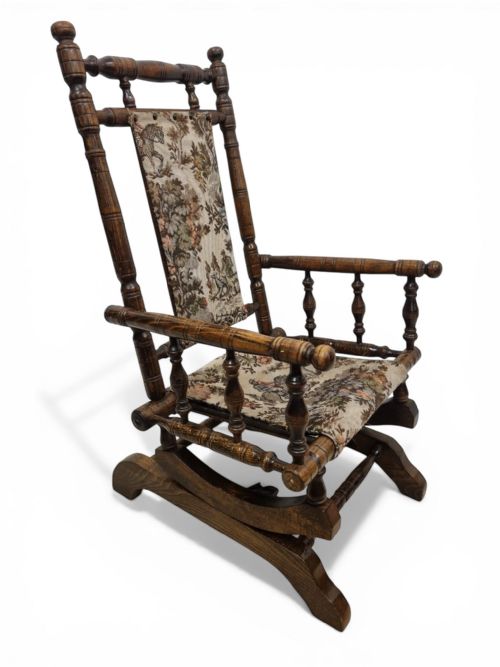
Tiny nineteenth-century rocking chairs allowed miniature occupants to join in the evening hearthside seating arrangement.
What varies in quality
Construction integrity separates proficient vernacular work from hurried production, visible in the snugness of joints and the retention of original turned spindles. Timber selection also dictates grade, where finely figured mahogany or well-matched yew-wood grain elevates a piece above standard utility items.
Proportion and execution define the upper tier, where miniature forms maintain the structural balance and decorative carving of full-sized furniture rather than appearing crude or clumsy. Original surfaces, such as untouched patinated fruitwood or intact early cane work, distinguish superior survivals.
Pairs MFG Co
The Antique Childs Furniture Glossary
- Bergere
- A type of upholstered armchair with enclosed cane panels on the back and sides. It originated in France and appeared on nineteenth-century high chairs.
- Windsor chair
- A chair built with a solid wooden seat into which the legs and back spindles are bored directly. Country makers utilised elm, ash, and yew for these sturdy constructions.
- Metamorphic furniture
- An item designed to transform from one form of furniture into another, such as a high chair converting into a low chair and table. These pieces offered dual utility in compact nineteenth-century nurseries.
- Commode chair
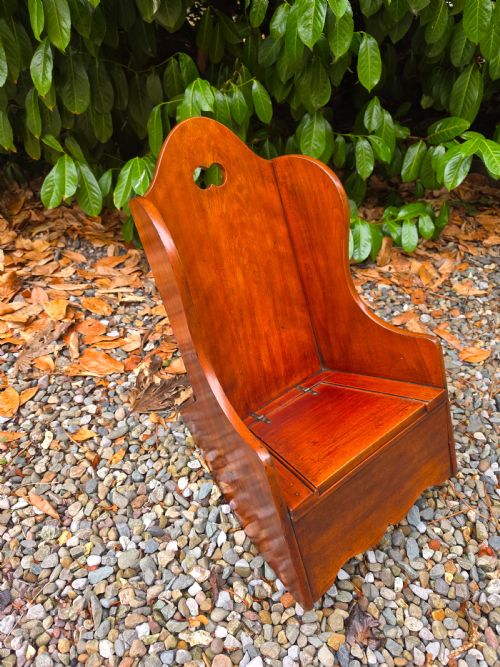
- A seating item enclosing a chamber pot beneath a hinged seat or drawer. They were standard nursery equipment before modern plumbing.
- Stick back
- A chair back constructed from plain turned spindles inserted into the seat and top rail. This vernacular method provided light yet rigid support.
Antique Childs Furniture: Frequently Asked Questions
Were antique high chairs safe for children?
Many historical high chairs lack modern safety harnesses, relying instead on high wooden armrests, enclosed trays, or deep seats to keep an infant contained.
Today, these items serve primarily as decorative display pieces rather than functional seating for infants.
How can I date an antique childs chair?
Dating relies on stylistic clues, construction methods, and timber choices that align with specific design periods like the Georgian or Victorian eras.
Hand-cut joinery, pegged joints, and secondary wood types often indicate earlier eighteenth-century or provincial vernacular origins.
What is a potty rocker?
A potty rocker is a low nursery chair fitted with a concealed cavity beneath the seat for a chamber pot, mounted on rocking rails.
These combination items aimed to soothe infants whilst assisting with early household toilet training routines.
How should I clean wooden antique furniture?
Maintain the surface by dusting gently with a dry, soft cloth and applying a traditional beeswax polish sparingly to nourish the timber.
Avoid modern liquid cleaners or excessive moisture, which can degrade old wax patinas and loosen historical glue joints.