



Antique Chicken Painting
An antique chicken painting brings the rustic charm of the farmyard directly into your interior with detailed depictions of hens, cockerels, and rural life.
Antique Chicken Painting
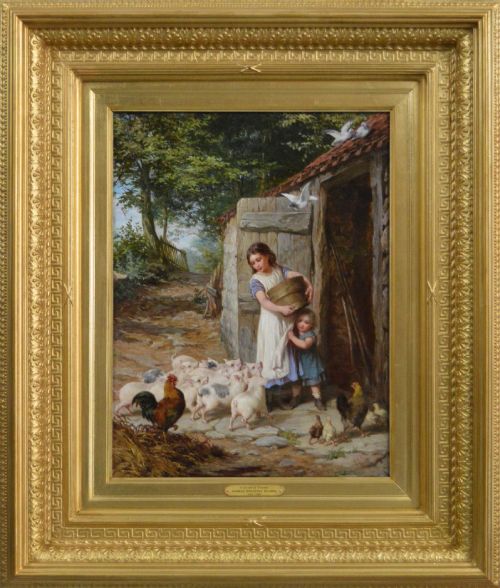
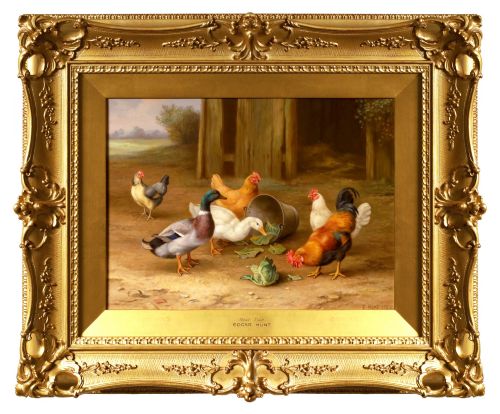
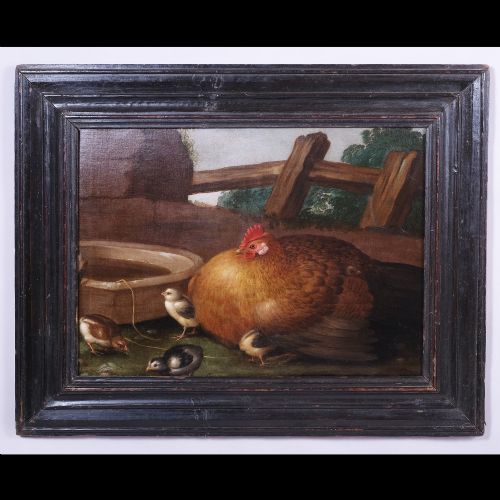
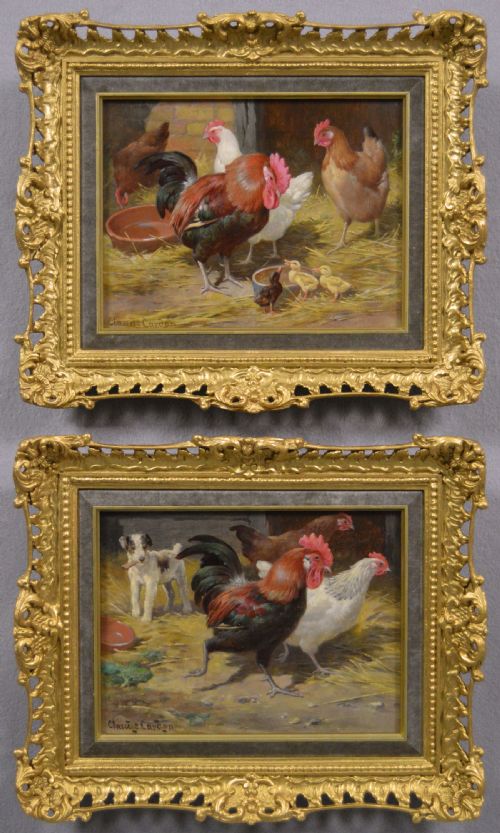
An antique chicken painting captures rural farmyard scenes, often featuring hens, cockerels, and chicks alongside cottages and agricultural landscapes. These works emerged strongly during the nineteenth and early twentieth centuries, reflecting a widespread artistic interest in pastoral realism and farm life. Buyers seeking this phrase encounter both oil paintings and watercolours depicting daily agricultural scenes.
The pieces on this page span several periods, from the eighteenth century up to the 1930s, with strong representation from the Victorian and Edwardian eras. Common formats include oil on canvas, oil on wood panel, and watercolour on paper, sometimes housed in period frames. Alongside traditional flat artworks, the selection occasionally extends to related decorative ceramic forms such as Staffordshire hen egg crocks.
Makers and painters range from accomplished named artists specialising in animalier and rural subjects to anonymous practitioners working within established regional styles. The compositions vary from intimate studies of individual birds to bustling farmyard narratives involving figures, horses, and other livestock. This diversity allows collectors to choose between focused avian studies and broader pastoral landscapes.
Materials and technique
Artists primarily utilised oil paint on stretched canvas or wooden panels, applying pigment to build up the texture of feathers and the earthy tones of the farmyard. Watercolours on paper provide a lighter, more translucent alternative, often capturing delicate washes of light in cottage gardens and rural lanes. Giltwood and wood frames complete many of the surviving works, protecting the painted surface while adding period context.
The technique relies on careful observation of light, particularly in pastoral and realisic traditions where natural illumination defines the plumage of cockerels and hens. Brushwork ranges from tight, controlled realism down to looser impressionistic strokes in later works from the twentieth century. Support materials such as paper and canvas were frequently mounted on wooden stretchers or panels to ensure stability over decades.
Even ceramic hens found their way into the flock, preserving farmyard charm in pottery.
Assessing quality in the works
Quality rests primarily on the artist's ability to render the anatomy, feather texture, and posture of the birds with convincing realism. Superior pieces display a confident command of light and shadow, particularly across the plumage of cockerels and the surrounding farmyard environment. Weaker examples often rely on formulaic compositions and stiff, repetitive animal forms lacking individual character.
The harmony between the central subject and the background landscape further distinguishes finer works from ordinary studio output. Strong paintings integrate the chickens naturally into their surroundings, whether an orchard, a coastal home, or a rustic barn. The condition of the pigment and the presence of an appropriate period frame also influence the overall standing of the piece.
George Augustus Holmes·Edgar Hunt·Claude Cardon·John Frederick Herring Jnr·Robert Russell MacNee·B. Kaufmann·J L VAN Leemputten·John Abernethy Lynas-Gray·Benjamin D. Sigmund·Walter Hunt·James Hey Davies·Paul Henry Schouten·Ernest Betigny·Cornelius Van Leemputten·Fred Lawson
The Antique Chicken Painting Glossary
- Animalier
- A term describing art that realistically depicts animals, such as farmyard birds, horses, and livestock. This genre gained significant popularity during the Victorian period among painters specialising in rural subjects.
- Watercolour painting
- A medium where coloured pigments are suspended in a water-based solution, typically applied to paper. It allows for luminous, transparent effects favoured by Edwardian landscape artists.
- Oil on canvas
- A traditional painting method utilising pigments bound in drying oil applied to a woven fabric support. This technique provides rich colour depth and durability over centuries.
- Egg crock
- A utilitarian or decorative ceramic vessel shaped like a sitting hen on a nest, used for storing eggs in the nineteenth-century kitchen. Staffordshire potteries produced notable examples during the Victorian era.
- Giltwood
- Wood that has been treated with a thin layer of gold leaf or gilt paint, commonly used for decorative antique picture frames. It enhances the visual weight and period authenticity of oil paintings.
Antique Chicken Painting: Frequently Asked Questions
What periods do these paintings come from?
The available pieces primarily date from the nineteenth and early twentieth centuries, spanning the Victorian and Edwardian eras. Earlier examples stretch back to the eighteenth century, while later works reach toward the 1930s.
This broad chronological range allows collectors to explore shifts in pastoral painting styles, from early realist farmyard scenes to later twentieth-century interpretations.
How should I care for an antique painting?
Protect oil paintings and watercolours from direct sunlight and high humidity to prevent the fading of pigments and degradation of paper or canvas supports. Keep them away from extreme temperature fluctuations found near radiators or fireplaces.
Display the works securely using appropriate wall fixings, and consult a professional conservator if cleaning or frame restoration becomes necessary.
What is the difference between oil and watercolour works?
Oil paintings utilise thick, opaque pigments on canvas or wood panels, offering rich textures and deep colour saturation. Watercolours employ translucent washes on paper, creating a lighter, more delicate atmosphere.
Oils generally require sturdy frames with protective panels, whereas watercolours are typically displayed under glass to safeguard the paper surface from atmospheric moisture.
Where were these farmyard scenes typically set?
The settings generally reflect rural British and European countryside life, featuring farmyards, orchards, cottage gardens, and coastal homes. Hens and cockerels are shown interacting with agricultural elements like carts, hay, and coops.
Many compositions also include human figures, such as women feeding livestock or children tending to farm animals, capturing everyday rural routines.