



Antique Cherub Centrepiece
An antique cherub centrepiece brings sculptural figures and classical drama to the dining table or side cabinet.
Antique Cherub Centrepiece
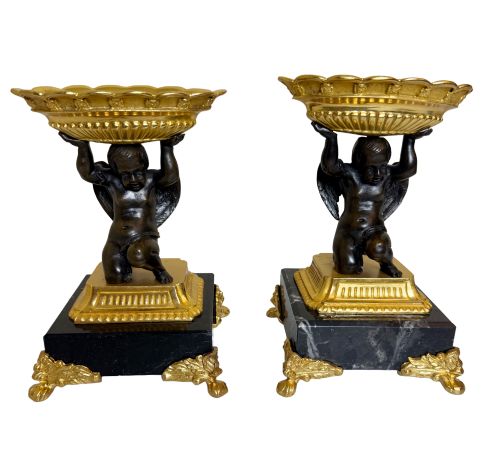
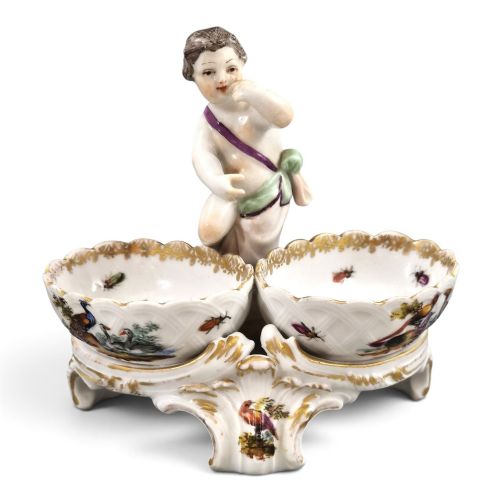
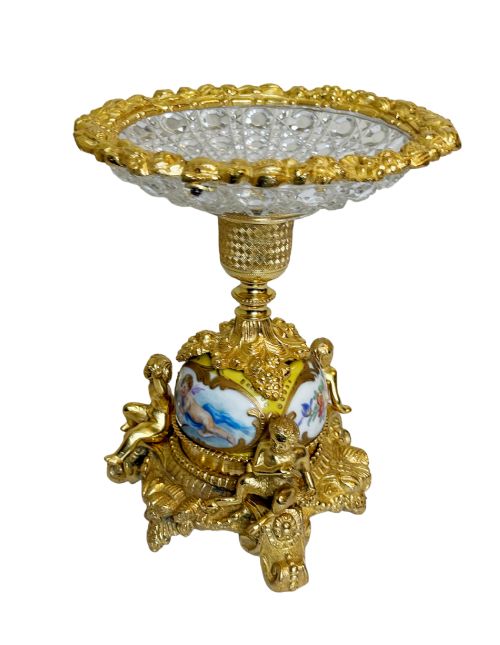
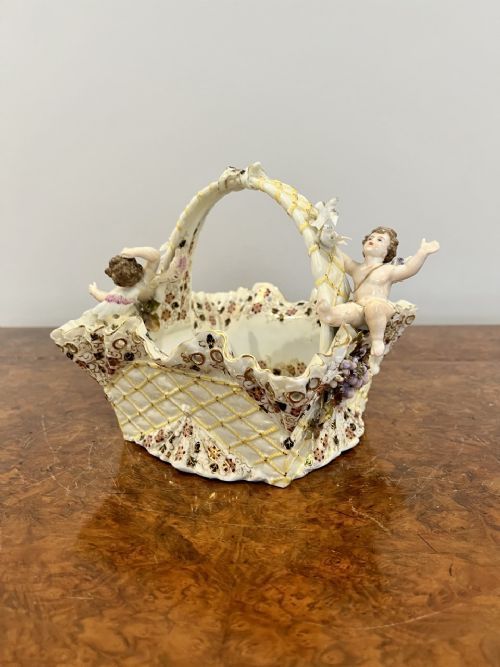
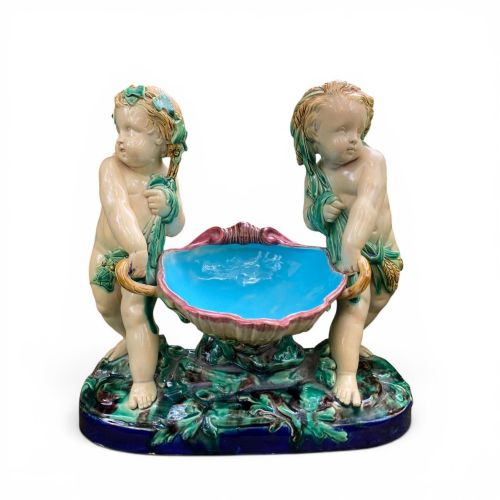
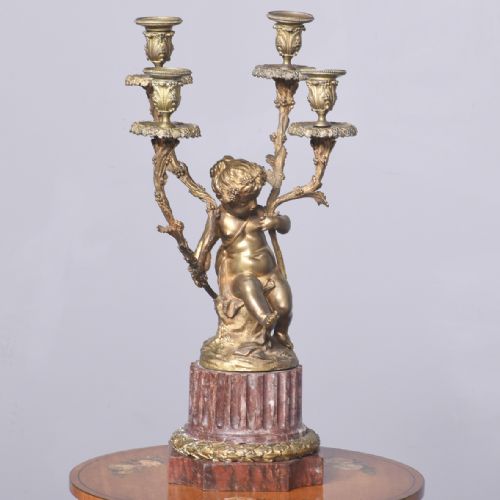
The antique cherub centrepiece encompasses a range of ornamental table vessels, from porcelain bowls and majolica baskets to gilt bronze tazzas and candelabra. Figures of putti or winged cherubs support, climb upon, or surround the central vessel or candle branches.
Most examples originate from nineteenth-century European workshops, spanning Victorian English makers, French bronze founders, and German porcelain factories. The forms frequently draw upon Rococo revival, Neoclassical, and French Empire design vocabularies.
Buyers encounter porcelain fruit bowls, silver-plated triple shell biscuit boxes, and patinated bronze centrepieces featuring classical motifs. These objects served as impressive table focal points for formal dining in the nineteenth and early twentieth centuries.
Materials and Techniques
The construction combines modelled ceramic or cast metal with decorative surface treatments. Porcelain and majolica pieces involve hand-painted detailing, applied floral elements, and glazed finishes, whilst metal works utilise cast bronze, ormolu, silver plate, and gold leaf.
Gilt and patinated bronzes are often paired with contrasting materials such as white marble bases, cut crystal bowls, malachite, or mother-of-pearl dishes. Metal components are cast in sections, chased, and joined with mechanical fittings or pinned construction.
Listings feature works from the nineteenth and early twentieth centuries, spanning Victorian, Edwardian, and Art Nouveau periods in porcelain and bronze.
Craftsmanship and Detail
Quality rests in the crispness of the modelling and the finesse of the hand-painting or metal-chasing. Superior pieces display naturalistic expression in the cherubs' faces and careful articulation of hair, wings, and drapery.
The choice of secondary materials marks the tier of the piece. Finer examples incorporate heavier cast ormolu, genuine hardstones like malachite, and thick silver plating over quality base metals, rather than lighter pressed brass or simple pottery.
KPM Berlin·Royal Dux Bohemia·Schierholz·Volkstedt·Minton·Meissen·Christofle Paris·Elkington
The Antique Cherub Centrepiece Glossary
- Tazza
- A shallow ornamental cup or bowl mounted on a stem and foot. These vessels frequently feature cherub supports at the column.
- Ormolu
- Gilt bronze produced by applying a finely ground high-carat gold mercury amalgam to a bronze base. The technique creates a rich golden finish characteristic of French decorative arts.
- Putto
- A plump, naked male infant figure, often winged, derived from classical art. They appear frequently in these centrepieces acting out mythological or decorative roles.
- Majolica
- A type of earthenware coated with an opaque white tin glaze and painted with metallic oxide colours. It was widely utilised by nineteenth-century factories for colourful figural vessels.
- Comport
- A large standing dish or bowl used for fruit or sweetmeats at dessert. They form a standard category of table centrepiece.
Antique Cherub Centrepiece: Frequently Asked Questions
How were these centrepieces used?
In nineteenth-century dining, they functioned as ornamental focal points for the table, sometimes holding fruit, sweetmeats, or flowers. Candelabra versions also provided illumination during evening meals.
Today, they are typically displayed on tables, mantels, or cabinets as sculptural antiques rather than utilised for serving food.
How do I identify the period?
Dating relies on factory marks, material composition, and stylistic clues. Nineteenth-century pieces often reflect revival styles such as Rococo or Neoclassical, while early twentieth-century examples lean towards Art Nouveau.
Examining the base, glaze type, and casting quality helps narrow down the production era to specific decades like the Victorian or Edwardian periods.
Are porcelain and bronze pieces fragile?
Porcelain and majolica centrepieces require careful handling due to delicate applied elements like flowers, wings, and fingers. Bronze and silver-plated examples are more robust but still vulnerable to surface scratching or chemical damage.
Owners should place them on stable surfaces away from heavy traffic areas to prevent accidental knocks to protruding figures.