






Ormolu Cherub Stand
An ormolu cherub stand brings sculptural French bronze work into a room, offering both decorative presence and period charm.
Ormolu Cherub Stand
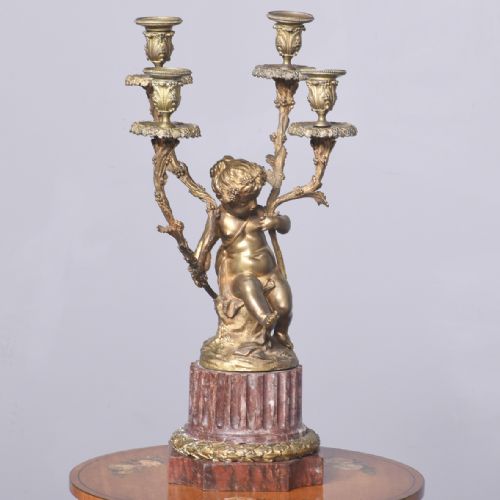
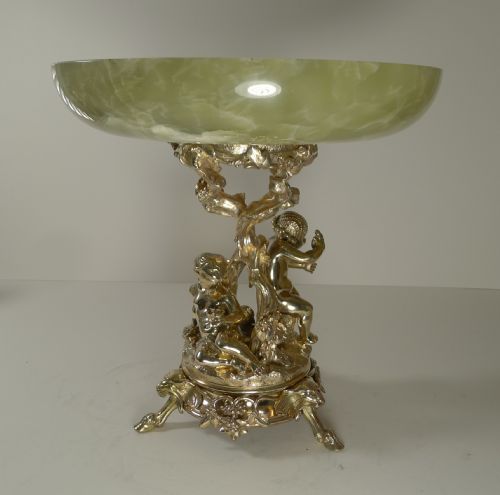
When you search for ormolu cherub stand, you find decorative table pieces and fittings shaped by nineteenth-century French and Victorian tastes. These items typically combine cast bronze figures with gilt finishes, often supporting candle holders or holding central basins.
The pieces on this page span several decades of the nineteenth century, including Regency, Victorian, and Napoleon III periods. You will encounter candelabra, desk accessories, and tazzas featuring figural putti alongside materials such as marble, glass, and agate.
Design influences range from French Rococo Revival to the French Empire style. Makers utilised classical motifs alongside naturalistic details like dragonflies to create ornamental metalwork for grand interiors.
How they were made
These works rely on bronze casting combined with mercury gilding or modern electroplating to achieve the bright golden ormolu surface. Artisans chased the metal by hand after casting to sharpen details on wings, hair, and drapery.
Many designs incorporate heavy natural stones such as marble or porphyry for stability and contrast against the gilt metal. Patinated bronze is frequently paired with polished ormolu to create tonal depth across the figures.
Watch closely for dragonflies sharing the metal stage with cherubs, reminding us that nineteenth-century desks enjoyed a touch of whimsical nature.
What varies in quality
The integration of secondary materials like variegated marble bases or inset agate alters the visual weight and cost of the object. Superior examples display balanced proportions between the cast putti and their supporting architectural elements.
Christofle Paris·Clodion
The Ormolu Cherub Stand Glossary
- Ormolu
- Gilded bronze produced through a mercury amalgamation process or modern electroplating. This finish gives the metal a rich golden lustre characteristic of nineteenth-century decorative arts.
- Putti
- Depictions of chubby male infants, often winged, derived from classical art. They appear frequently in these works acting as supports for candelabra or holding basins.
- Tazza
- A shallow ornamental cup or bowl mounted on a stem and foot. In this context, they are often cast in bronze and ormolu with figural ornamentation.
- Porphyry
- An igneous rock with large crystals, highly prized for bases and pedestals. Its deep purple or reddish hue contrasts sharply with bright ormolu.
- Napoleon III
- A French design period spanning the mid-nineteenth century, known for eclectic revivals of earlier styles. Pieces from this era often feature rich ornamentation and mixed materials.
Ormolu Cherub Stand: Frequently Asked Questions
What is an ormolu cherub stand?
It is a decorative nineteenth-century metalwork object featuring gilded bronze and figural cherubs, often used as a candelabra, desk accessory, or tazza.
These items were produced mainly in France and Britain during the Victorian and Napoleon III eras to adorn grand reception rooms and studies.
How do I clean ormolu?
Ormolu requires gentle dusting with a soft, dry cloth to prevent damage to the thin gold layer. Avoid chemical dips, abrasive polishes, or water, as these treatments strip the historic gilding.
Professional conservation is recommended if tarnishing obscures the detail of the bronze casting.
Are these pieces French or English?
Most items bearing this description follow French design traditions, including Rococo Revival and Empire styles. Many were made in Paris workshops and imported to Britain during the nineteenth century.
Victorian makers also produced similar items locally, often adapting French models for domestic markets.
What materials are used with the ormolu?
Makers combined gilded bronze with patinated bronze, white or variegated marble, porphyry, and occasional hardstones like agate. Glass and mirrors also appear in desk stands and table accessories.
These contrasting materials provide structural weight and visual variety beneath the metal figures.
How can I tell the period?
Dating relies on stylistic clues such as the boldness of Rococo Revival curves or the strict symmetry of the French Empire. Material choices, casting quality, and assembly methods also indicate whether a piece dates to the Regency or later Victorian decades.
Maker marks or signatures stamped into the bronze can further narrow down the date of manufacture.