




Antique Cheese Cover
An antique cheese cover keeps the table tidy and cheese properly moist.
Antique Cheese Cover
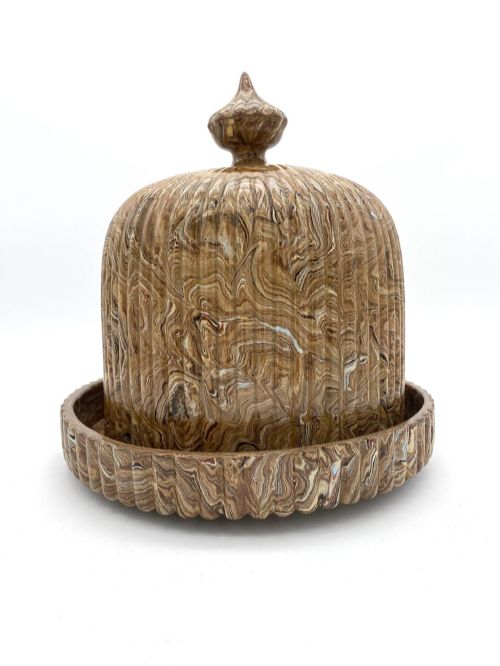
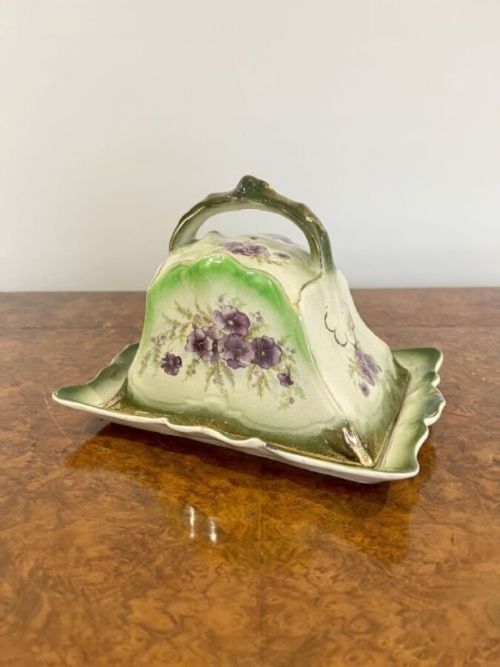
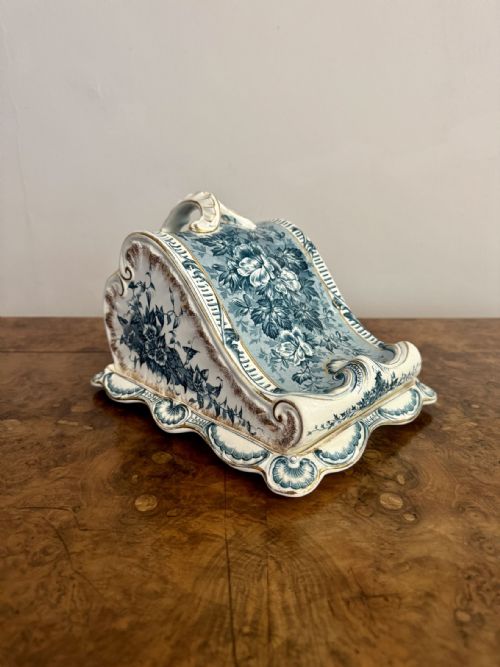
An antique cheese cover protects and presents cheese on the dining table, taking the form of a domed bell or cover paired with a matching base or stand. These pieces belong primarily to the Victorian and Edwardian eras, though earlier Georgian examples and later pieces also appear.
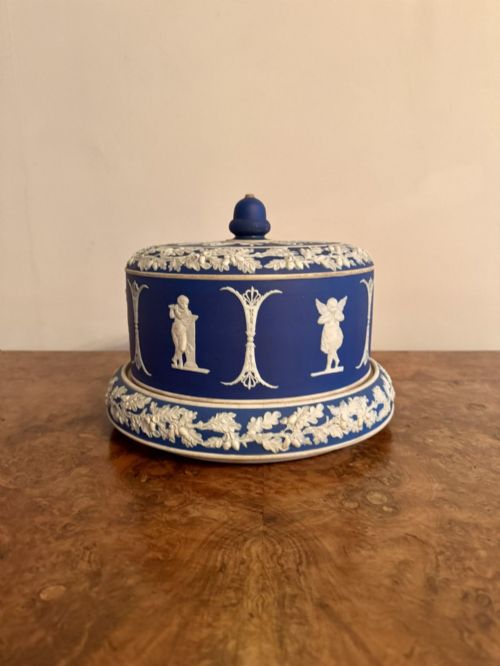
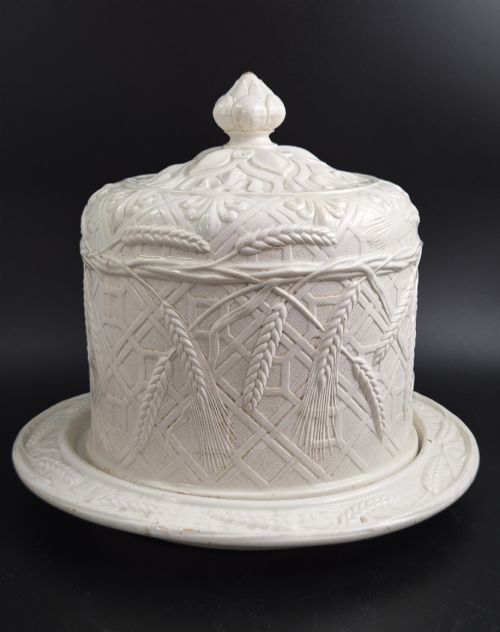
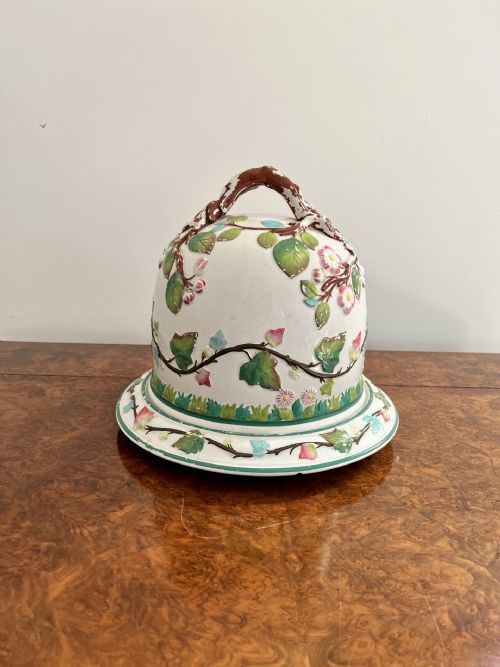
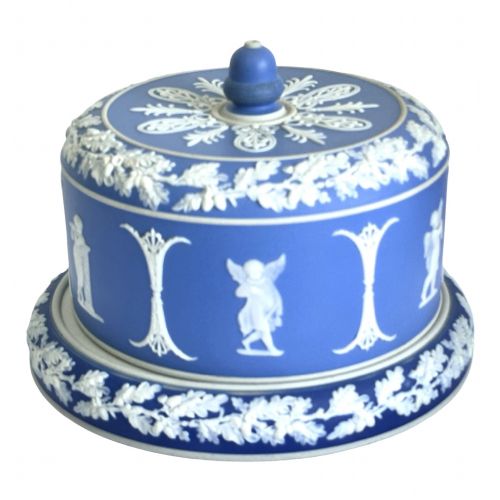
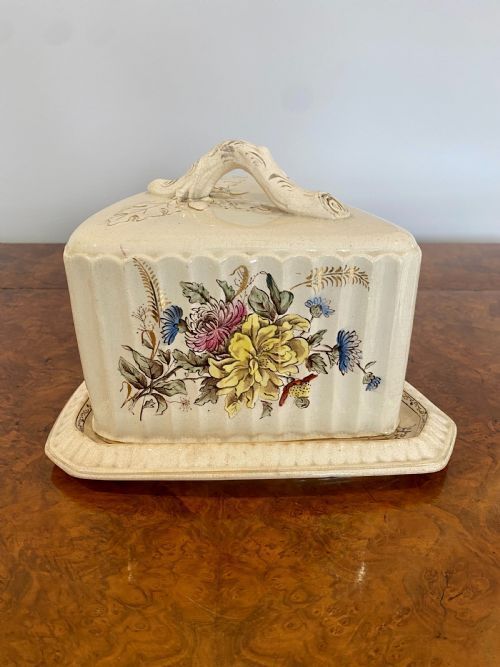
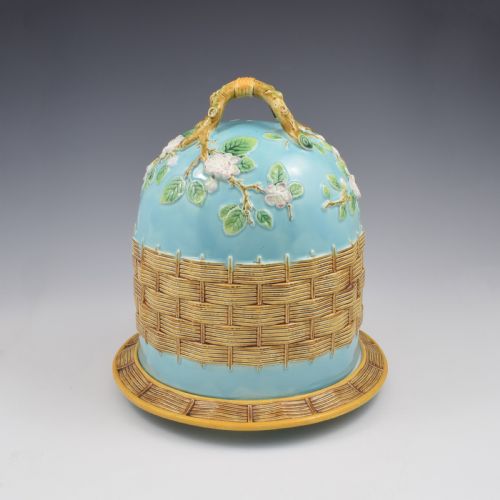
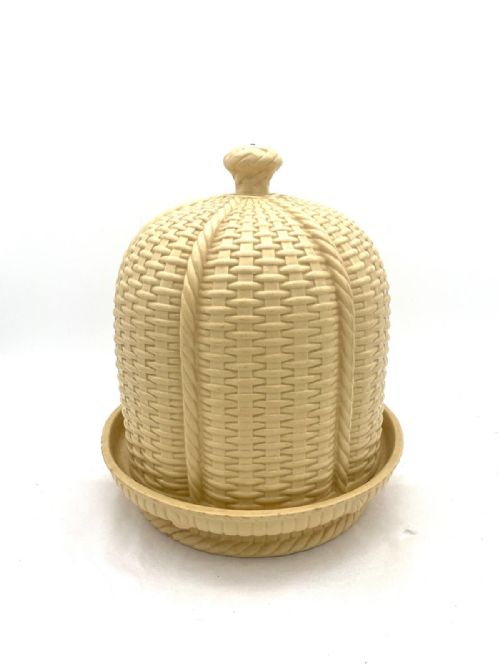
The most common examples met on this page are substantial Victorian earthenware and ceramic domes featuring decorative patterns such as basket weave, wheat and lattice, or apple blossom. Collectors also encounter ironstone, majolica, jasperware, glass, and occasional silver plate or treen versions.
Serveware of this scale reflects the importance of cheese courses in nineteenth-century dining, ranging from tall Stilton domes designed for large gatherings down to smaller domestic dishes. Each piece combines a fitted cover with a coordinating tray to contain the cheese and its aromas.
How they were made
Potters shaped earthenware, ironstone, and stoneware bodies using moulds or throwing techniques before applying coloured glazes or specialised ceramic finishes like majolica. Jasperware pieces relied on applied white clay reliefs contrasting against coloured stoneware backgrounds.
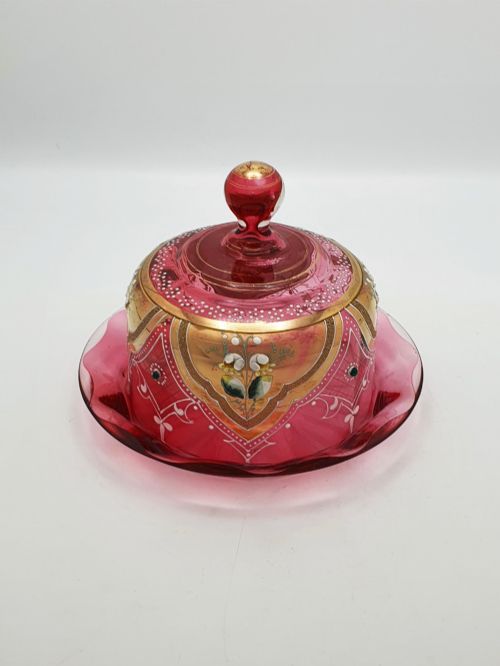
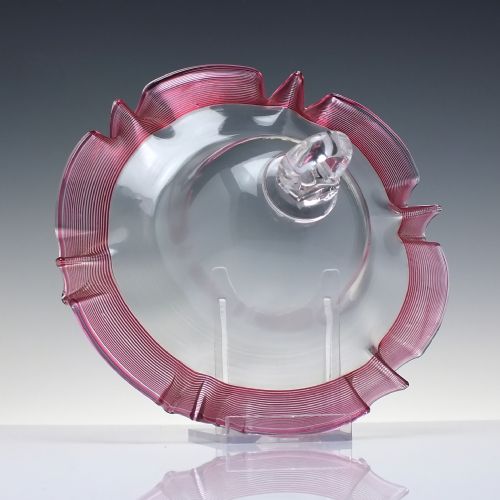
Glass covers and domes were blown or pressed into shape, sometimes pairing with silver plate or Sheffield plate mounts and trays. Earthenware and ironstone versions often received hand-painted details or intricate moulded surface textures prior to high-temperature firing.
Antique Cheese Cover Retail Price Guide 2026
Typical asking prices for cheese cover among the pieces listed under this phrase on Sellingantiques today, from the lower quarter to the upper quarter. They describe what is for sale here now, not the wider market.
Periods represented span from the Georgian era through the Victorian and Edwardian decades into the early twentieth century.
What varies in quality
Quality shows in the crispness of the moulded relief work and the richness of the glaze, particularly in majolica and jasperware where depth of colour defines the surface. Better pieces display precise registration between the cover and its matching stand without excessive warping from the kiln.
Proportion and scale dictate the visual presence of a dome, with larger, well-balanced examples commanding attention on the sideboard. The integration of decorative motifs, such as naturalistic fruit or botanical elements, separates standard utility wares from ambitious studio and factory productions.
George Jones·Wedgwood·James Dudson·Copeland·WMF
The Antique Cheese Cover Glossary
- Majolica
- A type of earthenware coated with an opaque tin-lead glaze and brightly coloured metallic oxide paints. This technique created vibrant, glossy finishes popular during the Victorian period.
- Ironstone
- A heavy, durable type of earthenware patented to resemble porcelain. It offers high resistance to chipping and formed the basis of many nineteenth-century domestic kitchen wares.
- Treen
- Small handmade wooden objects and household utensils carved from timber. Treen cheese covers present a warm, organic alternative to ceramic domes.
- Cheese bell
- An alternative term for a domed cheese cover that resembles the shape of a hand bell. These tall covers often accommodate large cylindrical cheeses like Stilton.
Antique Cheese Cover: Frequently Asked Questions
How do I clean an antique cheese cover?
Wash ceramic and glass covers gently by hand using warm water and mild soap, avoiding abrasive scrubbers that might scratch old glazes.
Dry them thoroughly with a soft cloth to protect any metallic accents or delicate surface decoration.
Can I use an antique cheese cover for daily dining?
These pieces function well on the dining table for serving hard cheeses and keeping them covered during meals.
Take care with heavy ceramic domes when lifting them on and off their stands to avoid accidental chips.
How do I tell Victorian majolica from later copies?
Victorian majolica displays deep, translucent glaze pools and crisp moulding details achieved through traditional nineteenth-century production methods.
Examine the underside of the base for typical kiln marks, crazing, and weight characteristic of period earthenware.
Why do some cheese domes have steam holes?
Small apertures in the top of certain domes allowed air circulation to prevent condensation from building up inside.
This ventilation helped maintain the proper humidity for ageing cheeses resting on the tray.