


Antique Ceramic Pitcher Bowl
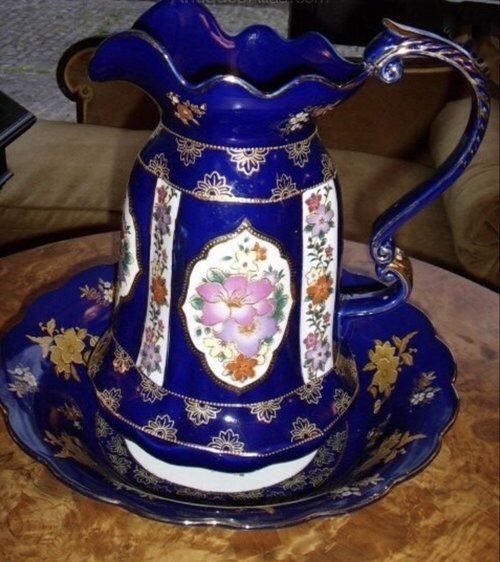
These antique ceramic pitcher bowl sets bring heavy earthenware basins and handled jugs from Victorian and Edwardian washstands directly into daily use.
Antique Ceramic Pitcher Bowl
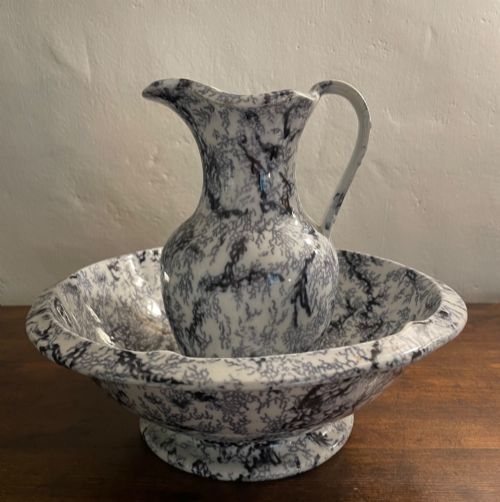
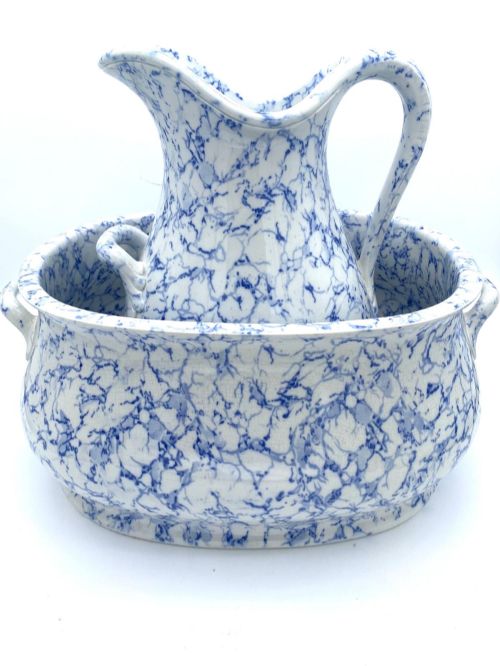
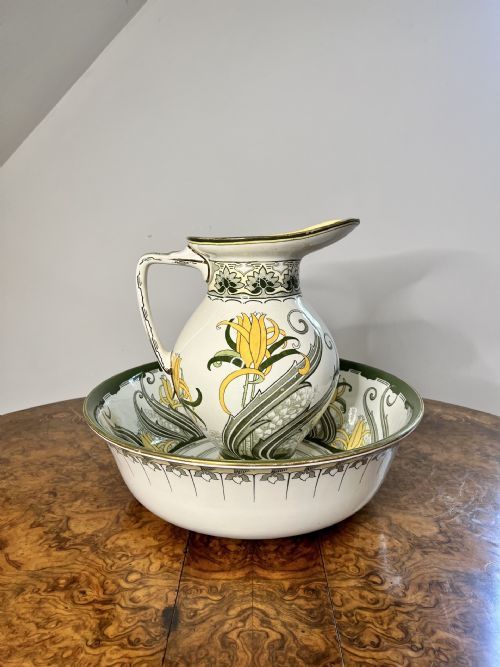
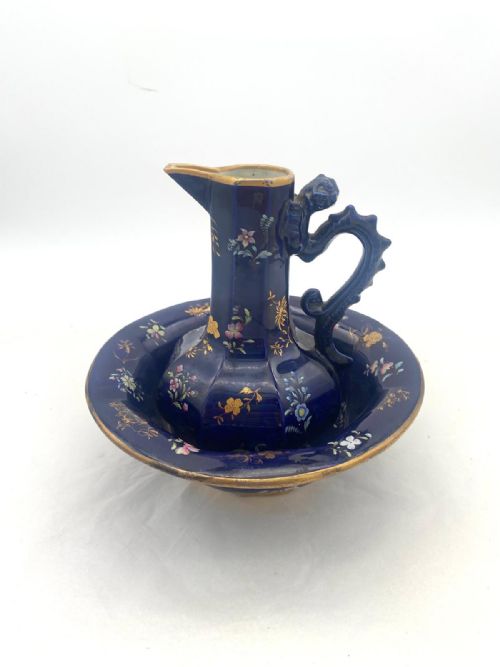
An antique ceramic pitcher bowl set comprises a large handled jug and a matching basin, historically used for washing before indoor plumbing became universal in homes.
The selections encountered here range across the nineteenth century into the Edwardian period, appearing as complete wash sets, bathroom sets, and individual basins.
Makers and potteries such as Doulton Burslem, Mason's, and Minton dominate the production of these utilitarian items, often incorporating ironstone and glazed ceramic bodies.
Materials and construction
Potters shaped these pieces primarily from earthenware and ironstone, applying opaque glazes to create durable surfaces suitable for holding water.
Decoration involved blue and white transfer printing, flow blue techniques, enamel painting, and occasional touches of gold leaf or gilt highlights.
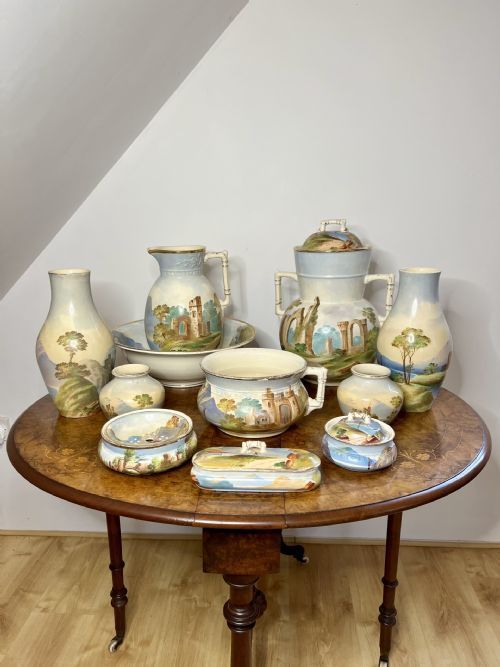
Some nineteenth-century basins included specialised soap dishes that kept slippery bars from sliding into the dirty water.
Assessing quality and finish
Superior examples display crispness in transfer-printed patterns or careful hand-painting, whereas lesser pieces suffer from blurred outlines and uneven glaze pooling.
The weight and density of the ceramic body distinguish robust ironstone pieces from standard earthenware, while matched sets command greater interest than assembled groups.
Doulton Burslem·Minton·Doulton Lambeth·Shelley·Mark Jones And Sons
The Antique Ceramic Pitcher Bowl Glossary
- Ironstone
- A heavy, durable type of earthenware patented in the nineteenth century. It resists chipping better than traditional pottery.
- Flow Blue
- A cobalt blue transfer-printing technique where the colour bleeds slightly into the white glaze during firing. This creates a soft, misty aesthetic.
- Wash Set
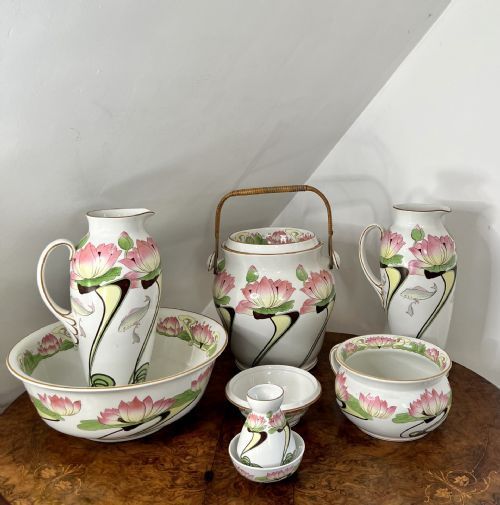
- A matching collection of ceramic vessels designed for personal hygiene on a washstand. It typically includes a large jug and basin alongside smaller accessory pieces.
- Art Nouveau
- A decorative style prevalent around 1900 characterised by organic, flowing lines and plant-inspired motifs. It appears frequently on later ceramic sets.
Antique Ceramic Pitcher Bowl: Frequently Asked Questions
How were wash sets used originally?
These sets sat upon wooden washstands in bedrooms before modern indoor plumbing provided running water. Housemaids filled the pitchers with warm water from kitchen supplies so residents could wash their hands and face.
After use, the soiled water emptied into the large basin below before being carried away. Additional smaller vessels on the stand held soap, toothbrushes, and sponges.
Can I use these pitchers for fresh flowers?
The large capacity and sturdy glazed ceramic make these pitchers suitable for holding cut flowers or decorative branches. Their wide bases provide steady support for heavy arrangements.
Checking the interior for old hairline cracks ensures the ceramic holds water safely without leaking onto furniture surfaces.
How do I date a ceramic wash set?
Stylistic clues such as floral transfer prints point towards Victorian production, while flowing organic lines indicate an Art Nouveau influence near 1900. Maker marks stamped underneath the base offer definitive clues to the manufacturing decade.
Heavier ironstone bodies with oriental-inspired patterns often belong to early nineteenth-century production, whereas lighter earthenware forms align with the Edwardian era.
Are these sets dishwasher safe?
Historic glazes, enamel paints, and gilt highlights require gentle hand washing in lukewarm water with mild soap. Modern dishwasher detergents and high heat can damage the nineteenth-century ceramic surfaces.
Soft cloths prevent scratching the delicate glaze layers accumulated over more than a century of existence.