


Victorian Porcelain Wash Basin
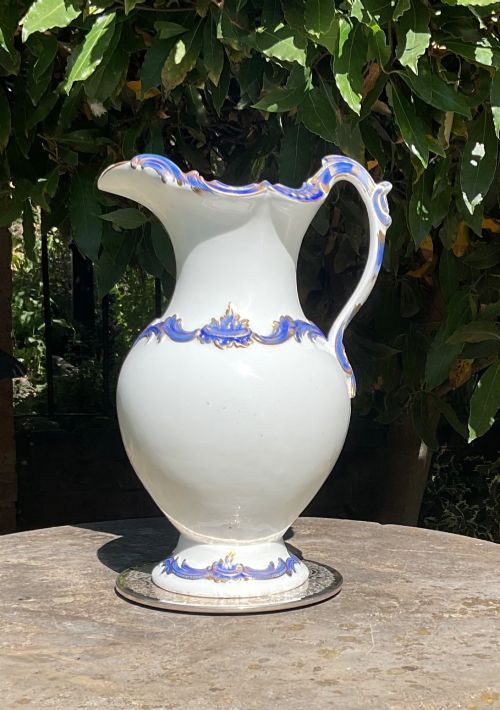
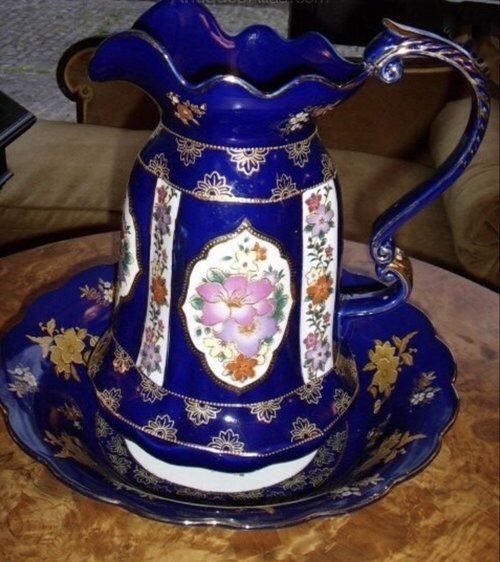
These robust pieces of victorian porcelain wash basin design are practical sanitary ware shaped for the bedroom toilette before plumbed bathrooms took over.
Victorian Porcelain Wash Basin
A victorian porcelain wash basin typically forms part of a larger washstand set, paired with a matching water jug for morning ablutions. These items emerge from the Victorian and Edwardian eras, spanning decades of domestic bedroom use before running water became standard.
Most examples found here appear as individual basins or complete jug and bowl sets, sometimes accompanied by smaller chamber vessels or soap dishes. The forms range from standard chamber basins to large footbaths, reflecting the varied sanitary needs of nineteenth-century households.
How they were made
Potters shaped these vessels from ceramic, earthenware, and porcelain bodies, applying liquid glazes to seal the porous clay. Cobalt glaze provided deep blue decoration, while enamel pigments added floral details directly over the fired surface.
Makers finished select pieces with gold leaf or gilt trim along the rims and handles, elevating utilitarian bedroom ware into decorative items. Transfer printing and hand-painting techniques both appear across the recorded styles, from simple blue and white patterns to Victorian Chinoiserie.
Listings feature periods spanning from the Victorian era through the Edwardian period into the early twentieth century.
What varies in quality
The distinction between standard utility ware and finer pieces rests in the crispness of the transfer print and the precision of the hand-applied enamel or gilt highlights. Well-preserved gilding and smooth, unblemished glaze surfaces indicate higher workshop standards during production.
Named factories such as Doulton Burslem or Copeland distinguish finer productions from unmarked commercial sets. The weight and refinement of the porcelain body also separate simple earthenware basins from more delicate, high-fired porcelain examples.
Doulton Burslem·Copeland
The Victorian Porcelain Wash Basin Glossary
- Footbath
- A deep, wide vessel designed for soaking feet, sharing the same ceramic materials and decorative schemes as wash basins. These large pieces were kept in the bedroom for evening use.
- Cobalt glaze
- A deep blue metallic oxide colorant applied under the glaze before firing, prized for its stability at high temperatures. It creates the rich blue tones seen on traditional patterned washware.
- Earthenware
- A porous pottery body fired at lower temperatures than porcelain, requiring a complete glaze coating to hold water. Many nineteenth-century wash sets utilised this practical ceramic base.
Victorian Porcelain Wash Basin: Frequently Asked Questions
What is a wash basin set?
A matching collection comprising a large bowl for washing and a tall pitcher for holding fresh water. These sets sat atop wooden washstands in bedrooms.
They served as the primary means of personal hygiene before indoor plumbing and running water became common in homes.
How do I date these pieces?
Dating relies on stylistic clues, ceramic bodies, and factory marks stamped into the underside of the earthenware or porcelain. Victorian examples often display heavier forms and ornate floral transfers.
Edwardian pieces tend to show lighter construction and different pastel palettes, while mid-nineteenth-century items lean toward robust cobalt blue designs.
Can I use them today?
These basins function well as decorative planters, umbrella stands, or striking centrepieces in a modern bathroom. Their generous proportions make them surprisingly adaptable for contemporary displays.
Care should be taken with older glazes and any applied gold leaf, which benefit from gentle hand washing rather than abrasive cleaning.
What caused the crazing?
Crazing appears as a fine network of tiny cracks in the glaze, caused by the different expansion rates of the ceramic body and its glassy coating over time. Age and exposure to warm water naturally create this harmless pattern on older earthenware.
It is a common characteristic of nineteenth-century ceramics rather than a structural fault.