




Antique Ceramic Clock
An antique ceramic clock brings the weight of nineteenth-century domestic life into a room through glazed earthenware and porcelain.
Antique Ceramic Clock
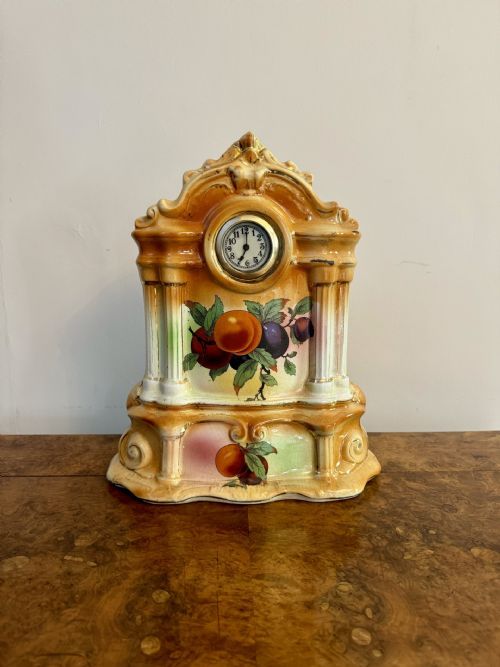
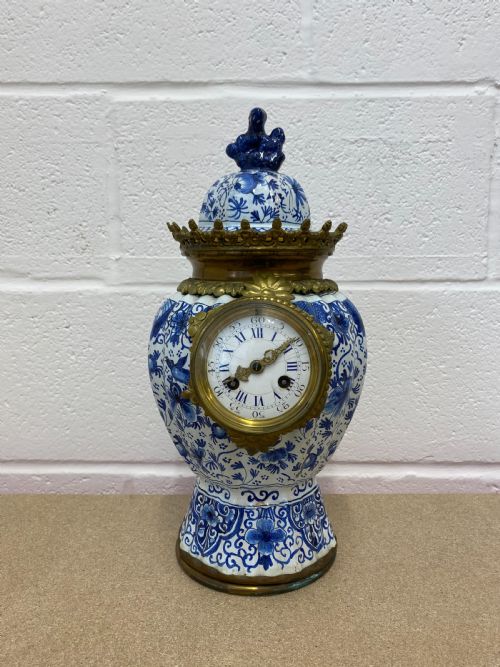
An antique ceramic clock forms a domestic timekeeper shaped from porcelain, earthenware, or pottery, frequently seated alongside matching garniture sets or figural groups. The pieces documented here span the Victorian era, the Edwardian period, and the nineteenth century, ranging from modest Staffordshire models to elaborate French porcelain clock sets.
Collectors encounter mantel clocks, boudoir clocks, and bracket clocks featuring ceramic dials or bodies, alongside miniature longcase forms and decorative pottery figurines fitted with time movements. Aesthetic movement and Rococo revival styles dominate the selection, bringing varied sculptural silhouettes to fireplace surrounds and tabletops.
The material expression shifts between British Staffordshire earthenware, Chinese blue and white porcelain, Dutch delftware, and French porcelain bearing ormolu or gilt bronze mounts. Buyers select these objects for their combination of mechanical utility and sculptural ceramic presence, anchoring a room in nineteenth-century craftsmanship.
What varies in quality
The refinement of the clock dial, whether enamelled or ceramic, and the structural integrity of subsidiary garniture pieces set finer works apart from standard production. Elaborate French and Meissen models demonstrate greater sculptural ambition than simpler Staffordshire earthenware items.
The listings combine British earthenware from Staffordshire with French porcelain, Dutch delftware, and Chinese export ceramics.
Meissen·Sevres
The Antique Ceramic Clock Glossary
- Garniture
- A set of three or more decorative objects, typically a clock paired with matching vases or urns, designed to display together on a mantelpiece.
- Ormolu
- Gilt bronze mounts applied to furniture, clocks, and porcelain bodies to provide decorative highlights and protect corners.
- Earthenware
- A porous pottery body fired at lower temperatures, commonly found in Staffordshire mantel clocks and figures.
- Bracket clock
- A portable timekeeper originally designed to sit on a wall bracket or table, often housed here in massive ceramic and gilt bronze mounts.
- Aesthetic movement
- A late nineteenth-century design style emphasising visual beauty over narrative meaning, seen in ebonised clock cases.
Antique Ceramic Clock: Frequently Asked Questions
How do I clean an antique ceramic clock?
Dust the ceramic body and glass gently with a soft dry brush. Avoid liquid cleaners that might damage hand-painted glazes or gilt bronze mounts.
Keep moisture entirely away from the internal brass movement and paper or enamel dials.
Where should I place a mantel clock?
Mantel clocks sit securely on firm, level surfaces like fireplace mantelpieces, sideboards, or heavy wooden tables. Ensure the location is free from excessive vibration and direct sunlight.
Allow sufficient clearance around any accompanying garniture vases to display the set properly.
How do I wind these clocks?
Use the correct winding key gently, turning only until you feel resistance. Overwinding can damage the internal springs of nineteenth-century movements.
Consult a professional horologist if the movement resists or fails to hold time.
Are these clocks suitable for daily use?
Nineteenth-century timepieces require careful handling and regular professional maintenance to remain in working order. Many owners treat them primarily as decorative objects.
If running daily, periodic servicing by a clockmaker preserves the mechanical components.