





Antique Caucasian Bag
An antique caucasian bag brings nomadic artistry directly into your home, offering portable storage transformed into textile art.
Antique Caucasian Bag
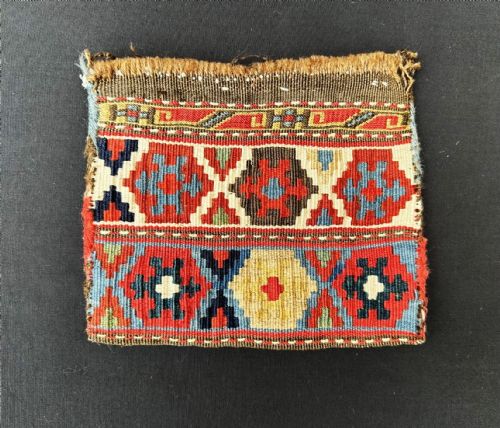
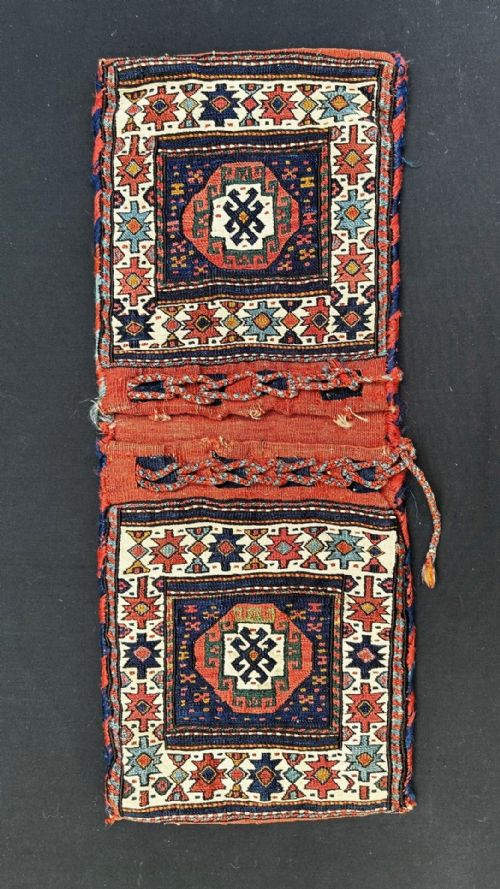
When searching for an antique caucasian bag, you are looking at woven storage items produced by nomadic groups in the Caucasus region. These include complete storage containers, saddlebags, and individual bag faces that served practical functions during travels.
The pieces on this page span the nineteenth and early twentieth centuries, reflecting the material culture of tribal weavers. Shahsavan and Jaf Kurd groups feature prominently among the origins recorded in the inventory.
Forms vary from complete pairs of saddlebags to flattened panels and vanity bags. Many survive as isolated bag faces, having been separated from their original utility over generations of use.
Materials and construction
Weavers utilised wool and hand-spun wool for the foundational structures and pile elements of these textiles. Cotton also appears in the physical makeup, providing structural stability where required.
Natural and vegetable dyes impart colour to the wool, creating the characteristic palettes seen across tribal weaving traditions. Flat-weave methods, soumak technique, and pile weaving define the structural approaches employed by the makers.
Antique Caucasian Bag Retail Price Guide 2026
Typical asking prices for caucasian bag among the pieces listed under this phrase on Sellingantiques today, from the lower quarter to the upper quarter. They describe what is for sale here now, not the wider market.
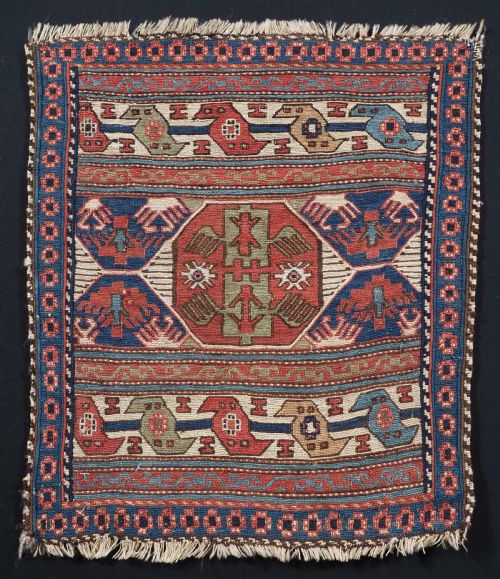
Birds and dragons frequently stare out from nineteenth-century soumak weaves, silently guarding gear once bound for the saddle.
Assessing quality and execution
Quality rests upon the crispness of the weaving technique and the handling of structural details like soumak work or plain weave backs. Finer execution yields sharper geometric and figurative motifs.
The choice and preservation of natural dyes dictate visual depth, separating standard examples from those with exceptional colour saturation. Complete structural survival, such as intact pairs or full storage bags, elevates the standing of a piece.
The Antique Caucasian Bag Glossary
- Khorjin
- A traditional saddlebag used by nomadic tribes for transport and storage. These pieces were often woven as pairs linked by a central web.
- Mafrash
- A large rectangular storage bag or chest panel used within nomadic tents for bedding and household goods. They are frequently encountered as individual panels or complete containers.
- Soumak
- A flat-weave technique involving wrapped supplementary weft threads that create a textured, durable surface. This method allows for precise rendering of complex geometric and figurative designs.
- Bag face
- The decorative front panel of a storage or saddlebag. These sections were often preserved and mounted as cushions or wall hangings after the rest of the bag wore out.
Antique Caucasian Bag: Frequently Asked Questions
What is an antique caucasian bag used for?
These textiles originally served as practical storage containers for nomadic tribes, holding household goods, bedding, or provisions during seasonal migrations.
Today, collectors use them as decorative wall hangings, table runners, or padded cushions within domestic interiors.
How do I care for a tribal bag?
Protect the wool and natural dyes by keeping the textile out of direct sunlight to prevent fading. Gentle vacuuming with a mesh screen provides safe routine maintenance.
Avoid chemical cleaners and consult a specialist in antique textiles for professional washing.
Are these bags complete or fragments?
The inventory includes both complete examples, such as full mafrash storage bags and pairs of saddlebags, alongside individual bag faces and panels.
Many surviving pieces are single faces because the backing materials wore out faster than the decorative fronts during historical use.
How can I tell who made the bag?
Attribution relies on specific structural characteristics, regional motifs, and weaving techniques associated with particular tribal confederations like the Shahsavan or Jaf Kurd.
Design elements such as birds, dragons, and specific border layouts often point toward particular regional workshops or nomadic groups.