

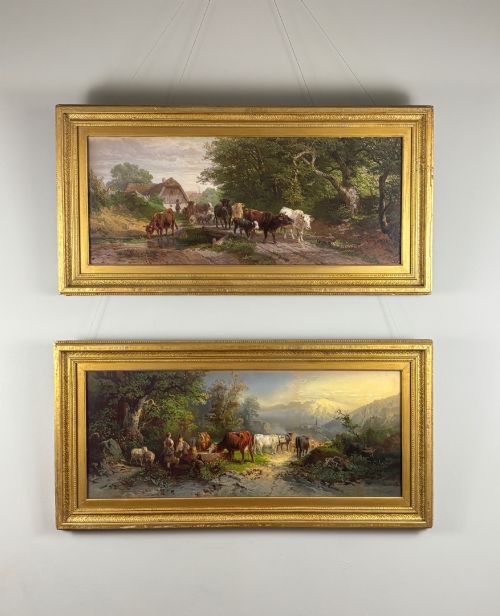
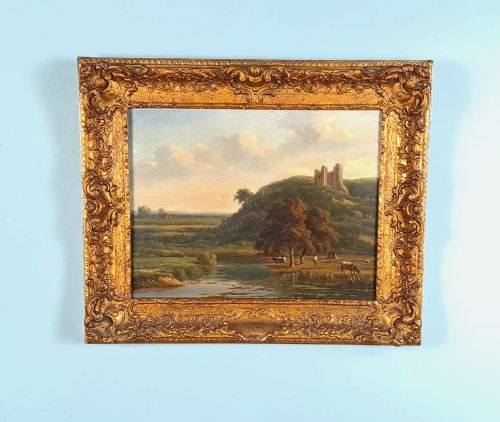
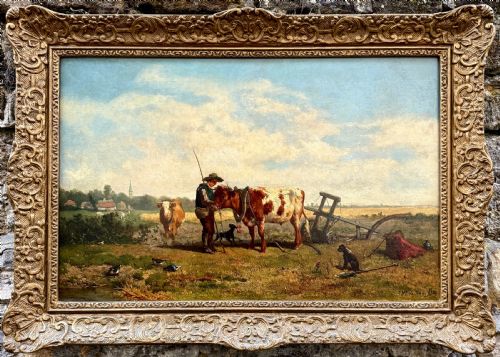
Antique Cattle Landscape Art
Antique cattle landscape art captures pastoral scenes from past centuries, bringing the quiet rhythm of rural life and farming into a room.
Antique Cattle Landscape Art
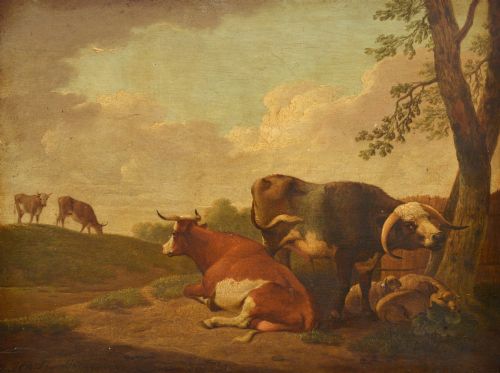
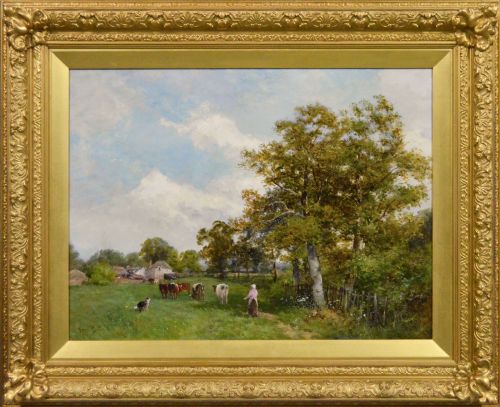
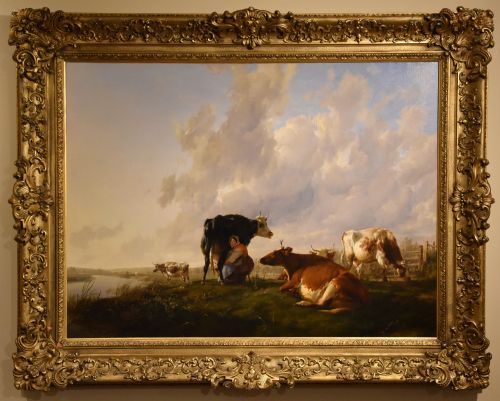
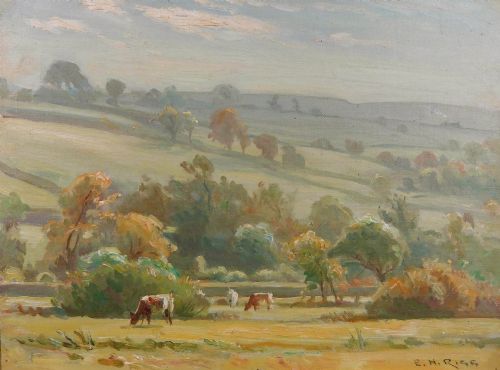
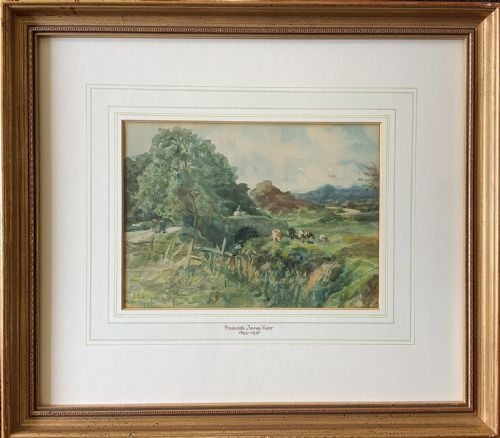
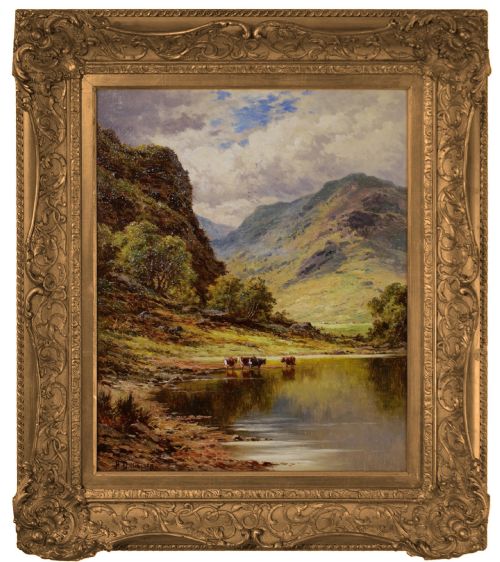
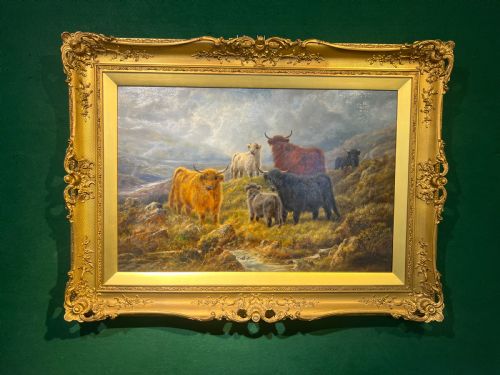
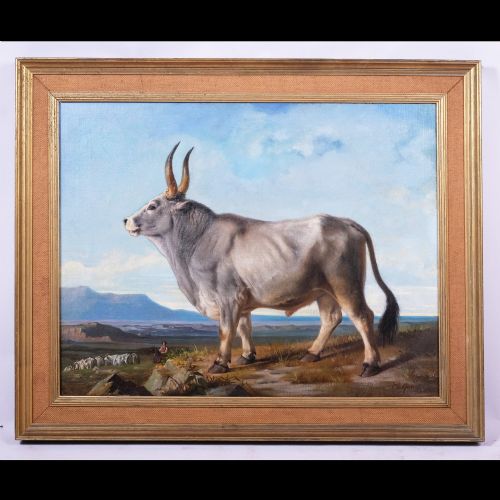
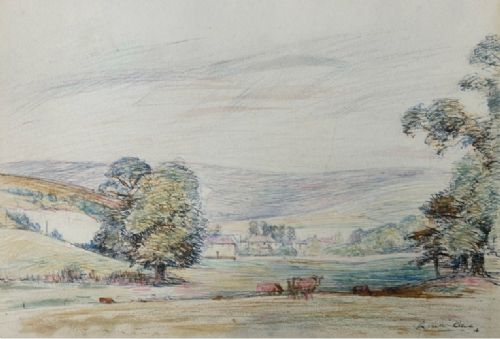
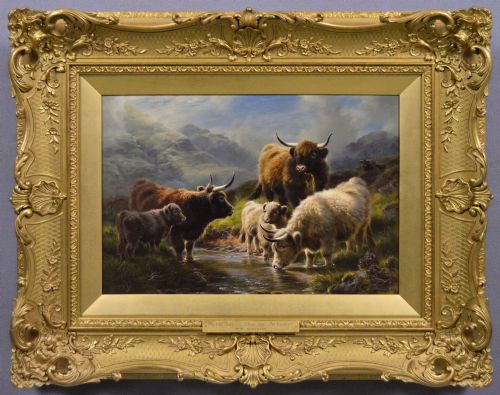
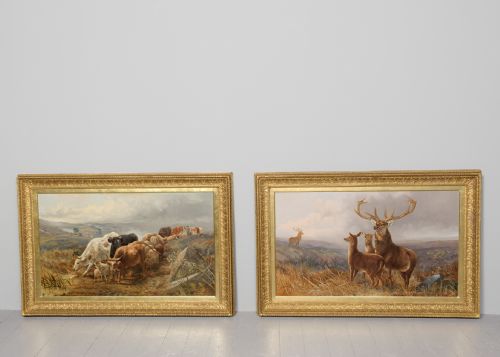
Antique cattle landscape art depicts rural views featuring cows, bulls, and calves integrated into natural scenery. These works capture farming life, riverbanks, and open pastures across Britain and Europe.
The pieces on this page mostly date from the nineteenth century and the early decades of the twentieth century. They appear as oil paintings on canvas or board, alongside watercolours on paper.
Makers range from regional British and Scottish painters to continental European artists who specialised in animal portraits and pastoral settings.
Materials and technique
Artists built these compositions using oil paint on canvas or board, and watercolours on paper. Canvas supports often received layers of gesso preparation before the application of paint.
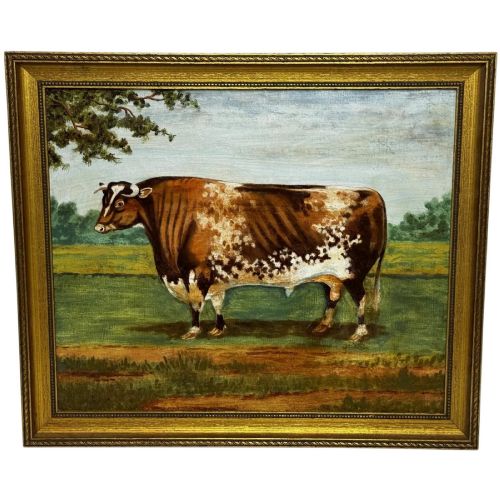
Several canvases record specific named animals, preserving the exact likeness of a prize-winning shorthorn bull for posterity.
Factors of quality
Quality rests upon the artist's ability to render the anatomy and weight of the animals with conviction, rather than treating them as generic shapes in the landscape. The handling of natural light across open fields and water also separates standard works from finer examples.
Condition plays a part, particularly the preservation of the paint surface on canvas and the retention of the original giltwood frame.
William H Myers·Hendrik Willem Schweickhardt·David Bates·Thomas Sidney Cooper·Ernest Higgins Rigg·Frederick James Kerr·Henry H Parker·Robert Watson·Russell Sidney Reeves·William Watson Jnr·Robert Cleminson·Johann Friedrich Voltz·T C Hofland·Johannes de Haas·A M Gauci·Oswald Garside·Henry Robinson Hall·J C Grey·Henry Hillier Parker·Frederick Septimus Lewis·Ernest Pile Bucknall·Samuel Joseph Clark·William Sydney Cooper·Thomas Hunn·George Vicat Cole
The Antique Cattle Landscape Art Glossary
- Oil on Canvas
- Pigment mixed with drying oil applied to a woven fabric stretched across a wooden frame. This medium allowed artists to build rich textures and deep tones.
- Giltwood
- Wood carved and covered with a thin layer of gold leaf or gold paint. Frames built this way frequently accompany nineteenth-century oil paintings.
- Watercolour
- A paint consisting of colour suspended in a water-soluble binder, used on paper supports. Artists favoured this medium for lighter, more translucent pastoral studies.
- Gesso
- A plaster mixture used as a smooth base on wood panels or frames before gilding or painting. It provides a solid foundation for decorative surface work.
- Pastoral Landscape
- A genre of art focusing on rural subjects, agriculture, and livestock grazing in open country. These scenes reflect an idealized view of country life.
Antique Cattle Landscape Art: Frequently Asked Questions
What periods do these paintings come from?
The works span from the eighteenth century through the Victorian era and into the early twentieth century.
Most examples date from the nineteenth century, reflecting the popularity of pastoral and agricultural themes during that period.
How were these artworks framed originally?
Makers housed many of these pieces in wooden frames finished with gesso and giltwood decoration.
Surviving frames often match the age of the canvas, though some pieces have undergone reframing over the decades.
What is the difference between oil and watercolour pieces?
Oil paintings use heavy pigment on canvas or board, allowing for textured brushwork and deep colour saturation.
Watercolour works use water-soluble pigments on paper, producing a lighter and more transparent effect.
How do I care for an antique painting?
Keep the artwork away from direct sunlight and fluctuating humidity to protect the canvas and paper supports.
Dust frames gently with a dry cloth and avoid using liquid cleaners on the painted surfaces.