


Late Victorian Oil Landscape
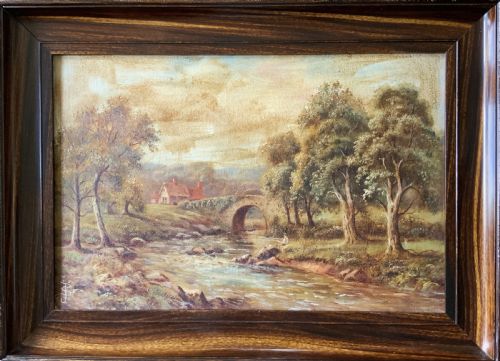
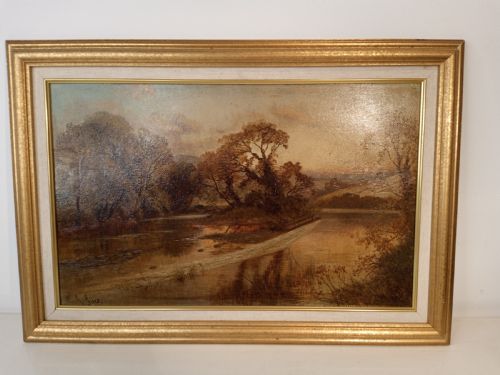
A late victorian oil landscape brings the quiet rivers, woodlands and coastlines of the nineteenth century into a room through rich brushwork and heavy gilt framing.
Late Victorian Oil Landscape
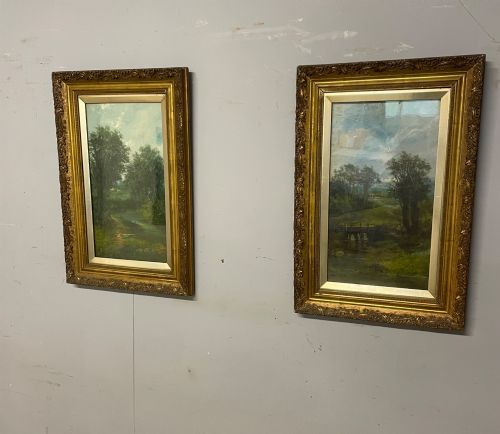
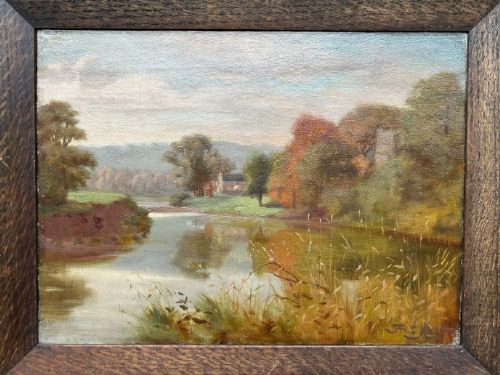
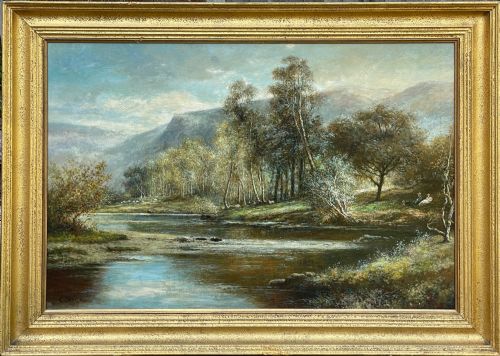
A late victorian oil landscape captures the natural world through the lens of nineteenth century realism, pastoral scenes and early impressionism. These works typically depict British and Scottish countryside vistas, rivers, woodlands and coastal views.
Most examples found here date from the late nineteenth century into the early twentieth century, spanning the Victorian and Edwardian eras. Painters of this period favoured rural tranquility, often placing figures, livestock or cottages within expansive natural settings.
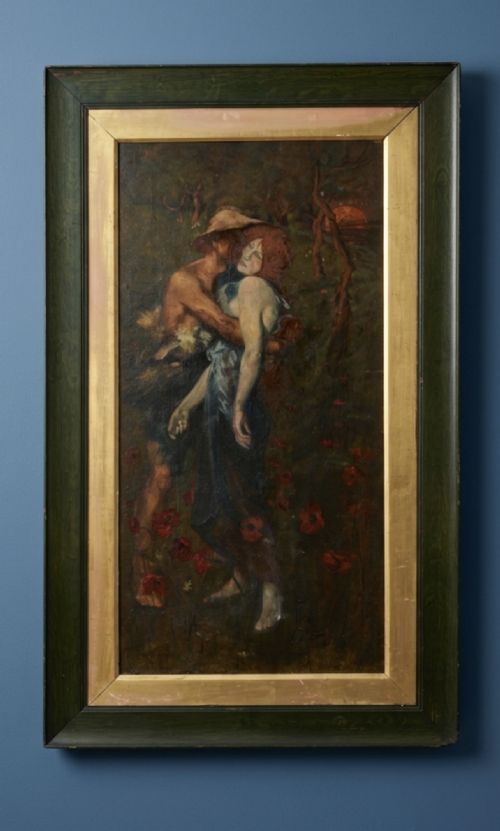
Buyers encounter framed canvases, wooden panels and board supports bearing original signatures from period artists. The subjects range from local English streams and Yorkshire towns to Scottish glens and Venetian canals.
How they were made
Artists applied oil paint to stretched canvas, wood panels or board supports, building texture and depth with layered brushstrokes. Canvas remained the primary medium for larger compositions, whilst smaller studies frequently utilised prepared wooden panels.
Surviving works are typically housed in their original frames constructed from wood and finished with gesso and gilt. These ornate surrounds were designed to complement the warm tones and atmospheric lighting of the painted scenes.
Frames across the selection utilise wood, gesso and gilt to house works depicting British and European subjects.
What varies in quality
The strength of a late victorian oil landscape rests upon the surety of the brushwork and the artist's command of light and atmosphere. Stronger examples display confident handling of shadow and tone, particularly in skies and woodland interiors, whereas weaker compositions rely on formulaic repetition.
The integrity of the original gilt and gesso frame contributes significantly to the overall presence of the piece. Frames with untouched gilding and minimal restoration enhance the historical character of the artwork.
Frederick Marriott·Thomas W Lascelles·Sydney Yates Johnson·William George Tennick·Arthur Herbert Rigg·Thomas Bromley Blacklock·Robert John Hammond·William Manners·John Syer junior·Frederick William Jackson·William Greaves·Walter Emsley·Clarence Roe
The Late Victorian Oil Landscape Glossary
- Gesso
- A plaster-like mixture applied to wooden frames before gilding to provide a smooth base for ornamentation. It allows carvers to achieve crisp details and relief mouldings.
- Giltwood
- Timber that has been coated with a thin layer of gold leaf or metal powder. This finish adds luminosity and warmth around the perimeter of the canvas.
- Oil on canvas
- Pigments bound in drying oils applied to a woven fabric support. This combination offers flexibility and allows for subtle blending of colours.
- Victorian Naturalism
- An artistic approach focusing on the unidealised representation of the physical world. It prioritises truthful observation of light, weather and rural labour.
- Pastoral
- A genre of painting celebrating rural life and peaceful countryside scenery. These works commonly feature shepherds, cattle, rivers and rustic cottages.
Late Victorian Oil Landscape: Frequently Asked Questions
How do I date a late victorian oil landscape?
Examine the style of dress on any figures within the composition and look for artist signatures, dates or inscription notes on the reverse of the canvas or stretcher bars.
The framing materials and stretcher construction methods also provide reliable clues to the period of creation.
Where should I hang these oil paintings?
Choose a wall with stable ambient temperature and humidity, away from direct sunlight and strong heat sources such as radiators. Natural indirect light best reveals the depth of the oil pigments and the texture of the brushwork.
Ensure the wall construction can support the combined weight of the canvas and its heavy gilt frame.
Are these paintings usually signed?
Many examples bear the artist's signature or monogram, typically located in one of the lower corners of the canvas. Unsigned works also appear frequently, often attributed to regional British schools of the period based on technique and subject matter.
Documentation or exhibition labels on the reverse can help identify the hand behind unsigned pieces.
What subjects are most common?
Rural river views, woodland paths, pastoral farmland with sheep, and coastal scenes dominate this category. Artists frequently turned to the landscapes of Scotland, Yorkshire, and the home counties for inspiration.
Occasionally, urban street scenes or foreign vistas such as Venetian canals appear among the rural views.