
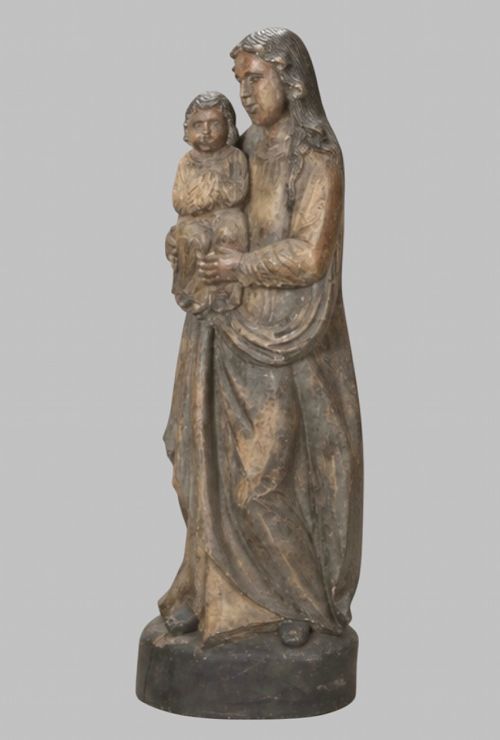


Antique Catholic Statue
An antique catholic statue brings centuries of devotion into a room through carved wood, gold leaf, and traditional polychrome paint.

Antique Catholic Statue
When you search for an antique catholic statue, you encounter devotional figures spanning from pre-sixteenth century church carvings to nineteenth-century home altars. These pieces range from substantial Spanish pietas and Baroque saints to simple folk art representations of the Madonna and Child.
The most common examples on this page date from the nineteenth century, often taking the form of carved wooden figures or domestic shrines. Many reflect regional traditions such as Italian folk art or Spanish Baroque styles, designed originally for private prayer or ecclesiastical settings.
How they were made
Carvers shaped these figures primarily from solid timbers like wood, olive wood, and hardwood, applying gesso to create a smooth surface for further embellishment. Artisans then finished many pieces with detailed polychrome paint and genuine gold leaf to highlight vestments and facial expressions.
Certain works incorporate terracotta or parianware, utilising moulds or direct modelling before surface decoration is applied. Workshops employed traditional gilding and painting techniques that have aged with distinct craquelure and patina over the centuries.
Antique Catholic Statue Retail Price Guide 2026
Typical asking prices for catholic statue among the pieces listed under this phrase on Sellingantiques today, from the lower quarter to the upper quarter. They describe what is for sale here now, not the wider market.
The listings span multiple centuries, ranging from pre-sixteenth century church figures to twentieth-century terracotta and carved wood sculptures.
What varies in quality
The distinction between ordinary and exceptional work lies in the depth of the carving and the expression captured in the saint's face. Master carvers rendered hands, drapery, and anatomical details with realistic fluidity, whereas simpler folk art carvings display charmingly naive proportions.
The preservation of original surface finishes significantly influences the character of a piece. Intact layers of early polychrome paint and genuine gold leaf retain their historical integrity far better than heavily restored or later overpainted surfaces.
George Kemper·Bohumil Kafka
The Antique Catholic Statue Glossary
- Polychrome
- Painted in several colours. This term describes statues decorated with pigments to render lifelike skin tones and coloured garments.
- Gesso
- A plaster mixture applied to wood surfaces. It provides a smooth base for subsequent gilding and painting.
- Giltwood
- Wood carved and then covered with gold leaf. This technique creates a luminous, reflective surface often used on ecclesiastical figures.
- Santos
- A carved figure of a saint or religious personage. These sculptures frequently served devotional purposes in Spanish and Portuguese traditions.
- Pieta
- A representation of the Virgin Mary holding the dead Christ. This specific subject appears in European devotional art from the medieval period onwards.
Antique Catholic Statue: Frequently Asked Questions
How old is my statue?
Dating relies on examining the tool marks left by the carver, the composition of the underlying gesso, and the ageing patterns of the wood.
Style also offers clues, as Gothic Revival, Baroque, and folk art traditions each utilised distinct forms of drapery and facial expression during their respective eras.
Where were these statues displayed?
Many originated in churches, convents, or roadside shrines before finding their way into domestic spaces.
Smaller examples were often housed within home altars or cabinets for private daily prayer.
How do I clean carved wood?
Dust the surface gently with a soft, dry brush to prevent dirt from settling into crevices and painted areas.
Avoid using water, oils, or modern cleaning agents, as moisture can damage fragile gesso and historic polychrome paint.
What is a home altar?
A home altar is a small devotional shrine designed for domestic worship, often containing a central figure of a saint or the Madonna.
These portable or tabletop structures frequently feature carved wooden frames and painted panels suited for private reflection.