





Antique Catholic Artwork
Antique catholic artwork carries centuries of devotion in oil paint, canvas, wood and gold leaf.
Antique Catholic Artwork
Antique catholic artwork brings together devotional paintings, portraits of saints, and carved figures created across the sixteenth, seventeenth, eighteenth, and nineteenth centuries. These pieces emerge from Italian, French, Spanish, and colonial traditions, reflecting private prayer and ecclesiastical spaces.
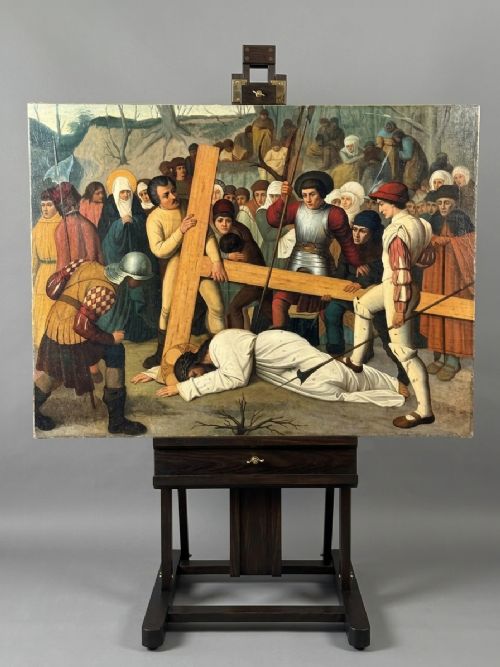
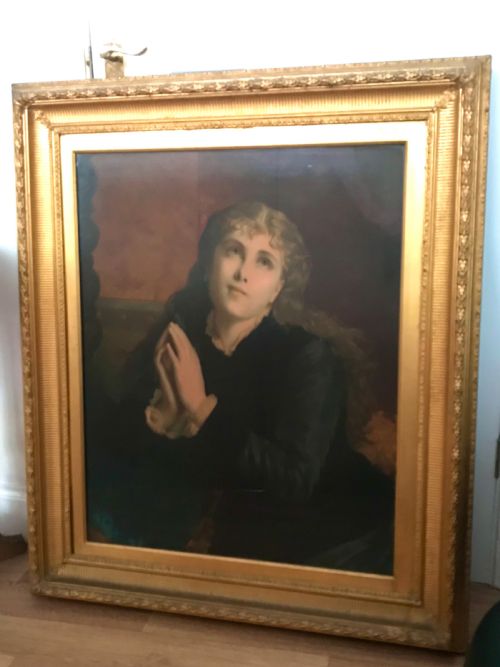
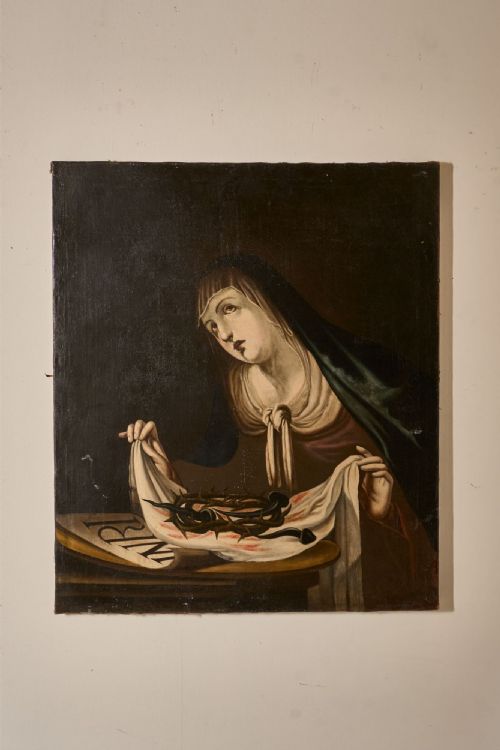
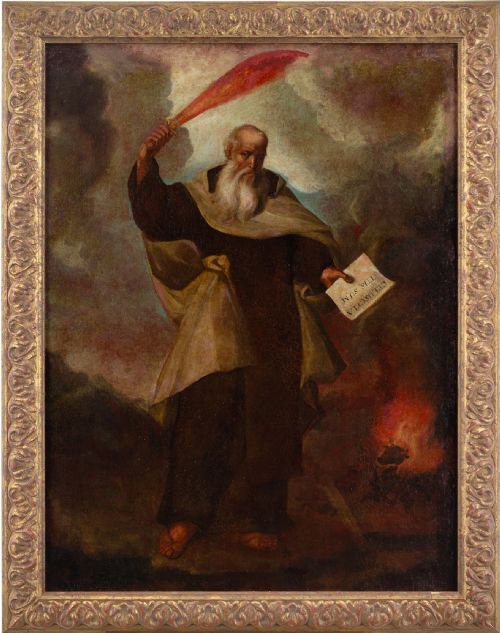
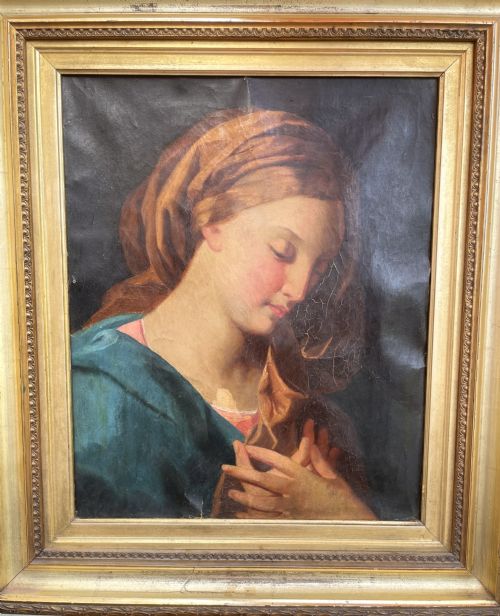
The version most commonly met on this page is the oil painting on canvas, spanning everything from small devotional panels to large old master portraits. Alongside canvases, buyers find framed prints, oleographs, and carved olive wood figure groups.
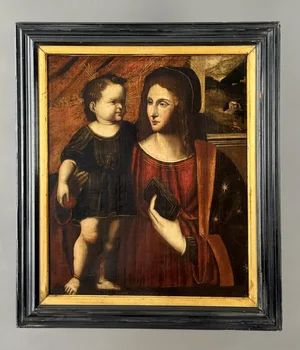
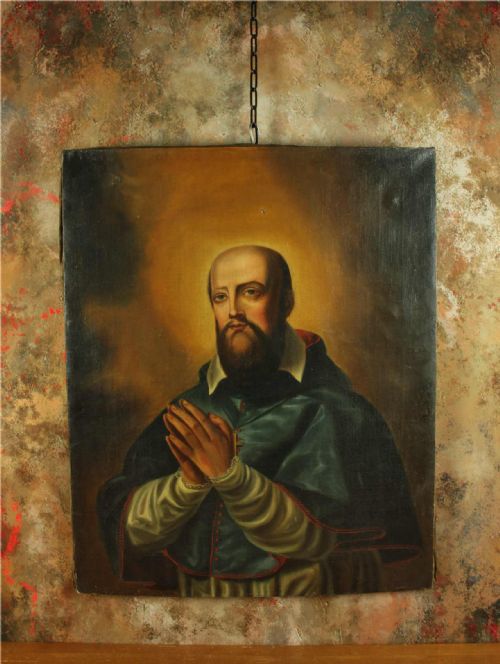
Subjects centre on the Virgin and Child, depictions of Christ, and specific saints such as Francis de Sales, Mary Magdalene, and Sebastian. Works range from intimate miniature portraits to grand historical compositions tied to Renaissance and Baroque movements.
How they were made
Painters applied oil paint to stretched canvas or wooden panels, building rich compositions through layered glazes and detailed brushwork. Many earlier canvases rely on traditional grounds of gesso to seal the fabric before pigment touches the surface.
Frames and decorative elements frequently incorporate carved wood finished with gold leaf or giltwood, catching candlelight in places of worship. Sculptural works utilise carved olive wood to shape three-dimensional devotional figures.
Reproduction techniques also appear alongside hand-painted canvases, including period prints and oleographs placed under glass. These printed works often received framing that matched the aesthetic of earlier painted devotional art.
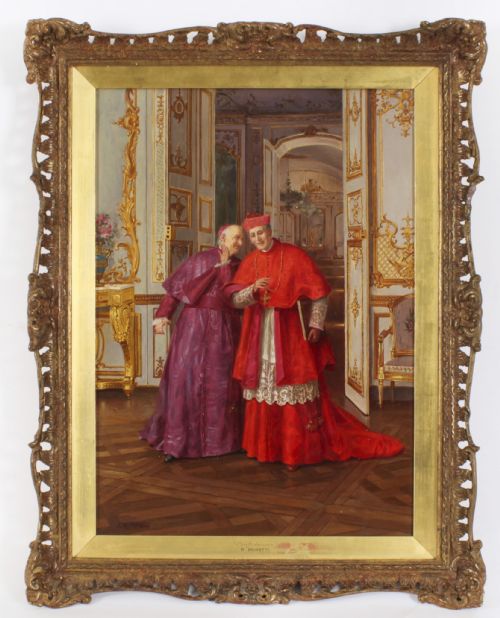
Cardinals and popes stare out across the centuries in full regalia, occasionally sharing canvas space with attentive dogs.
What varies in quality
Quality rests in the brushwork and the sureness of anatomy, where the hand of a skilled master or accomplished follower creates depth and expression in a face. Lesser works rely on stiff repetition and flat application of pigment.
The integrity of the materials matters deeply, from the weave of the canvas and the stability of the wood panel to the preservation of the original paint layer. Pieces that retain their early surface without heavy overpainting hold greater artistic weight.
The provenance and attribution to specific schools or circles elevate a piece, linking an anonymous workshop to the broader currents of Italian Baroque or Spanish Colonial painting.
Jozef Janssens·Bernardino Luini·Renato Moretti·Frank Moss Bennett·Costantino Frixione·Gaspar de Figueroa·Raffaello Sanzio da Urbinos·Pompeo Batoni·Guido Reni·Ernst Stierhof
The Antique Catholic Artwork Glossary
- Old Master
- A term for a European painter of skill working before the nineteenth century, or a painting by such an artist. These works form the backbone of early religious portraiture.
- Oil on Canvas
- Pigment mixed with drying oil applied to a woven fabric support stretched over a wooden frame. This medium allowed artists to achieve subtle tonal shifts and deep shadows.
- Giltwood
- Wood carved and then covered with a thin layer of gold leaf or gold paint. It provides a warm, reflective border for devotional paintings.
- Oleograph
- A type of chromolithographic print textured to imitate the surface of an oil painting. They gained popularity in the nineteenth century as accessible religious art.
- Ex-Voto
- A votive offering given to a saint or a divinity in fulfilment of a vow. These portraits often record a miraculous intervention or personal thanksgiving.
- Gesso
- A paint mixture consisting of a white pigment binder used to prepare a surface for painting or gilding. It creates a smooth, absorbent ground on wood panels and frames.
Antique Catholic Artwork: Frequently Asked Questions
How do I date an old religious painting?
Dating relies on the style of the brushwork, the preparation of the canvas, and the framing conventions typical of periods like the seventeenth or eighteenth century. Costume details and the rendering of facial expressions also offer clear clues to the era of creation.
Examining the stretcher bars, nails, and the ageing of the oil paint provides further physical evidence to help narrow down the decade or century.
Where were these devotional pieces displayed?
Many of these artworks hung in private domestic chapels, prayer rooms, or rural parish churches across Catholic Europe and colonial territories. Smaller miniatures and panel paintings were often used for personal, travelling devotion.
Larger canvases and carved wood groups commanded central positions above altars or within grand ecclesiastical architectural settings.
How should I care for an oil painting on canvas?
Keep paintings away from direct sunlight, high humidity, and rapid temperature changes that can cause the canvas to slacken or the paint to crack. Dust the surface very gently with a soft, dry brush without applying pressure.
Avoid using water or cleaning solutions on the paint layer, and consult a professional conservator if the canvas requires cleaning or structural repair.
What is the difference between a painting and an oleograph?
An oil painting consists of original pigments applied by hand to canvas or wood by an artist, showing distinct brush texture and depth. An oleograph is a mechanical print designed to mimic the look and texture of a genuine oil painting.
Examining the surface under magnification reveals the dot pattern of a print rather than the fluid strokes of brush-applied paint.