

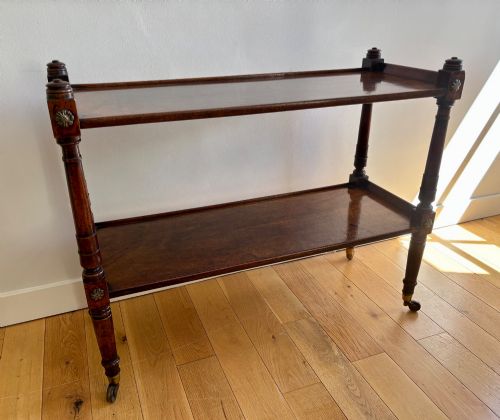


Antique Castored Shelf Stand
An antique castored shelf stand brings tiered shelving and mobility together, offering a practical solution for organising books and display pieces across domestic rooms.
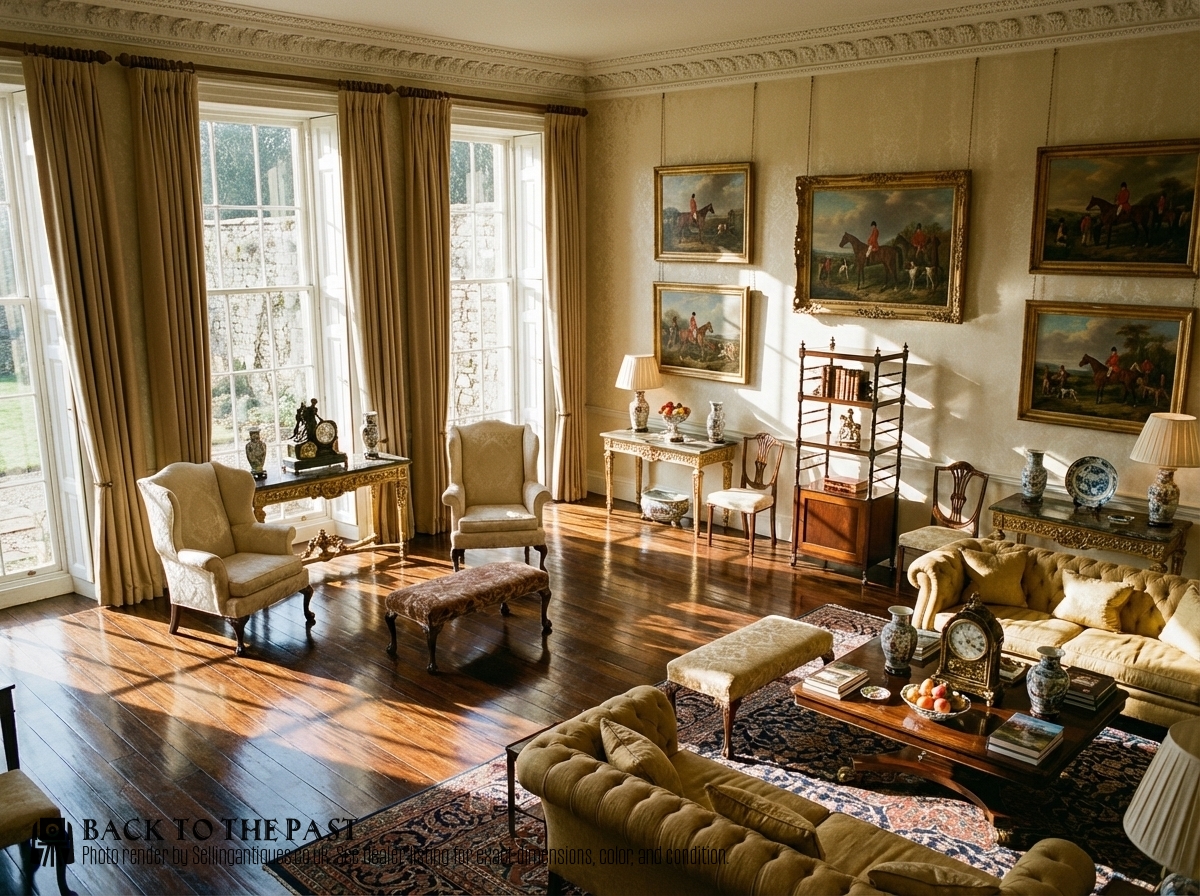
Antique Castored Shelf Stand
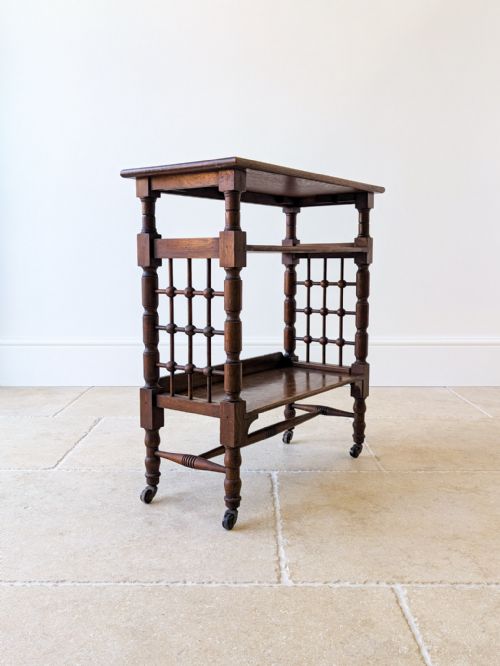
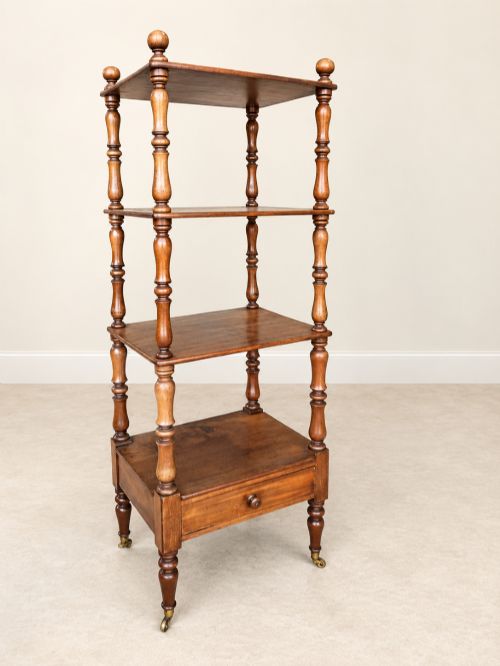
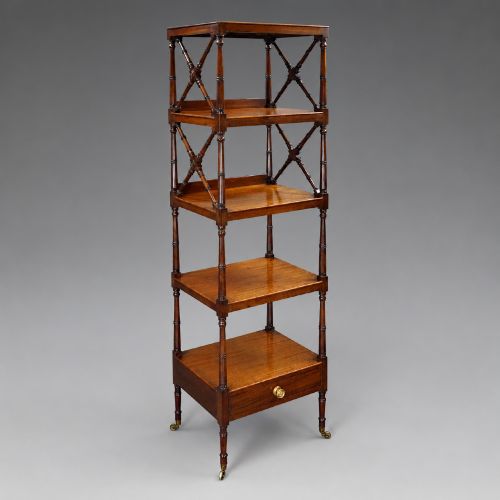
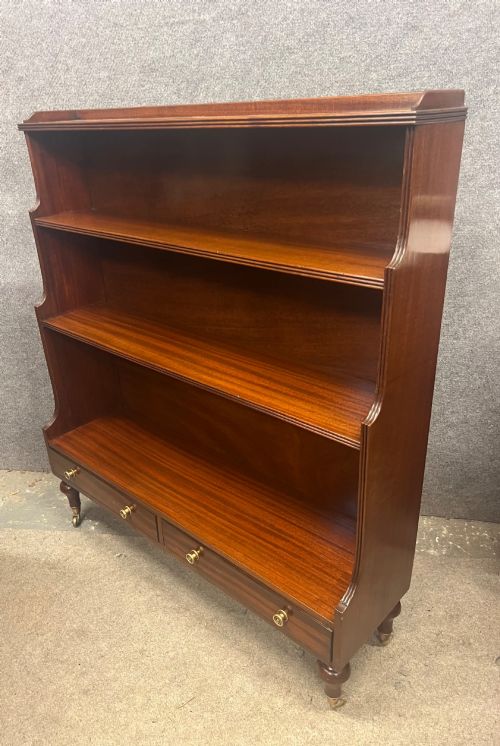
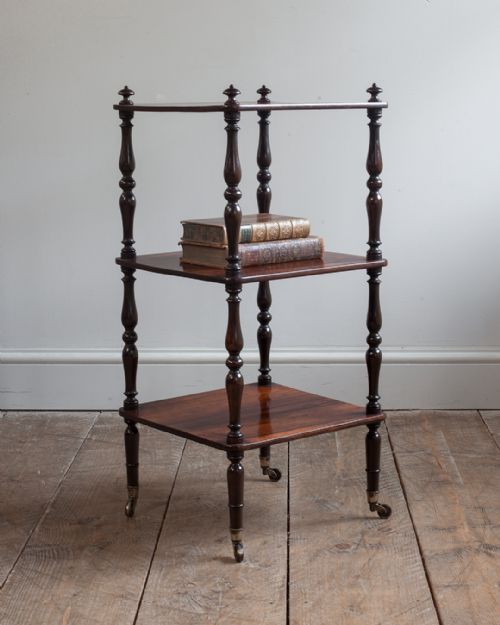
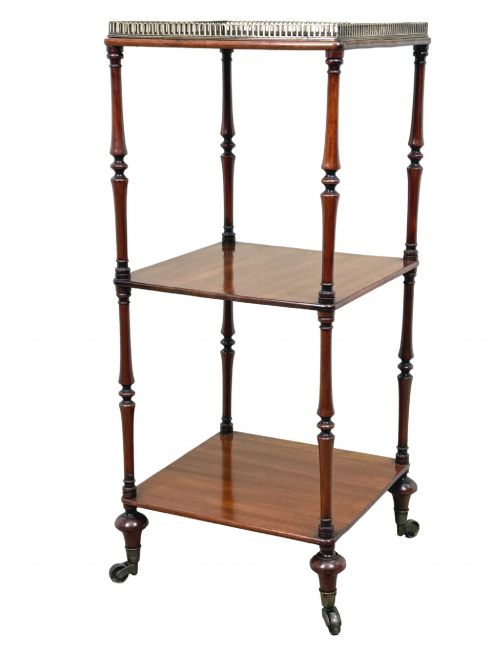
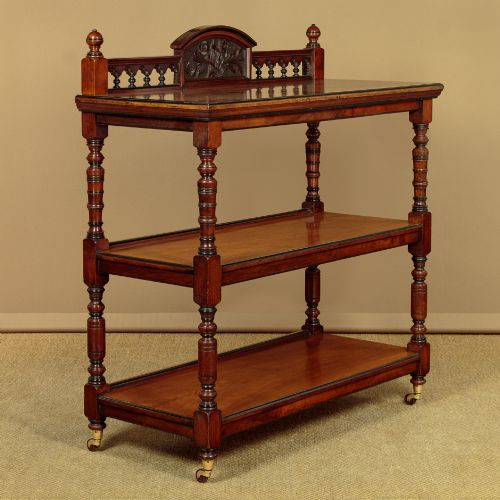
An antique castored shelf stand generally takes the form of a whatnot, etagere, or multi-tiered open bookcase fitted with castors for mobility. These multi-level pieces serve as adaptable storage surfaces for books, folios, or decorative items within Georgian, Regency, Victorian, and Edwardian interiors.
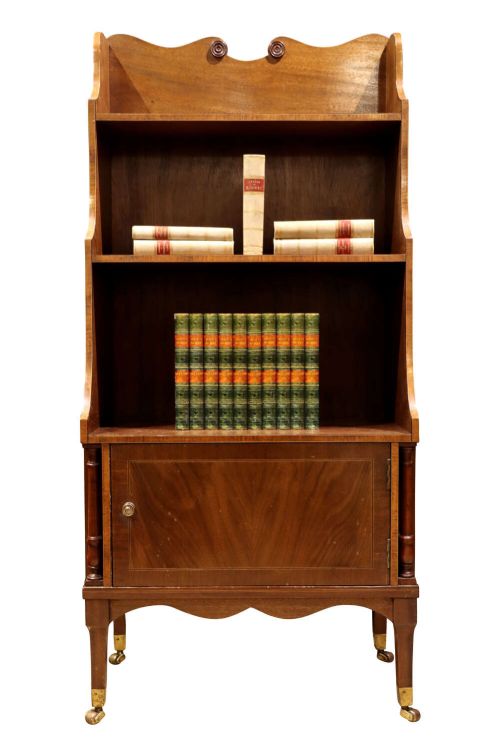
The versions most commonly met on this page span the nineteenth century, including compact rosewood and mahogany formats alongside larger revolving bookcases and music stands. They range from simple three-tier open designs to elaborate inlaid waterfall cabinets and double-sided freestanding pieces.
How they were made
Cabinet makers utilised dense hardwoods such as mahogany, rosewood, walnut, and birdseye maple, often selecting burr veneers and decorative inlay to enrich the visible surfaces. These timbers were shaped into upright supports, turned columns, and graduated shelves designed to bear weight while maintaining structural balance.
Cast metal components, specifically brass castors, were fixed to the feet or base to allow the heavy wooden furniture to move smoothly across floor surfaces. Joinery techniques varied from straightforward pegging to fine dovetailing on smaller compartments and drawers.
Listings feature pieces spanning the Georgian, Regency, Victorian, and Edwardian eras, constructed from mahogany, rosewood, walnut, and birdseye maple.
What varies in quality
The selection of timber grain and the choice of secondary woods largely define the standard of execution, with figured rosewood and burr walnut sitting at the upper end of the scale. Subtle details such as finely turned uprights, balanced proportions, and careful inlay distinguish more ambitious workshop productions from straightforward utility furniture.
The originality of the brass castors and the tightness of the shelf joints contribute significantly to the structural integrity and historical preservation of the piece. Superior examples maintain crisp mouldings and uncompromised timber surfaces through successive generations of domestic use.
The Antique Castored Shelf Stand Glossary
- Castor
- A small wheel fitted to the foot of a piece of furniture to allow easy movement. These are frequently made of brass on nineteenth-century pieces.
- Whatnot
- An open set of tiered shelves used for displaying or storing small objects, books, or ornaments. They emerged in popularity during the late eighteenth century.
- Etagere
- A French term for a piece of furniture consisting of a set of open shelves for displaying ornaments. It is functionally similar to the English whatnot.
- Waterfall bookcase
- A set of open shelves where each tier is successively deeper than the one above, creating a stepped profile resembling a waterfall. This style became popular during the Victorian period.
- Revolving bookcase
- A freestanding bookcase designed to rotate on a central pivot, allowing easy access to books from any angle. They are commonly constructed in mahogany or Edwardian satinwood.
Antique Castored Shelf Stand: Frequently Asked Questions
What is a whatnot?
A whatnot is a multi-tiered shelving unit designed to hold books, ornaments, or papers within easy reach in a parlour or study.
First appearing in the late eighteenth century, these open stands evolved into essential items of nineteenth-century domestic furnishing.
Where were these stands used?
These mobile shelf stands were typically placed beside seating areas, desks, or in libraries where books and writing materials needed frequent rearrangement.
Because they feature castors, servants or occupants could easily wheel the stand to different parts of the room as required.
How do I care for rosewood?
Rosewood surfaces benefit from minimal interference, requiring only a gentle dusting with a dry, soft cloth to prevent abrasion.
Avoid placing these timbers in direct sunlight or near heat sources to prevent the natural oils from drying out and causing the wood to split.
Are original castors important?
Original brass castors preserved on the feet of a nineteenth-century shelf stand contribute to the overall authenticity and historical value of the piece.
Replacement castors are common due to heavy wear over the decades, though surviving originals confirm the piece retains its primary configuration.