

Antique Carved Stick Stand
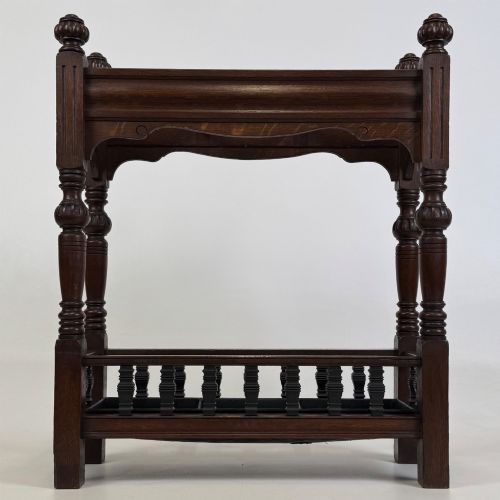
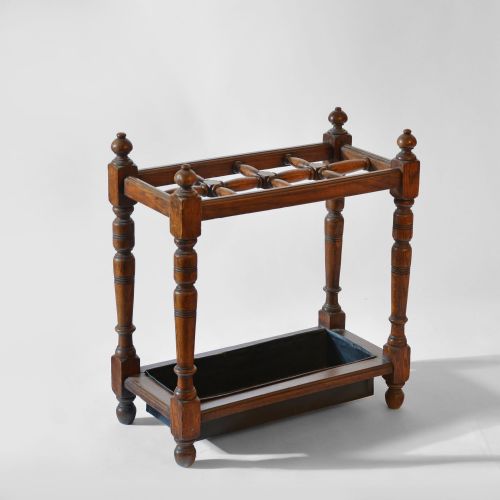
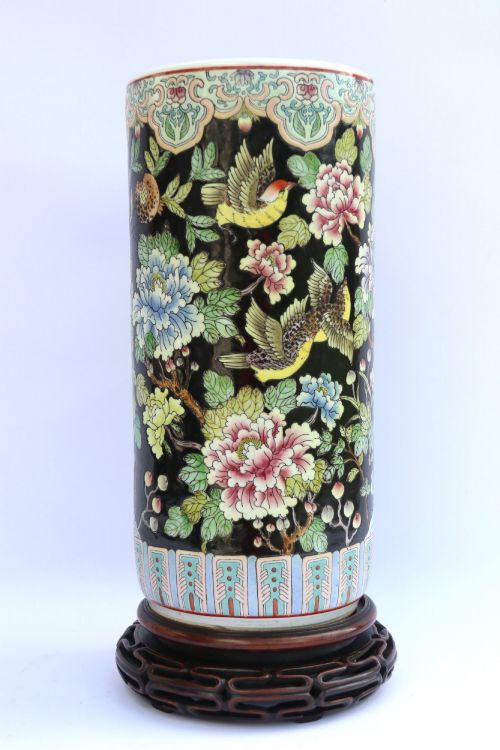
An antique carved stick stand brings robust timber work and practical hall storage together, offering a stately place for umbrellas and walking canes.
Antique Carved Stick Stand
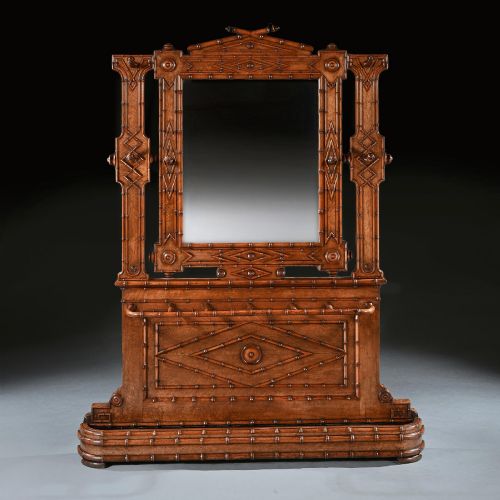
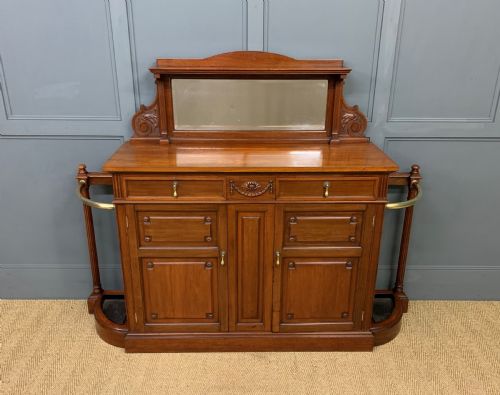
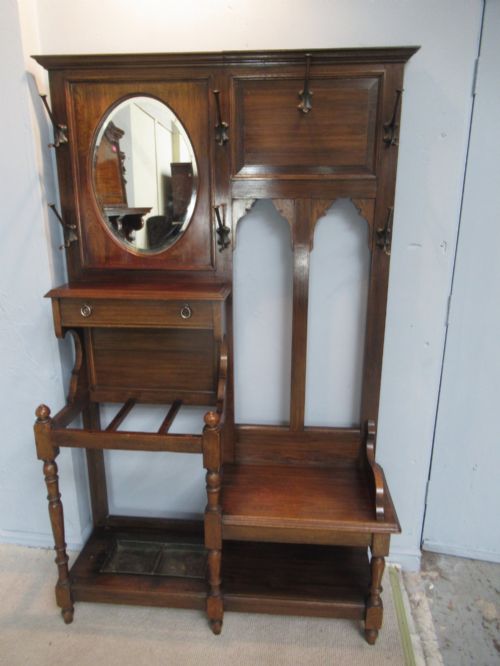
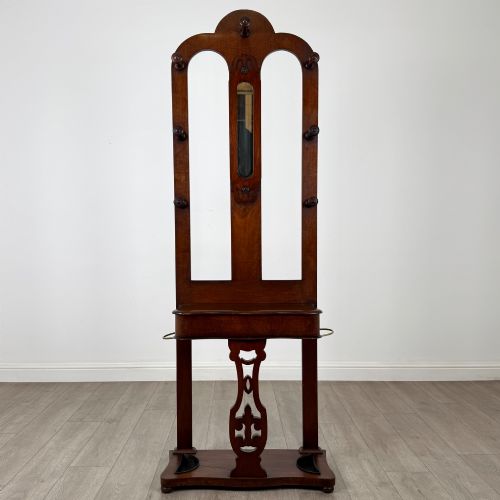
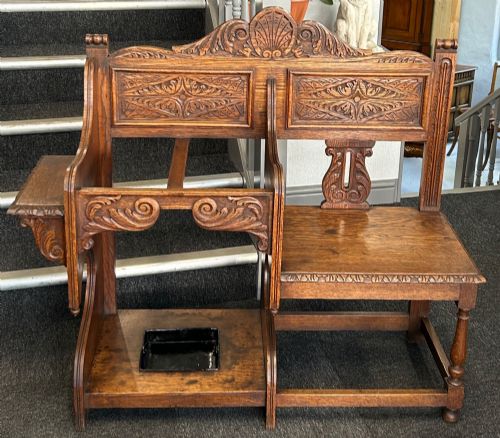
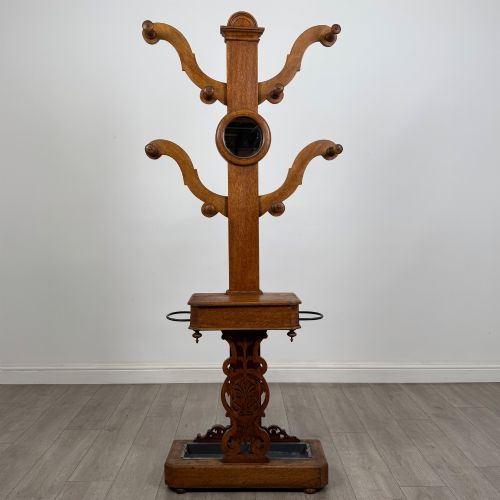
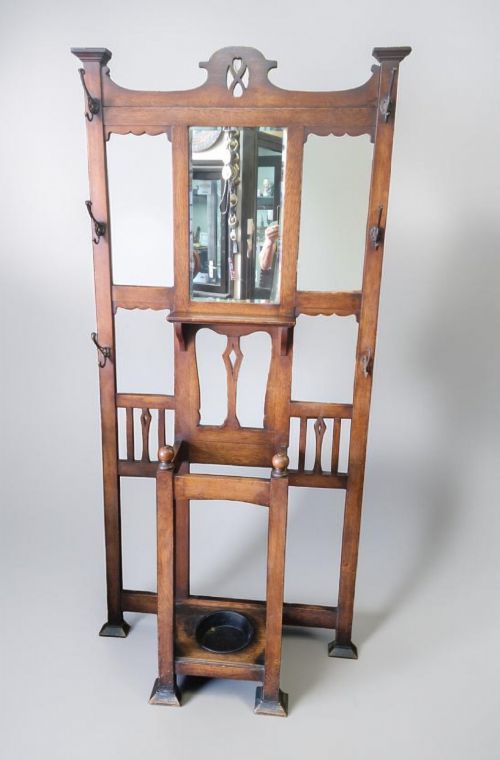
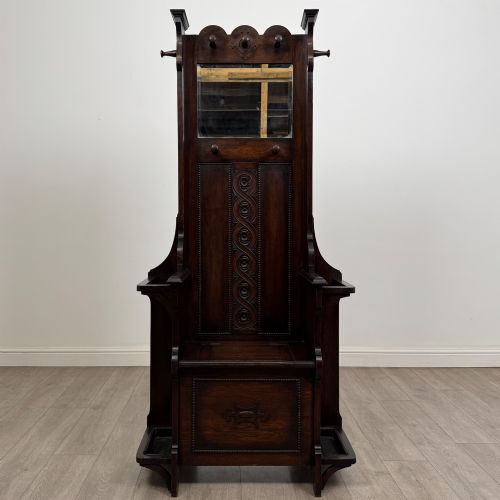
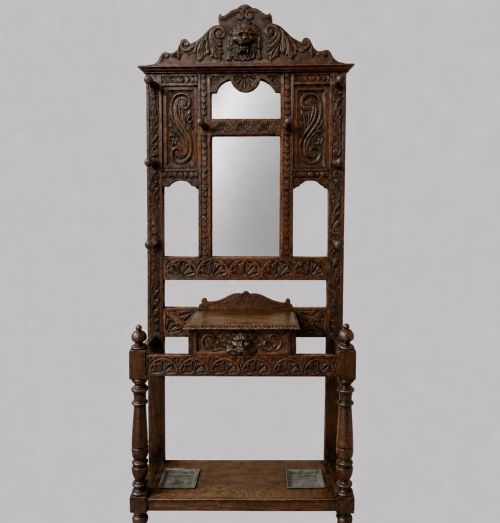
An antique carved stick stand serves as a functional piece of hall furniture designed to hold wet umbrellas and walking canes upon entering a home. Buyers exploring this category will encounter various forms, including dedicated umbrella holders, combined hall stands featuring mirrors and hooks, and integrated hall seats.
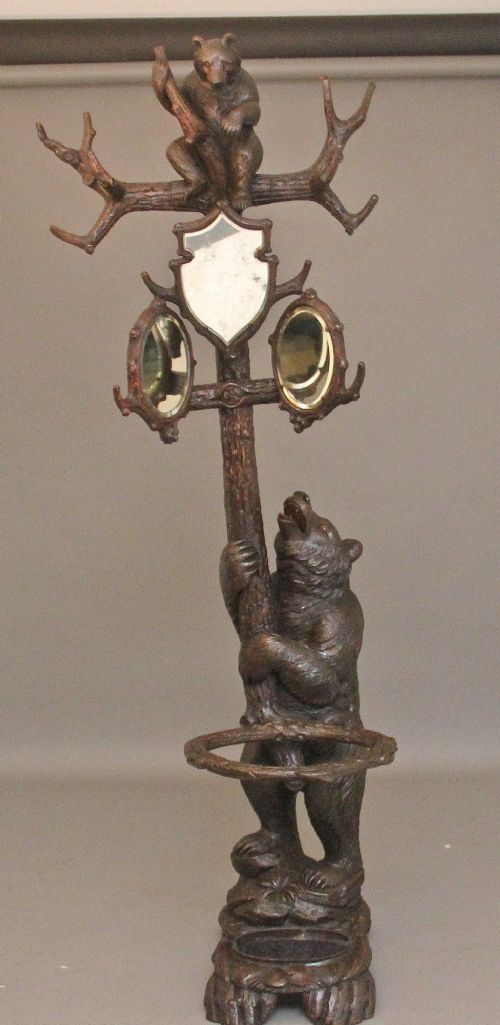
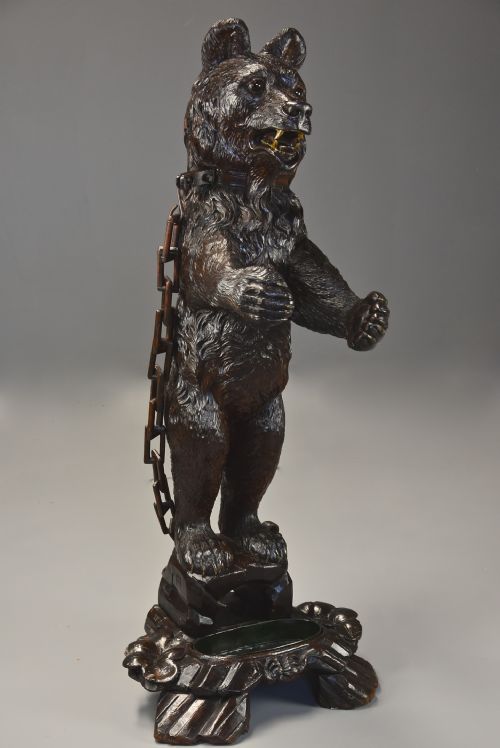
The selections span the nineteenth century through the early twentieth century, taking shape in styles such as Victorian, Edwardian, Gothic Revival, and Black Forest. Oak dominates the material record, frequently decorated with deep relief carving, figural bear motifs, or Green Man ornamentation.
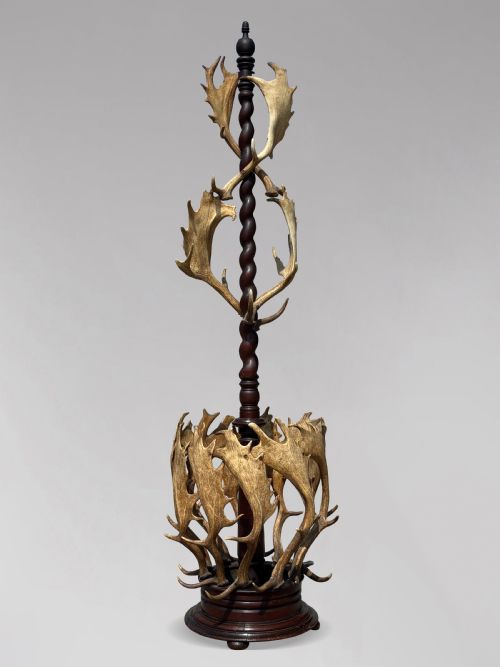
Many examples combine storage vessels with drip pans to catch moisture from wet weather gear. The primary versions met on this page range from modest oak umbrella holders to large architectural hall stands incorporating umbrella compartments.
Assessing quality in carved hall furniture
The distinction between standard utility items and superior examples rests upon the depth, sharpness, and ambition of the hand carving. Finer pieces display spirited animal forms or intricate foliate relief that remains crisp across every surface.
Construction integrity separates robust survivor pieces from lesser examples, relying on sound timber selection and well-executed joints that withstand the heavy daily load of damp wood and metal.
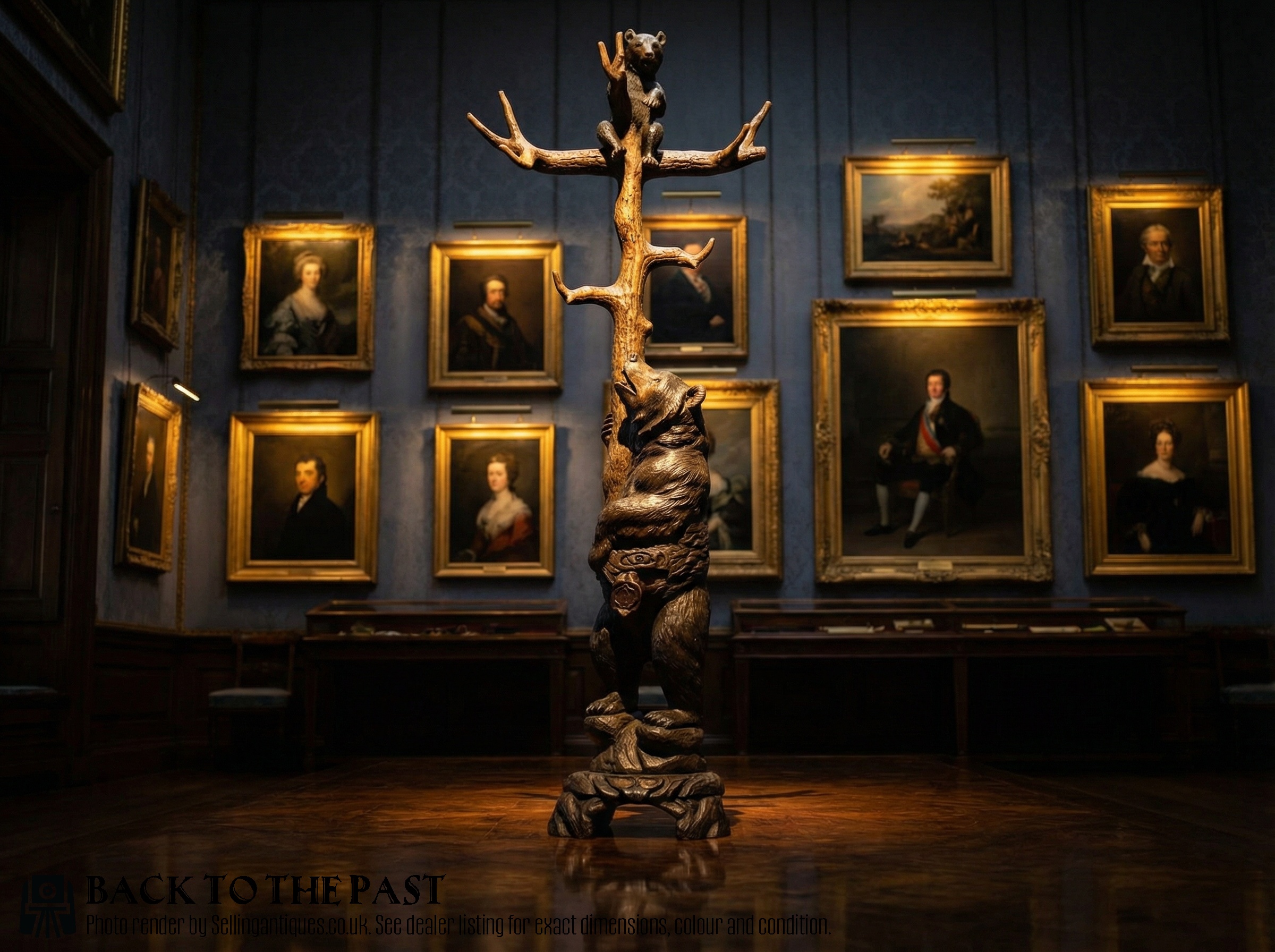
Several fierce wooden bears stand guard with outstretched paws, perfectly prepared to hold your wet umbrellas.
Shoolbred and Co
The Antique Carved Stick Stand Glossary
- Black Forest
- A style of wood carving originating in the Swiss region, famous for realistic depictions of bears and forest flora. These pieces often incorporate functional umbrella wells into naturalistic tree trunk forms.
- Green Man
- A sculptural architectural motif representing a face carved from or entwined with leaves and vines. It appears frequently on nineteenth-century oak hall furniture.
- Hall Stand
- A large piece of entranceway furniture combining a mirror, coat hooks, a shelf or glove drawer, and integrated umbrella or stick wells. Many incorporate umbrella stands directly into their base structure.
- Japonisme
- A late nineteenth-century artistic style heavily influenced by Japanese art and design. It manifests in furniture through exotic woods and bamboo-turnery effects.
- Pricket Candlestick
- An antique altar-style candlestick featuring a vertical metal spike upon which a wax candle is mounted. These early lighting forms occasionally share provenance with ecclesiastical woodwork.
Antique Carved Stick Stand: Frequently Asked Questions
What is an antique carved stick stand?
An antique carved stick stand is a piece of hallway furniture built to store walking sticks, canes, and umbrellas neatly. These items utilise traditional timber construction and ornamental carving to serve both a decorative and domestic purpose.
They appear frequently in oak, mahogany, and walnut across Victorian and Edwardian periods. Their primary function is to protect floors and provide an organised entryway.
How do I date an oak stick stand?
Dating an oak stick stand involves examining the carving style, construction joints, and overall design vocabulary. Pieces bearing heavy Gothic Revival or Black Forest motifs typically point to the nineteenth century, while simpler lines often suggest Edwardian manufacture.
Hardware such as original brass drip pans and mirror bevels also help establish the correct era. Comparing the decorative details to documented pieces aids in narrowing the timeline.
Where were stick stands placed in period homes?
Stick stands found their natural home in the entrance hall, vestibule, or boot room of large country houses and town residences. Positioned near the front door, they welcomed visitors and offered immediate convenience for wet weather gear.
Larger combination pieces often doubled as hall seats, allowing guests a comfortable surface to remove footwear. This placement kept heavy walking equipment contained near the main threshold.
What maintenance do carved wooden stands require?
Carved wooden stands require stable indoor humidity levels and protection from direct sunlight to preserve the timber and finish. Regular dusting with a soft cloth keeps the intricate relief carvings clear of buildup.
Inspecting internal metal drip pans for moisture helps prevent water damage to the surrounding wood base. Periodic treatment with appropriate furniture wax maintains the surface sheen.