
Antique Carved Oak Furniture
Antique carved oak furniture comprises solid timber seating, tables and storage pieces built across several centuries to endure heavy daily use.
Antique Carved Oak Furniture
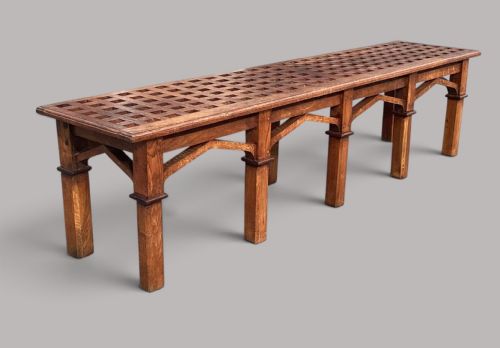
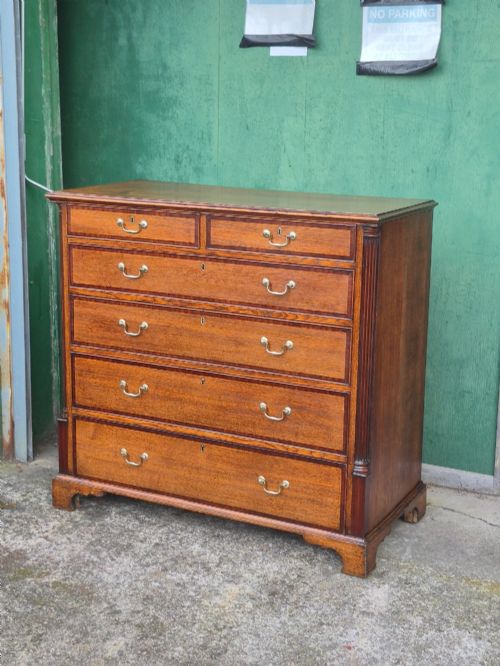
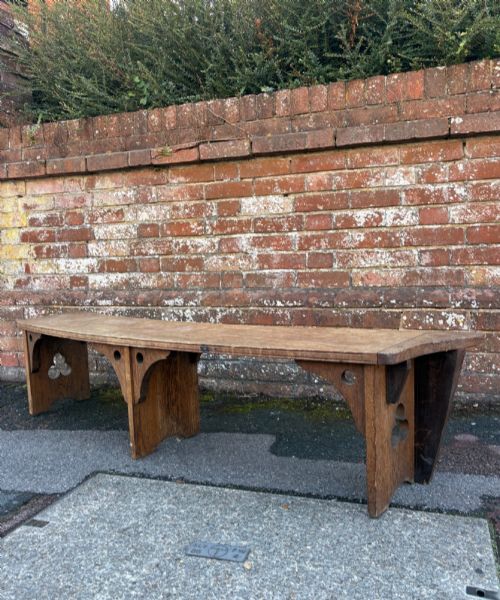
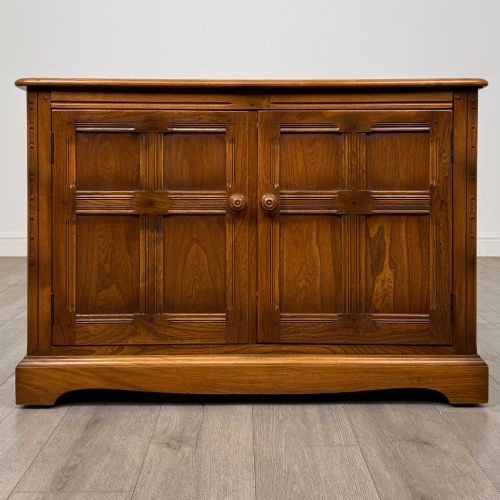
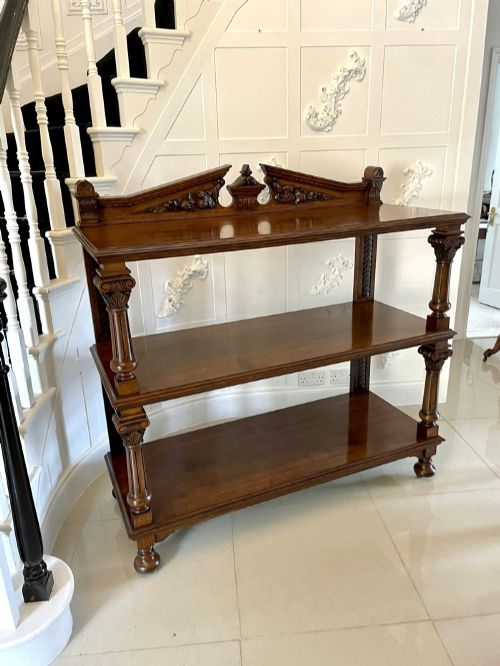
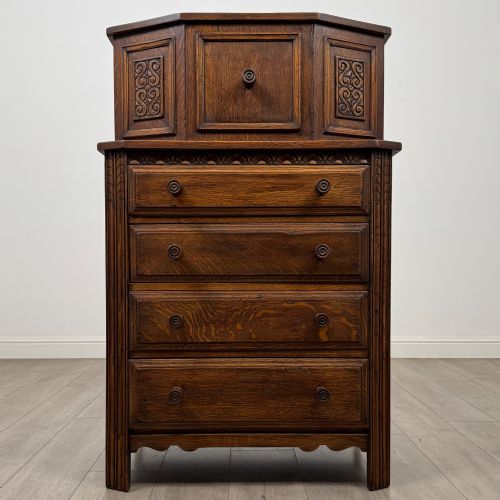
Antique carved oak furniture covers a broad span of functional household pieces built from heavy timber, ranging from primitive seventeenth-century boarded coffers to elaborate Victorian sideboards and Edwardian dining tables. When searching for antique carved oak furniture, buyers encounter everything from early church pulpits and prayer desks to domestic hall benches, bookcases and chests of drawers.
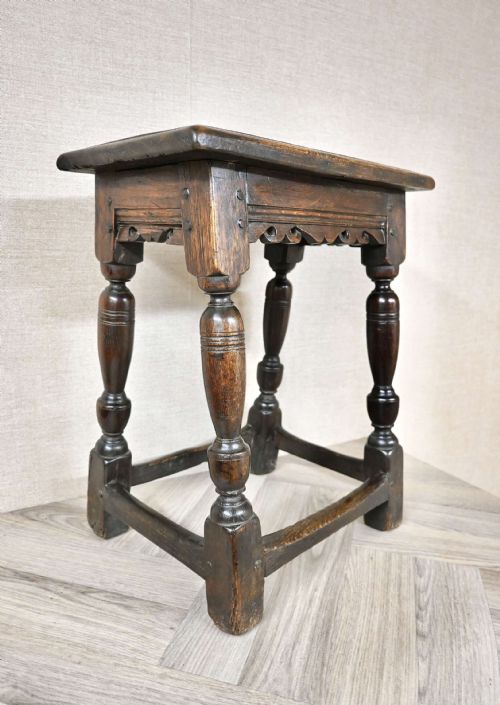
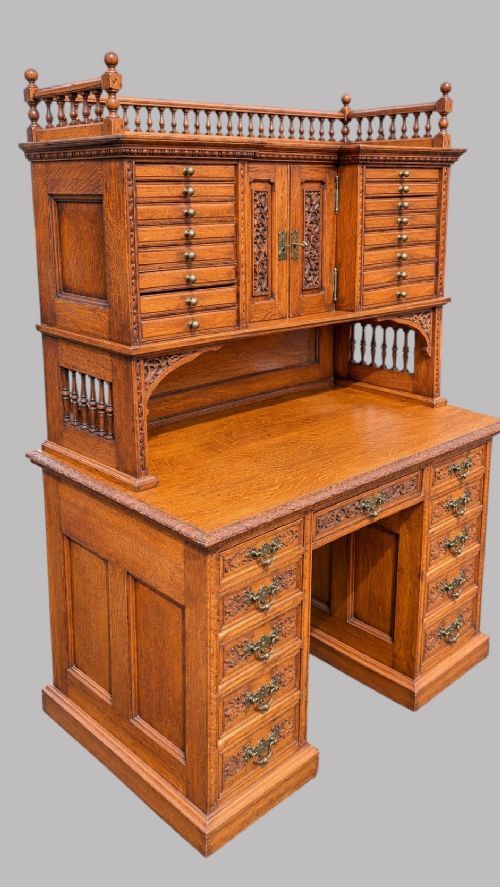
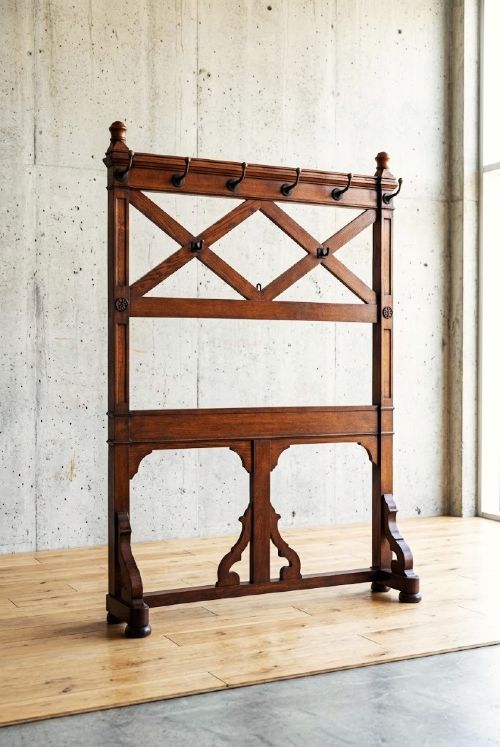
The items most frequently met on this page date from the nineteenth and early twentieth centuries, including Gothic Revival and Arts and Crafts iterations alongside Jacobean revival side tables and heavy dining suites. Earlier seventeenth-century joined coffers and panels appear alongside these later revival works, showing how carvers drew upon historical motifs across successive generations.
Distinctions in execution and depth
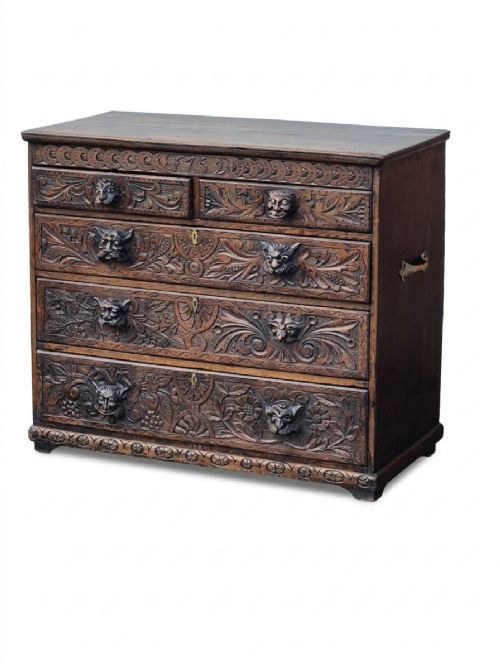
Quality rests upon the crispness and depth of the hand carving, the choice of timber figure, and the integrity of the original construction. Pieces with deeply undercut foliage, well-defined grotesque masks or complex marquetry inlay demonstrate superior craftsmanship compared to plain or mechanically stamped alternatives.
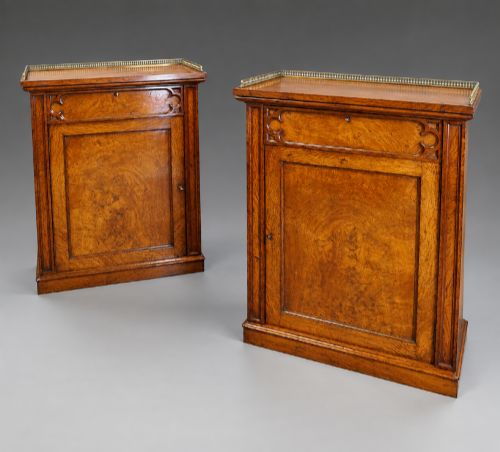
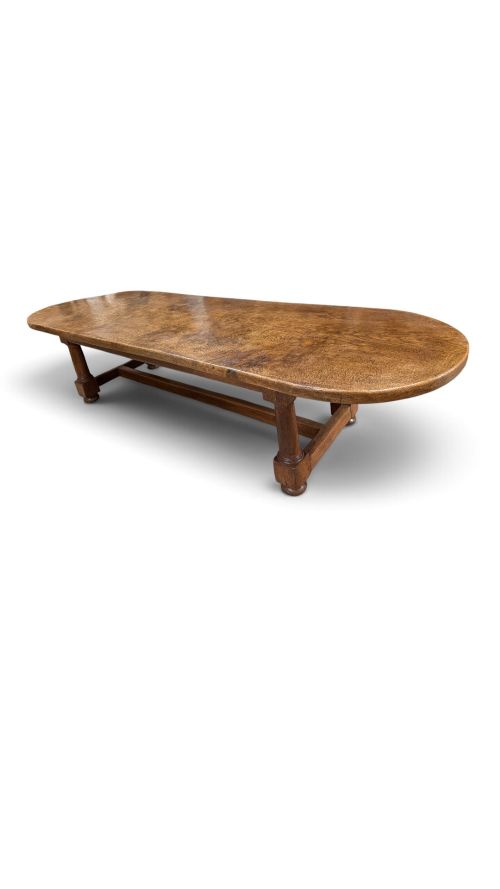
The structural honesty of the joinery and the survival of original brass or iron hardware further distinguish finer examples. Grain selection, such as figured pollard oak or single-plank tabletops, dictates the visual weight and presence of the finished item.
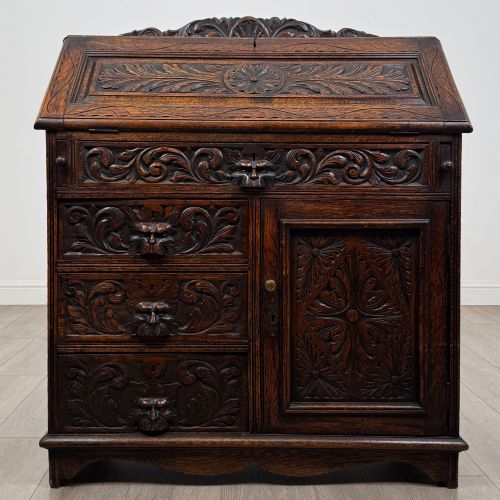
Stare closely into the foliage of Victorian panels to spot hidden Green Man masks grinning back from the oak.
The Antique Carved Oak Furniture Glossary
- Green Man
- A sculptural architectural ornament depicting a human face emerging from or entwined with foliage. It appears frequently on Victorian and Gothic Revival carved panels.
- Mule chest
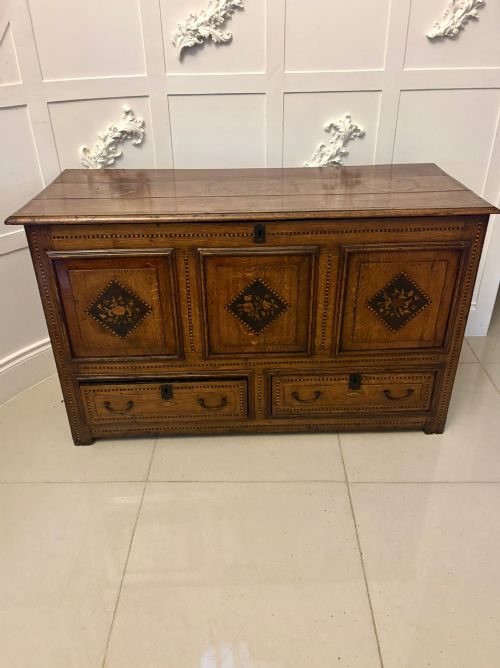
- A traditional storage chest featuring one or more drawers beneath the main lift-top compartment. They bridge the gap between simple coffers and modern chest of drawers.
- Draw-leaf table
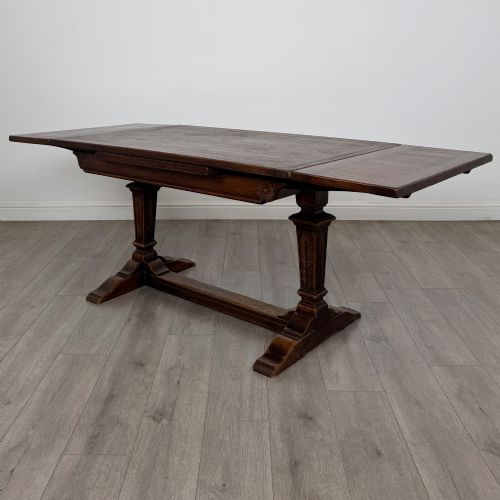
- A dining table fitted with pull-out extension leaves stored beneath the main top surface. This mechanism allows the table length to adjust without removing the central top.
- Marquetry
- The art of applying decorative veneer pieces in wood to a structural surface to form intricate patterns. It creates pictorial or geometric designs across cabinet doors and drawer fronts.
- Joined panel
- Construction method utilising pegged mortise and tenon joints to frame floating wooden panels. This technique accommodates the natural expansion and contraction of solid timber.
- Settle
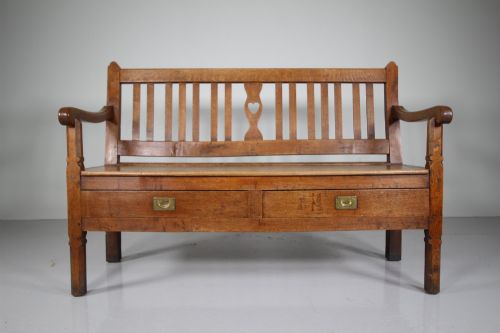
- A wooden bench featuring high solid backs, enclosed arms and often a box seat beneath. They provided draught-proof seating near hearths in early domestic interiors.
Antique Carved Oak Furniture: Frequently Asked Questions
How do I date antique oak furniture?
Dating relies upon examining construction methods, hardware types, and carving styles recorded across periods from the seventeenth century onward. Tool marks, joint types like pegged mortise and tenon, and timber shrinkage offer reliable clues to an item's age.
Revival pieces from the nineteenth and early twentieth centuries often borrow motifs from earlier eras, requiring careful inspection of the timber patination and assembly to separate original Tudor or Stuart work from later interpretations.
What is pollard oak?
Pollard oak is a decorative timber harvested from trees that were cut back close to the trunk to encourage dense, knotty regrowth. This pruning process creates highly figured, swirling grain patterns highly prized by nineteenth-century cabinet makers.
Furniture utilising pollard oak veneers typically dates from the Victorian period, where the dramatic grain provided visual contrast on large sideboards and architectural cabinets.
How should I care for antique oak?
Maintenance requires keeping solid oak furniture away from direct heat sources and sudden humidity changes to prevent the timber from splitting. Regular dusting with a dry, soft cloth preserves the wax finish without stripping the historical patination.
A light application of traditional beeswax feeds the dry wood annually, maintaining the deep lustre acquired through centuries of handling and environmental exposure.
What is a monks bench?
A monks bench is a dual-purpose piece of historic furniture designed to function as both a table and a seat with a pivoting back. When the back tilts forward over the arms, it forms a flat tabletop suitable for dining or writing.
These versatile items appear in Victorian and Edwardian iterations, adapting earlier vernacular forms for compact domestic spaces requiring multifunctional furniture.