


Solid Oak Wainscot Chair
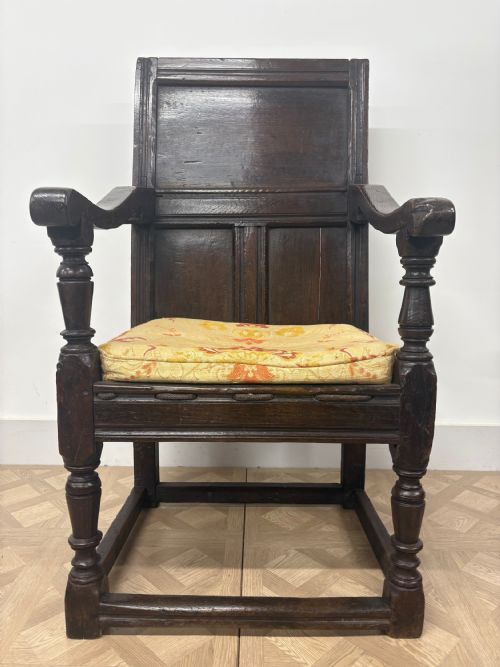
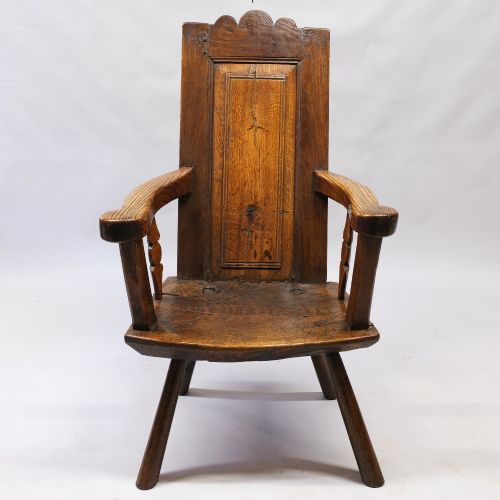
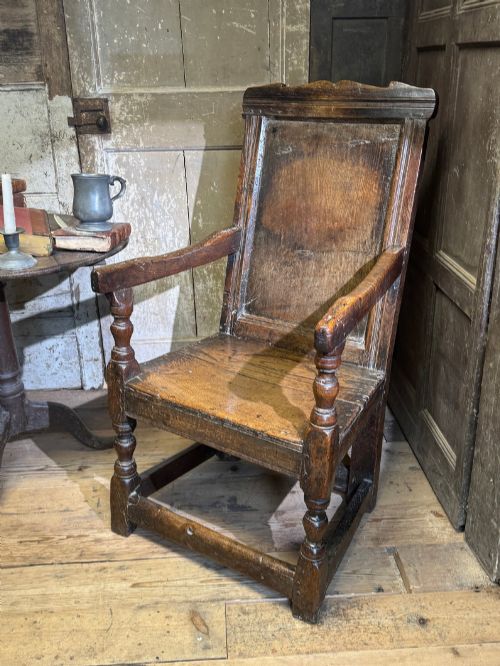
A solid oak wainscot chair offers sturdy panelled seating steeped in early vernacular history.
Solid Oak Wainscot Chair
A solid oak wainscot chair represents a heavy, wood-panelled seat rooted in domestic traditions spanning the seventeenth and eighteenth centuries, alongside later nineteenth-century revivals. These pieces function primarily as substantial armchairs or occasional hall seats, defined by their rigid board backs and sturdy armrests.
The selections encountered here range from early seventeenth-century examples originating in regions such as the North Country and West Country to later Georgian vernacular interpretations and twentieth-century revival pieces. Most survivors take the form of armchairs, occasionally accompanied by smaller side or hall variants.
Buyers seeking a solid oak wainscot chair encounter variations in regional carpentry, ranging from plain panelled backs to deeply carved crestings and boarded seats. The construction relies on heavy timber framing rather than fragile upholstery, making these chairs enduring fixtures in traditional interiors.
Factors of quality
Quality in a solid oak wainscot chair rests upon the proportion of original timber retained and the integrity of the primary joinery. Pieces that maintain their early boarded seats, original arm assemblies, and unaltered feet stand apart from those heavily restored or re-pinned over subsequent centuries.
The crispness of hand-carved details on the back panels and the presence of a rich, deep surface colour developed through centuries of handling distinguish superior examples. Heavy alterations to the crest rail or replaced lower stiles reduce the historical cohesion of the piece.
Some master armchairs were built so heavy that shifting them across a flagged floor required two people and a sturdy pair of boots.
The Solid Oak Wainscot Chair Glossary
- Wainscot
- A term originally describing fine oak panelling used to line interior walls, later applied to heavy wooden armchairs featuring similar panelled backs. These chairs share the sturdy board construction characteristic of early domestic woodwork.
- Stile
- A vertical framing member in the back or base of a chair that provides structural support. Stiles run upright to anchor the arms and support the panelled back.
- Rail
- A horizontal framing piece connecting the vertical stiles in a panelled chair structure. Top rails often feature carved decoration or shaped cresting.
- Joined
- A method of furniture construction utilising tight mortise and tenon joints secured by wooden pegs. This joinery distinguishes seventeenth-century seating from later glued or nailed furniture.
- Vernacular
- Regional furniture built by local jobbing carpenters for everyday domestic use rather than following metropolitan court fashions. These pieces display distinct local idiosyncrasies in construction and carved motifs.
Solid Oak Wainscot Chair: Frequently Asked Questions
How do I spot a genuine early wainscot chair?
Examine the construction methods visible underneath and around the joints, looking for hand-planed board surfaces and pegged mortise and tenon framing.
Early chairs display authentic surface wear and natural timber shrinkage consistent with age rather than artificial distress.
Were these chairs used at dining tables?
In seventeenth-century households, a heavy panelled armchair typically served as a seat of authority for the head of the house rather than casual dining seating.
Most household members sat on simple stools or benches while the master occupied the wainscot chair near the hearth.
How should I care for solid oak furniture?
Keep the wood away from direct heat sources and sudden humidity fluctuations to prevent the oak panels from splitting or warping.
Feed the timber occasionally with traditional beeswax to maintain the dry, rich lustre without sealing the pores.
Why do some chairs have carved dates?
Carved dates or initials on crest rails sometimes commemorate marriages, building completions, or significant family events.
Carvings must be scrutinized carefully, as later hands occasionally added dates to plain antique panels to enhance perceived antiquity.