




Antique Carved Deity
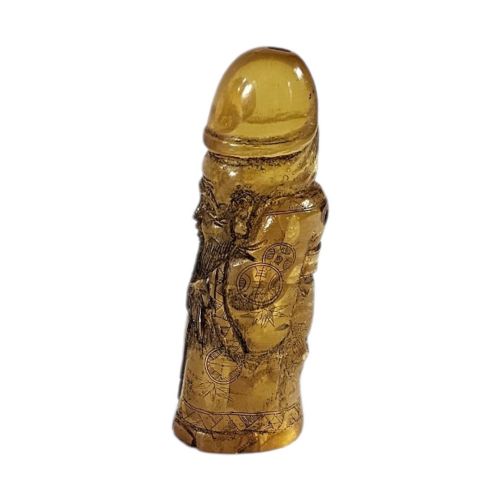
When you select an antique carved deity, you bring home a sculpted representation of spiritual devotion crafted from wood, stone, or amber.
Antique Carved Deity
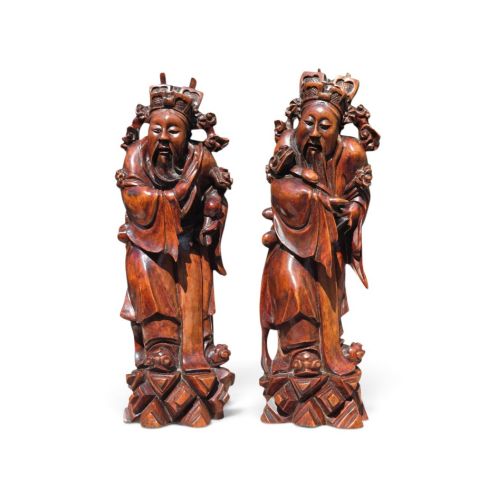
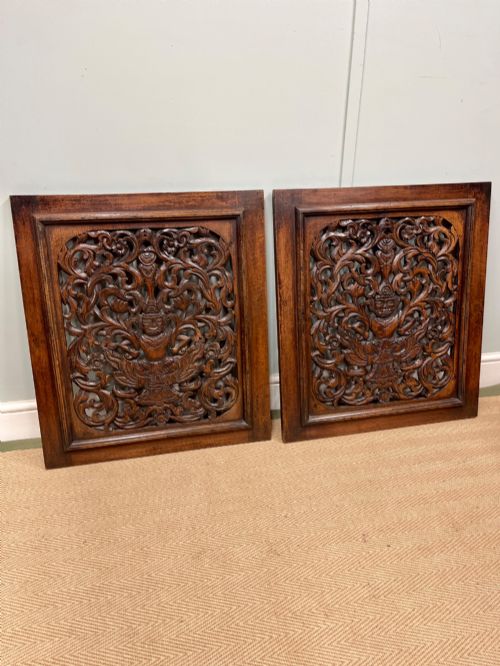
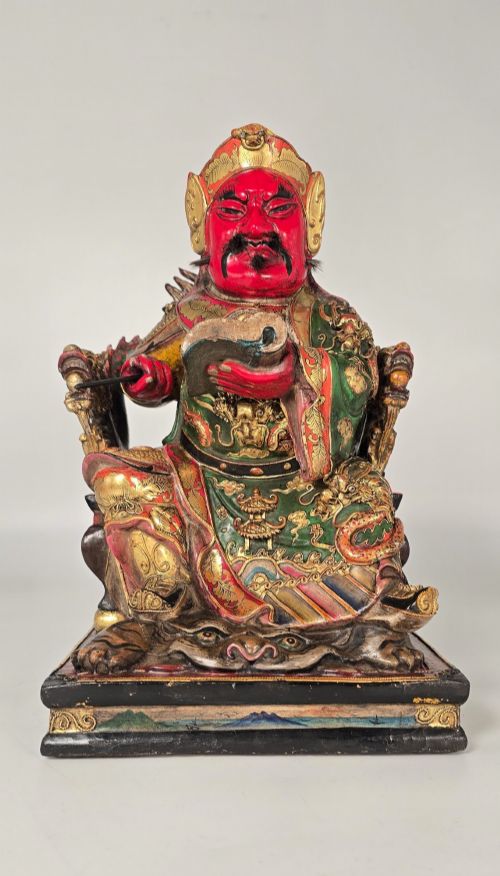
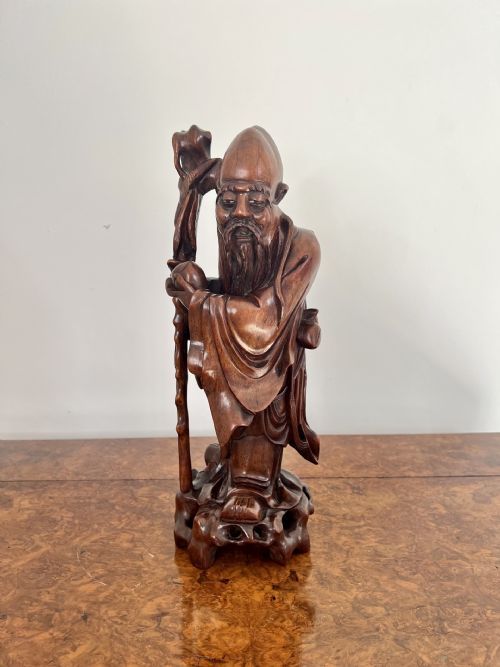
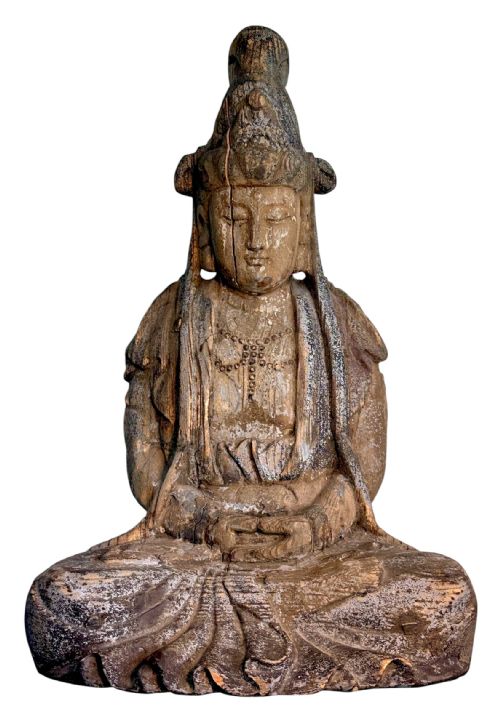
An antique carved deity encompasses sculptures, statues, pendants, and wall panels depicting figures from diverse cultural and religious traditions. Buyers encountering this selection will frequently find wooden and hardwood representations originating from nineteenth-century China, India, and Tibet.
The assortment includes figures of Buddhist, Daoist, and Hindu importance, ranging from household pendants to monumental temple guardians. Alongside these devotional statues appear secular scholars and mythical companions rendered in materials spanning centuries.
Regional styles shape these forms significantly, moving from Balinese and Burmese woodcarvings to Anglo-Indian panels and classical Grand Tour interpretations. Each object reflects the distinct artistic conventions of its period and origin.
How they were made
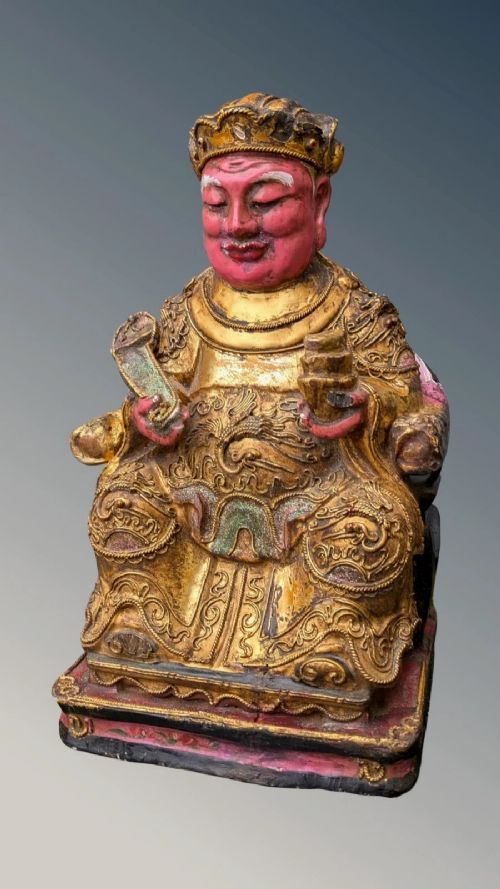
Wood serves as the primary medium, utilising dense hardwoods, boxwood, bamboo, and root carvings shaped with handheld chisels. Artisans frequently applied gesso, gold leaf, lacquer, and polychrome pigments over the timber surface to enhance visual detail.
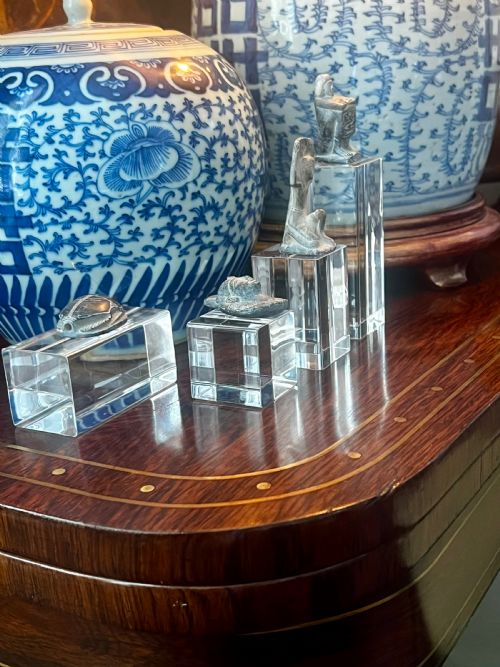
Stone and terracotta appear alongside organic materials, employing sandstone, marble, alabaster, and carved bone for relief panels and freestanding statues. Surface treatments often include natural patination developed through age and handling.
Listings feature items spanning from pre-sixteenth-century stone fragments to twentieth-century lacquer work, incorporating wood, bone, and jade.
What varies in quality
The refinement of the carving dictates the distinction between standard production and exceptional artistry, particularly in facial expression and drapery folds. Sculptures exhibiting deep undercut work and precise anatomical definition demonstrate superior hand execution.
The survival of original surface decoration, such as layered gilding and polychrome pigment, influences the visual impact of the piece. Integrated grain utilisation in hardwood and root carvings also separates masterworks from simpler workshop output.
The Antique Carved Deity Glossary
- Polychrome
- Painted in several colours. This surface treatment was frequently applied to wooden temple statues and deities.
- Okimono
- A Japanese decorative freestanding figurine. These objects were typically displayed in domestic settings during the Meiji period.
- Gesso
- A plaster mixture used as a base for painting or gilding on wood. It provides a smooth foundation for gold leaf application.
- Patina
- A gloss or sheen developed on surfaces through age and use. Collectors value this indicator of historical handling on bone and wood.
- Hardwood
- Timber derived from broad-leaved trees. These dense woods resist splitting and permit intricate sculptural detail.
Antique Carved Deity: Frequently Asked Questions
What materials were used for these deities?
Makers utilised various timbers including hardwood, boxwood, and bamboo, alongside sandstone, marble, alabaster, terracotta, bone, and amber. Many wooden surfaces received additional layers of gesso, lacquer, gold leaf, and polychrome pigment.
Organic materials like bone and amber appear frequently in smaller portable pendants and plaques. Stone sculptures are predominantly carved from sandstone or marble.
How do I care for a wooden deity?
Keep wooden and polychromed sculptures away from direct sunlight and rapid temperature fluctuations to prevent timber movement. Dust gently with a dry, soft cloth without applying liquid cleaners or polishes that might disturb aged surfaces.
Stable indoor humidity preserves both the wood substrate and any delicate layers of applied gesso or pigment. Avoid placing carved panels near direct heat sources.
How can I tell the region of origin?
Stylistic conventions provide clear indicators, such as the distinct crown and posture work found in Indian stone reliefs compared to Qing Dynasty woodwork. Iconography associated with specific deities like Ganesha, Buddha, or Daoist immortals points toward particular cultural traditions.
Materials and carving depths also offer clues, with Burmese and Balinese works displaying regional motifs distinct from Japanese okimono or Tibetan figures.
Were these figures meant for temples?
Some monumental carvings served as temple guardians or objects of public worship, while others functioned as household deities or personal amulets. Smaller figures and pendants were designed for portable devotion or private meditation.
Secular scholars and mythical figures also appear among devotional pieces, indicating a broad spectrum of religious and domestic use.