

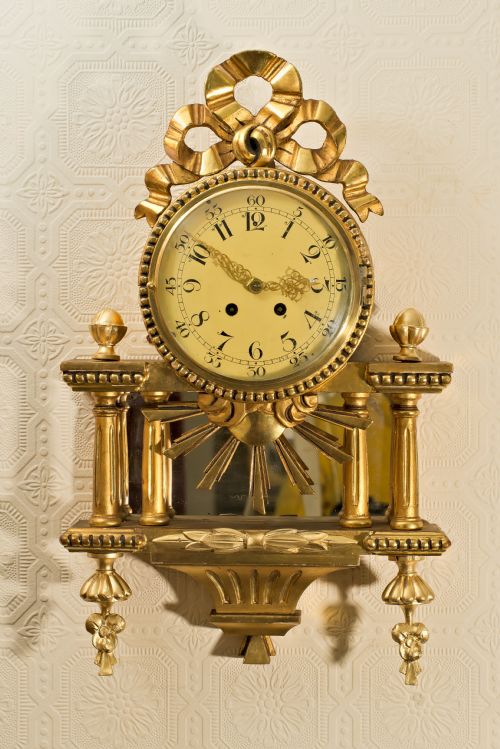


Antique Cartel Clock
An antique cartel clock is a wall-mounted timepiece driven by intricate metalwork, bringing sculptural presence and refined timekeeping into a room.

Antique Cartel Clock
When someone searches for an antique cartel clock, they are looking at ornamental wall clocks housed in elaborate frames designed to sit directly against a wall rather than rest on a mantel or floor. The versions most commonly met on this page originate from nineteenth-century France, shaped by Louis XVI and Rococo revival aesthetics.
The forms range from compact, symmetrical neoclassical designs featuring urns and ribbons to asymmetrical Rococo compositions with scrolling foliage, asymmetrical cartouches, and animal motifs like dolphins or dragons. These pieces function simultaneously as mechanical instruments and decorative wall sculptures.
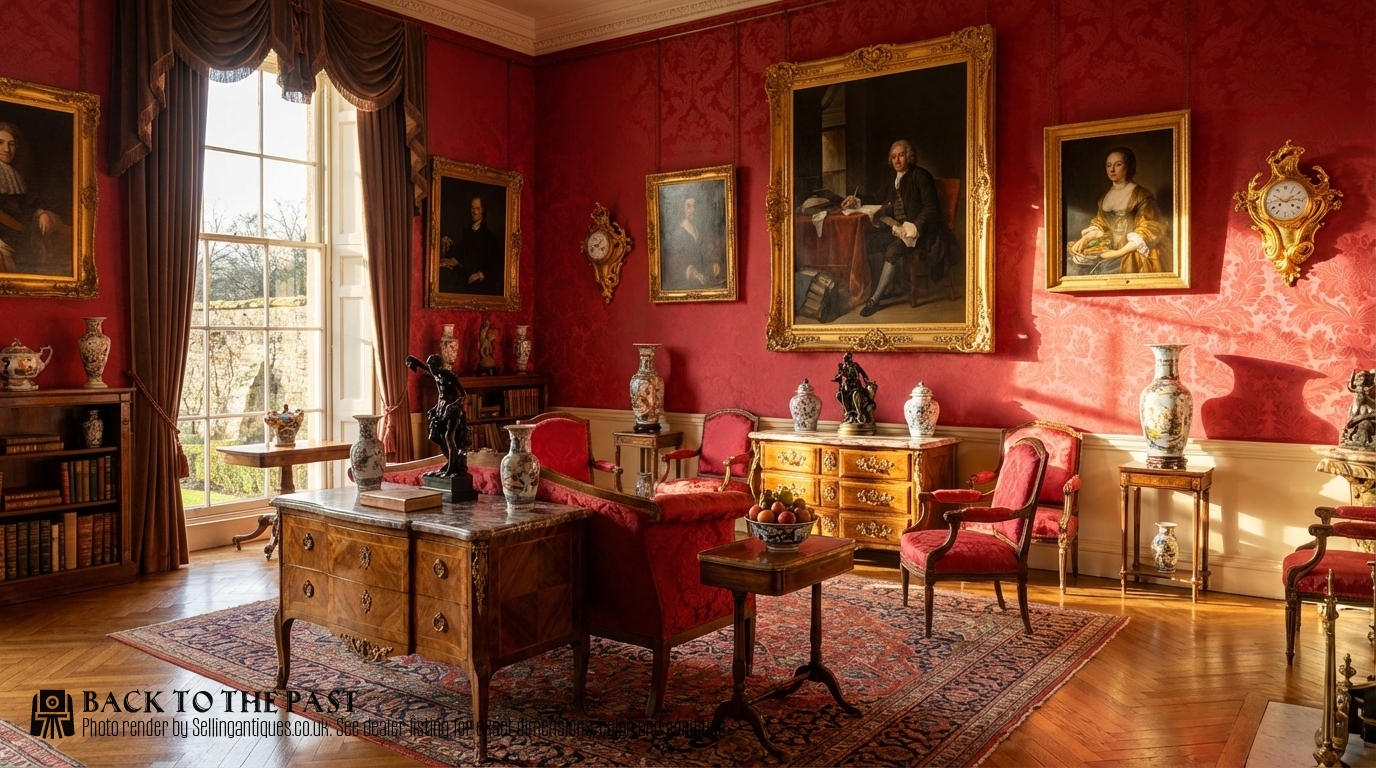
Materials and construction
Makers constructed the structural frames of these wall pieces using carved wood, such as giltwood and ebonised wood, or cast metals including bronze, brass, and gilt metal. Many of the metal cases received a rich layer of ormolu, applying finely ground gold to bronze through a mercury amalgamation process.
Dials typically comprise white enamel painted with Roman or Arabic numerals, protected behind curved glass panels. Swedish examples introduce eglomise panels, utilising gilded and painted glass to add depth and reflective contrast beneath the dial.
Antique Cartel Clock Retail Price Guide 2026
Typical asking prices for cartel clock among the pieces listed under this phrase on Sellingantiques today, from the lower quarter to the upper quarter. They describe what is for sale here now, not the wider market.
Materials recorded across the inventory include gilt bronze, ormolu, ebonised wood, enamel, glass, and carved giltwood.
Distinctions in execution
The upper tier of these timepieces is distinguished by the crispness of the bronze chasing and the depth of the gilding, where hand-tooled details remain sharp and varied in texture. Lesser examples display softer cast details with uniform, flat surfaces and lack the deliberate contrast between matte and burnished metal finishes.
Movement quality also separates the exceptional pieces from standard production, seen in signed mechanisms by notable makers that maintain precision and feature sophisticated striking trains. Cases constructed from solid timber with deep, hand-carved relief similarly indicate superior craftsmanship compared to simpler moulded compositions.
HENRI MARC OF PARIS·WETTERSTRANDS·Perivale of England·WILLIAM WEBSTER·Charles Vincent·Henri Riondet·Vincenti·Japy Freres·Raingo Freres·Samuel Marti·Maison Bagues
The Antique Cartel Clock Glossary
- Cartel clock
- A wall-mounted clock featuring an ornate frame integrated into the case design. These pieces emerged in France during the eighteenth century.
- Ormolu
- Finely ground gold applied in a mercury amalgam to a bronze base. This technique creates a durable, luminous golden finish on metal cases.
- Eglomise
- The process of cold painting and gilding on the reverse side of glass panels. It produces a reflective, mirror-like decorative surface.
- Rococo
- An artistic style characterised by asymmetric scrolls, shell motifs, and natural curves. It heavily influences many nineteenth-century French clock cases.
- Boulle
- A marquetry technique using brass and tortoiseshell inlaid in intricate patterns. It appears on select nineteenth-century clock bodies.
Antique Cartel Clock: Frequently Asked Questions
Where should a cartel clock be hung?
These wall clocks require a secure mounting point that can support the substantial weight of cast bronze and timber frames. They suit prominent wall spaces in reception rooms where their sculptural cases can be viewed at eye level.
Because the mechanisms rely on a plumb line, the wall must be flat and stable to ensure the pendulum swings evenly. Avoid placing them in damp areas or in direct sunlight that could damage the enamel dials and gilding.
How do I wind the movement?
Winding involves inserting a key into the winding holes on the enamel dial to tension the springs or lift the weights, depending on the specific mechanism. Care must be taken not to overwind the clock, which can damage the internal tension components.
Most traditional movements require winding at regular intervals, typically weekly or daily. Consulting the specific mechanical requirements helps preserve the historical movement.
How do I distinguish Louis XVI from Rococo styles?
Louis XVI cartel clocks display strict symmetry, straight lines, architectural urns, swags, and classical restraint. They emphasise order and geometric balance in their gilt bronze mounts.
In contrast, Rococo clocks embrace asymmetry, C-scrolls, floral abundance, and natural motifs like dragons or dolphins. The frames twist organically without a central axis, creating fluid movement across the wall.
Are these clocks suitable for daily use?
These timepieces function well for daily timekeeping provided they receive professional mechanical servicing. The intricate gear trains benefit from periodic cleaning and oiling by a horologist to prevent wear.
While they keep accurate time, their primary value lies in their historical artistry and decorative presence. Treating them with care ensures the movements continue operating smoothly alongside the original cases.