


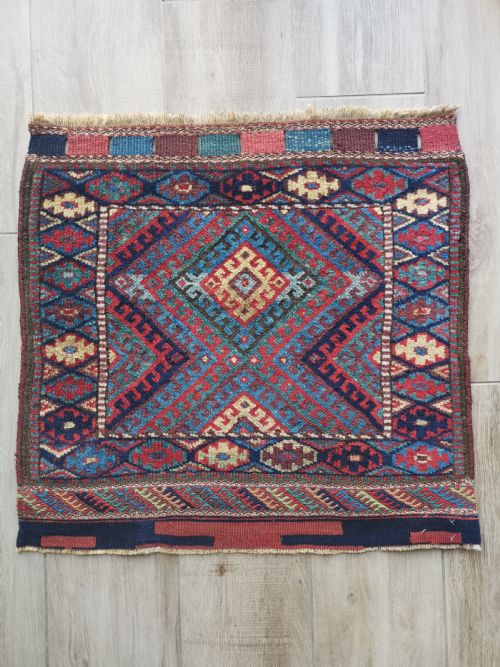


Antique Carpet Fragment
An antique carpet fragment brings the rich textile traditions of tribal weavers into a modern interior.
Antique Carpet Fragment
An antique carpet fragment represents a surviving portion of a larger textile, such as a torba, chuval face, or larger tribal rug. These pieces typically originate from nineteenth-century nomadic and village traditions across Central Asia, the Caucasus, and Persia.
Buyers encountering this category will frequently see specific tribal formats like Yomut, Tekke, Ersari, and Saryk bag faces alongside Caucasian and Kurdish remnants. Each piece preserves traditional motifs and structural weaving techniques that have survived centuries of domestic use.
How they were made
Weavers constructed these textiles using hand-spun wool, cotton, and occasionally silk foundations, combined with natural dyes and vegetable colours derived from local flora and minerals.
The technique relies on dense knotting or flatweave soumak construction, producing resilient pile surfaces designed to endure the demanding conditions of nomadic life.
The inventory spans the eighteenth, nineteenth, and early twentieth centuries, featuring wool, cotton, silk, and natural vegetable dyes.
What varies in quality
The distinction between standard and exceptional weaving lies in the fineness of the knot count and the precision of the drawing. Superior examples exhibit deliberate symmetry and intricate handling of traditional gul motifs.
Colour saturation and the vibrancy of natural dyes significantly elevate a textile. Pieces retaining deep, harmonious palettes demonstrate superior dyeing mastery by the original maker.
The Antique Carpet Fragment Glossary
- Torba
- A small storage bag face produced by Turkmen tribes, often used for tent storage and featuring prominent gul patterns.
- Gul
- A repeating medallion or primary motif found in Central Asian tribal rugs and carpet fragments.
- Chuval
- A large storage bag face traditionally woven by nomadic groups for household belongings within a yurt.
- Soumak
- A flatweave technique using wrapping threads over warp and weft to create a durable, textured surface without a cut pile.
- Mafrash
- A rectangular storage bag or chest panel used by nomadic tribes for bedding and household goods.
Antique Carpet Fragment: Frequently Asked Questions
How were these fragments used originally?
Nomadic tribes utilised these woven pieces primarily as functional storage bags, tent bands, and camel trappings within daily domestic life.
Over generations, larger household textiles naturally wore down, leaving surviving fragments that preserve the core design and weaving artistry.
How should I display a fragment?
Many collectors mount these textile pieces onto neutral linen backgrounds or display them directly on walls as flat textile art.
Proper mounting distributes the physical weight evenly across the structure, protecting the antique foundation fibres from undue stress.
How do I identify tribal origins?
Specific design elements, such as distinct gul medallions and border arrangements, point directly to particular tribal groups like the Tekke or Ersari.
Palette choices and structural weave characteristics further clarify whether a piece originated in Central Asia, the Caucasus, or Persia.
Are natural dyes easy to spot?
Natural dyes display subtle tonal variations and gentle abrash, where colour shades shift naturally across the dyed wool.
These vegetable colours age gracefully, developing a deeper patina compared to synthetic dyes introduced later.