


Antique Card Table Drawer
An antique card table drawer offers a neat pocket for counters and packs, built into timber frames from Georgian parlours to Edwardian drawing rooms.
Antique Card Table Drawer
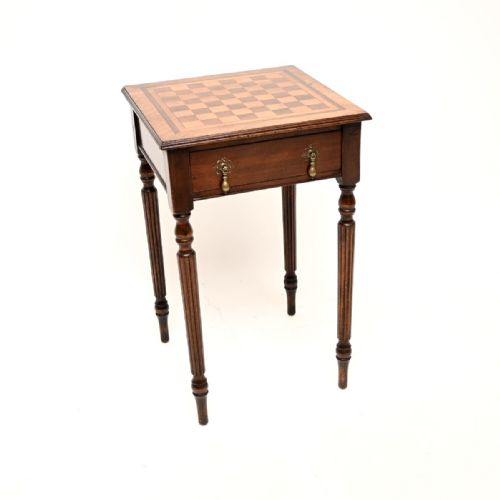
An antique card table drawer is a storage compartment built into games furniture designed to hold playing pieces, cards, and markers. These drawers sit beneath the gaming surface, tucked discreetly into the frieze of tables that date from the Georgian period through to the Edwardian era.
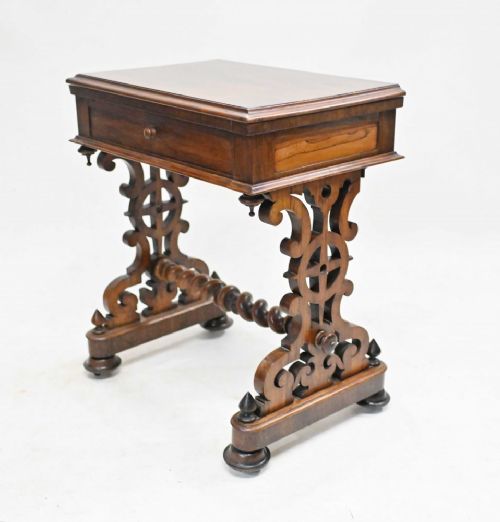
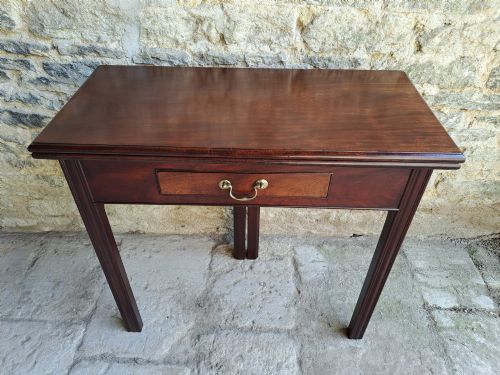
The pieces on this page span several centuries and styles, including George II concertina action tables, George III flip-top side tables, and Victorian walnut centre tables. Mahogany is the most frequent timber encountered, appearing alongside walnut, oak, satinwood, and lacquered wood.
Buyers looking at these pieces find variations in function, from dedicated chess and backgammon boards to envelope tables and tea tables with integrated drawers. Each example reflects the social habits of its period, when parlour games required dedicated furniture to house the paraphernalia.
Judgments of quality
Quality in these tables rests on the crispness of the timber selection and the precision of the cabinetwork in the drawer framing. Grain continuity across the drawer front and the surrounding apron indicates a maker who paid careful attention to visual harmony.
The sophistication of the mechanism, whether a concertina action supporting an extra leg or a smoothly sliding drawer lined in marbled paper or baize, distinguishes standard production from finer examples. Timber choice also plays a role, with figured Cuban mahogany and intricate marquetry marking out the upper tier of pieces.
Some Victorian tables hide compartments deep enough for card packs but shallow enough to trap a stray sixpence for a century.
The Antique Card Table Drawer Glossary
- Concertina action
- A complex table frame extension method that allows the rear legs to move outward when the top unfolds, creating a stable square surface. This design leaves room for a drawer in the front rail.
- Flip-top
- A hinged tabletop that folds over to double the surface area when opened for play. When closed, it conceals the playing well and any contents stored within.
- Marquetry
- Decorative patterns created by fitting different woods, veneers, and sometimes shell or ivory into a wooden surface. It appears on Victorian tables to form chequer boards and floral motifs.
- Envelope table
- A form with four triangular flaps that fold over each other like an envelope to reveal the baize-lined interior. They frequently incorporate a small drawer beneath the top.
Antique Card Table Drawer: Frequently Asked Questions
What fits inside an antique card table drawer?
These compartments were designed to hold the small items required for parlour pastimes, such as mother-of-pearl gaming counters, ivory markers, and decks of cards.
Because the spaces are shallow and partitioned differently from piece to piece, they suit flat accessories rather than bulky modern objects.
How do I know if the drawer is original?
An original drawer shows the same degree of timber ageing, wear patterns, and secondary wood construction as the interior frame of the table. Dovetails should match the period of the piece rather than modern machine cutting.
The runners inside the frieze should also show natural friction marks consistent with decades of opening and closing.
Were these drawers locked originally?
Some higher-end tables featured small brass locks on the frieze to secure valuable gaming counters and stakes away from children or servants. Where keyholes are present, the locks themselves may remain inside the drawer lining.
Many standard tables relied simply on a tight fit and gravity to keep the drawer closed during play.
How do I care for the timber on these tables?
Keep mahogany and walnut furniture away from direct sunlight and sudden temperature shifts to prevent the veneer from lifting or the solid wood from splitting. Regular dusting with a dry, soft cloth protects the polish.
A light application of traditional beeswax feeds the grain without building up a sticky residue on the carved surfaces or around the drawer edges.